In '28 Years Later: The Bone Temple,' We Are All We Have
I wasn't a huge fan of 28 Years Later, Danny Boyle and Alec Garland's 2025 follow-up to their 2002 horror classic 28 Days Later. But I've now seen 28 Years Later: The Bone Temple, and I'm pleased to say, this film rips.

This review contains SPOILERS for all the '28' films including 28 Years Later: The Bone Temple.
I wasn't a huge fan of 28 Years Later, Danny Boyle and Alex Garland's 2025 follow-up to their 2002 horror classic 28 Days Later.
Years had a compelling opening act, fashioning a coming-of-age story out of the trappings of the post-apocalypse. It was grounded by a believable dynamic between Spike (Alfie Williams), a 12-year-old boy going on his first hunt, and Jamie (Aaron Taylor-Johnson), Spike's hard-headed, philandering father. But I felt the movie quickly devolved into several characters making wildly nonsensical decisions and some lore-building that I wasn't particularly interested in. When it ended with a Jimmy Savile-esque figure commanding an army of somersaulting blond child soldiers to eliminate a pack of zombies and save Spike's life, I felt like I'd really have to reserve any final judgment until I saw at least the next film in the franchise.
Well, that day is finally here. I've seen 28 Years Later: The Bone Temple, and I'm pleased to say, this film rips.
The Bone Temple kicks off mere moments after the conclusion of 28 Years Later. We learn that the Jimmy Savile-esque figure from the last movie is actually Sir Lord Jimmy Crystal (an incredible Jack O'Connell), and in the universe of the film, he commands a pack of blond-wigged child soldiers whom he refers to as his Fingers (he also renames them each Jimmy or variants thereof). Crystal was the kid who watched his entire family get massacred by the infected at the beginning of the last film and that tragedy has led him to turn to Satanism. He's a charismatic guy who seems to have a close relationship with the Devil, so it's no surprise that as civilization has deteriorated, he's managed to attract a group of deadly children to follow in his footsteps.
Spike has been taken in by Crystal's gang and is forced to battle to the death with a fellow Finger in order to take his place. After a duel and a lucky strike with a knife, Spike is welcomed into the group. Crystal then proceeds to lead his Fingers on a raid in the countryside. They prey upon unsuspecting survivors of the apocalypse and inflict horrifying acts of torture and bodily harm upon them in order to sate Crystal's bloodlust, all under the guise of providing a sacrifice to "Old Nick" (AKA Satan).
The Bone Temple is a difficult watch. Unlike with previous films in the series, this one doesn't spend much time showing screaming groups of infected sprinting at survivors as they barely escape. Instead, the horrors come from fellow humans under Crystal's control. There are extended scenes of torture and killing, many depicted in graphic fashion. One scene in particular is so challenging to get through that I was stunned the film only received an R rating. As with many horror films, this one asks: "Who are the real monsters?" And it has the imagery to back that question up.
In The End of Faith, Sam Harris wrote about the overwhelming power of belief as the animating principle in a person's life:
A belief is a lever that, once pulled, moves almost everything in a person’s life. Are you a scientist? A liberal? A racist? These are merely species of belief in action. Your beliefs define your vision of the world; they dictate your behavior; they determine your emotional responses to other human beings.
I couldn't help but think of Harris's words as The Bone Temple unfolded and Crystal preached at his Fingers throughout the film. Crystal has taken advantage of these children's disillusionment and vulnerability, brainwashing them into following his every command. His Fingers will kill, torture, and even die for him because they believe he communes with a higher power. In their search for any kind of purpose, they've given over their belief to a monster.
It's no accident that Crystal is styled after Jimmy Savile, who died in 2011 as one of the most beloved figures in British broadcasting before it was discovered that he was a monstrous sexual predator. The 28 Years films are heavily occupied with deconstructing the mythology of Britain. The last film depicted an island in self-imposed exile paying tribute to the Queen and dwelling on the glories of the past. The Bone Temple feels like an indictment of the charisma of folks like Savile and the institutions and systems of belief that allow them to inflict suffering and misery.
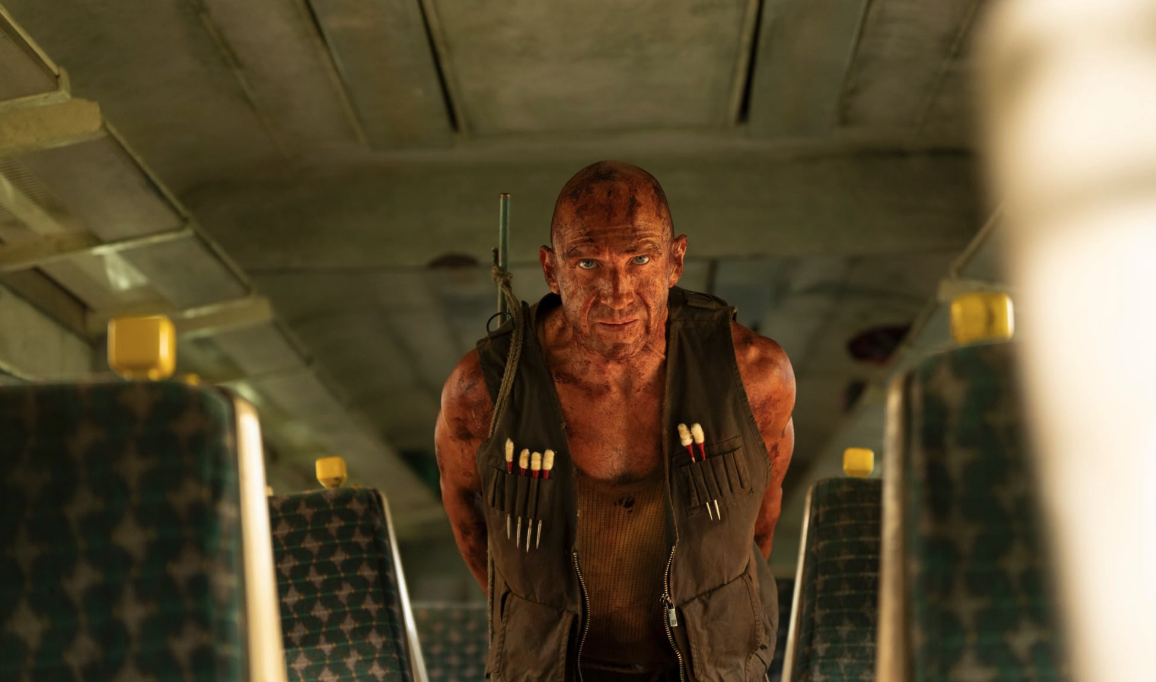
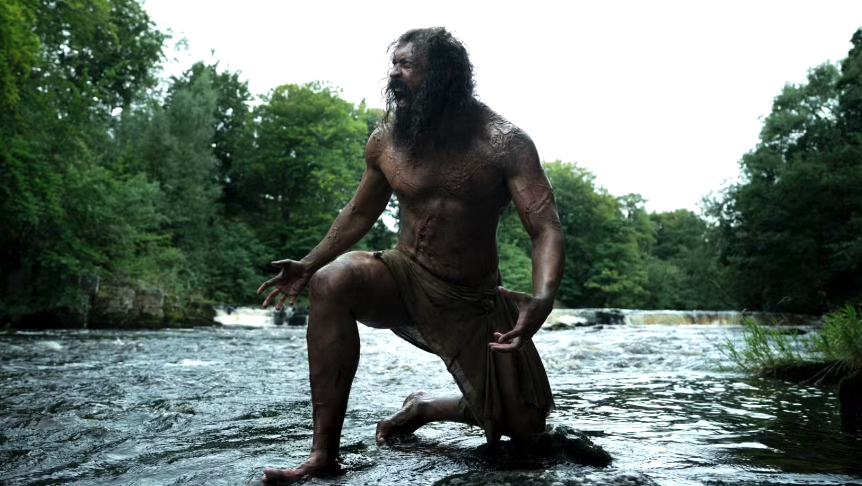
In a separate plotline, Dr. Ian Kelson (Ralph Fiennes) has figured out how to connect with the imposing Alpha leader from the last film, whom Kelson has dubbed Samson (Chi Lewis-Parry). By dosing Samson with morphine, Kelson can converse with him for hours without fear of getting his spine ripped out. The two form an unlikely friendship as Kelson tries to see if there's anything left of Samson's personality beneath all that rage virus.
I found these sections of the film unexpectedly beautiful. Seeing Samson experience rain for the first time (again) and being with him as he struggled to surface his humanity provides a striking contrast with the lack of humanity in Crystal's plot. I was also moved by Kelson's compassion. In the last film, we learn that he's dedicated his life to memorializing the dead; here, we understand that he's trying to find the good even in the infected living. By the end of the film, Kelson appears to have discovered a cure for the rage virus but we'll have to wait until the next installment to fully understand the implications of that.
You may surmise that eventually, the two main plotlines converge. The movie's plot machinations require Kelson to pretend to be Satan in front of Crystal and his Fingers, and Fiennes sells the illusion with aplomb. But there's a moment at the very end of the film where Spike and Ian connect for one last time. Incredulous at everything that's occurred, Jimmy Ink (Erin Kellyman) asks whether Kelson is really Satan. Kelson responds (and I'm probably paraphrasing here):
I'm not. No one is. There's just us.
It's a beautiful moment, and it brought to mind Carl Sagan's reflections on the famous photo of "The Pale Blue Dot," which shows Earth as a tiny blue speck suspended in a sunbeam:
The Earth is a very small stage in a vast cosmic arena. Think of the rivers of blood spilled by all those generals and emperors so that, in glory and triumph, they could become the momentary masters of a fraction of a dot. Think of the endless cruelties visited by the inhabitants of one corner of this pixel on the scarcely distinguishable inhabitants of some other corner, how frequent their misunderstandings, how eager they are to kill one another, how fervent their hatreds. Our posturings, our imagined self-importance, the delusion that we have some privileged position in the Universe, are challenged by this point of pale light. Our planet is a lonely speck in the great enveloping cosmic dark. In our obscurity, in all this vastness, there is no hint that help will come from elsewhere to save us from ourselves.
Whether in the present day or in the ashes of civilization, we are all we have. And we ought to take that responsibility seriously.
Other Stuff I've Made
- On Decoding TV, I was thrilled to be able to chat with Valentina Vee about the first season of Heated Rivalry. Listen to our chat here or watch below.
- Also on Decoding TV, we kicked off our first conversation about The Pitt Season 2 this week, featuring Sarah Marrs. This show is confident going into its second season and continues to be one of the best things on TV.
- On The Filmcast, we reviewed No Other Choice, one of my favorite films of 2025.