Sundance 2026 Dispatch #1: Dark High School Musicals, Childhood Traumas, and Freedom of the Press
Matt Goldberg shares his thoughts on Josephine, The Musical, Run Amok, Seized, and The Incomer.


Welcome to the first of 2-3 dispatches by Matt Goldberg from this year's online version of Sundance. If you're interested in checking out these films and others, many of them are still available to stream at Sundance's website. -David Chen
It’s been a minute since I’ve covered the Sundance Film Festival. I attended the festival from 2011 to 2020, and while I didn’t miss trudging through the snow and cold of Park City, Utah, I did love the sense of discovery. Before streaming fully took over the fest, there was a feeling that festivalgoers could uplift a movie that needed attention and would likely struggle under a traditional studio. Consider the success of Beasts of the Southern Wild, a movie with no stars, but one that was lauded out of Sundance and went on to be nominated for Best Picture.
Today, it’s a different festival, and arguably one looking for a new identity. This is its last year in Park City, and while I wasn’t physically at the festival, there’s a sense of transformation as Sundance will begin its new life in Boulder, Colorado in 2027. For those who cover the festival remotely, it’s still a good opportunity to see independent films, and especially on the remote beat where not every in-person selection goes to the online platform. If you’re wondering why I’m not covering, say, the new Olivia Wilde movie that just sold to A24, it’s because it was only available for those who physically attended. And that’s fine! I would be annoyed if I were standing in a frigid tent for hours only to learn that some doofus was at home watching the same movie in their robe and slippies (it’s me; I’m the doofus).
With that in mind, I chose films from the online platform that sounded interesting and went from there. These first five movies varied in quality, but I’d say there’s only one I’d outright recommend. Let’s dive in.
Josephine (dir. Beth de Araújo)
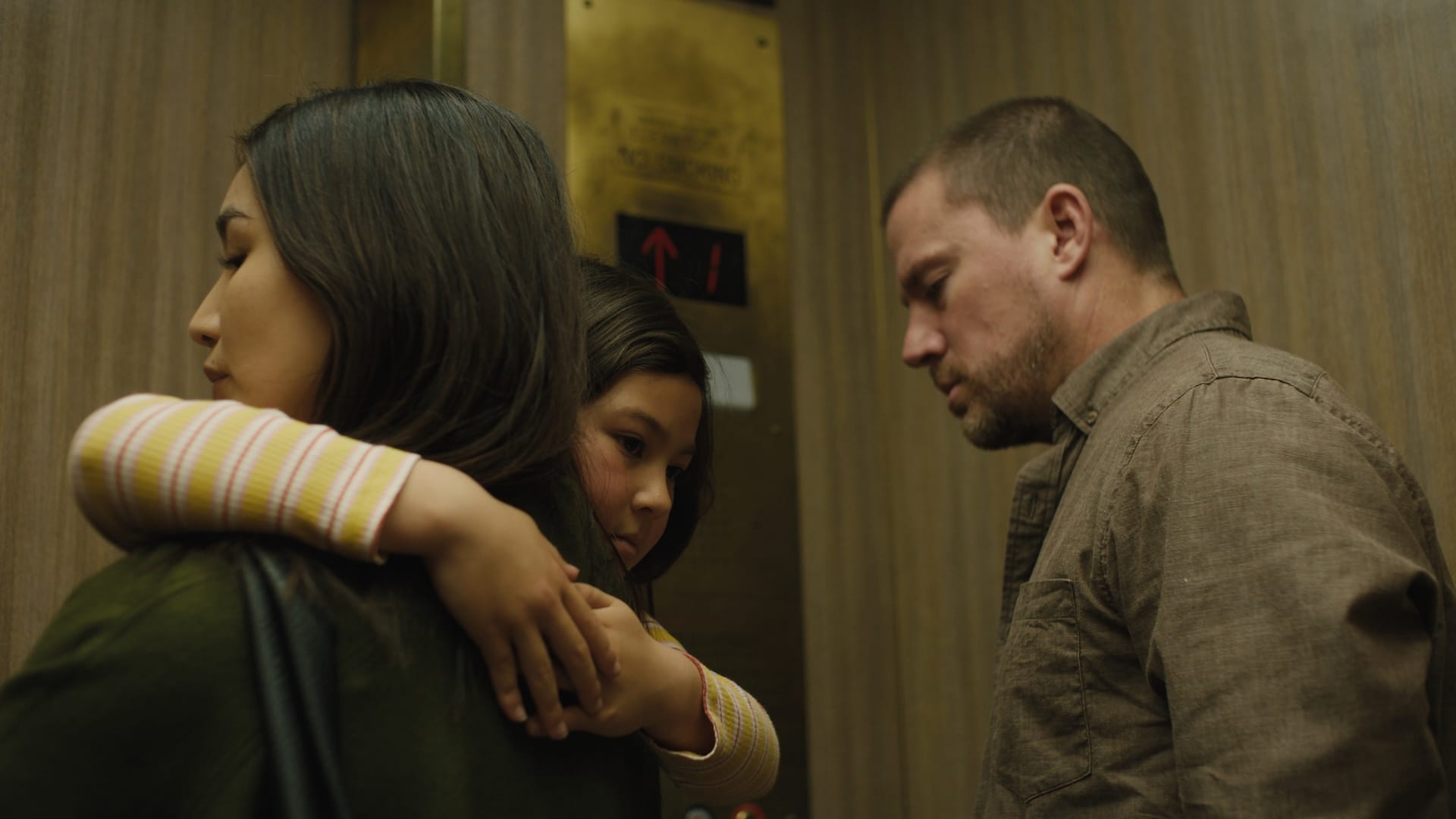
I kicked off my viewing with one of the films I felt would be the toughest: a two-hour drama about a young girl who stumbles upon a brutal sexual assault. Mason Reeves, in her debut performance, plays the eight-year-old title character who witnesses a rape in Golden Gate Park while she’s out with her dad, Damien (Channing Tatum). Unable to process what she saw, Josephine begins to lash out, and Damien and her mom Claire (Gemma Chan) don’t know how to help their daughter. How do you speak to a child about the unspeakable?
Araújo tries to ride the line between gritty realism and dark fantasy. There are times when the camera puts us directly into Josephine’s perspective—low to the ground, handheld, and feeling small. But there are other times when it leans more fantastical, like Claire’s ballet performance or, most unnervingly, Josephine imagining that the rapist is present at all times, a ghost haunting her every step. In this way, Josephine almost plays like a real-life Insidious where parents feel helpless to protect their child from an unseen force, except here, the dad can’t go into his mind palace to fight a malevolent spirit.
It’s a difficult balancing act, but Araújo is mostly successful thanks to the strength of the lead performances and in how she leans into the nightmare of trying to protect your child from a fundamentally unfair and cruel world. However, to keep the plot going, Araújo spends some time on the legal repercussions dealing with the rapist, and this feels like the story going too far afield. The heart of this movie is about a child and her parents and once you start exploring "Well, what happened to the rapist in real life?" you're losing sight of the film's emotional core. Josephine does manage to regain its footing, but everything outside the family's dynamic pales in comparison to the dramatic weight of this bond.
The Musical (dir. Giselle Bonilla)
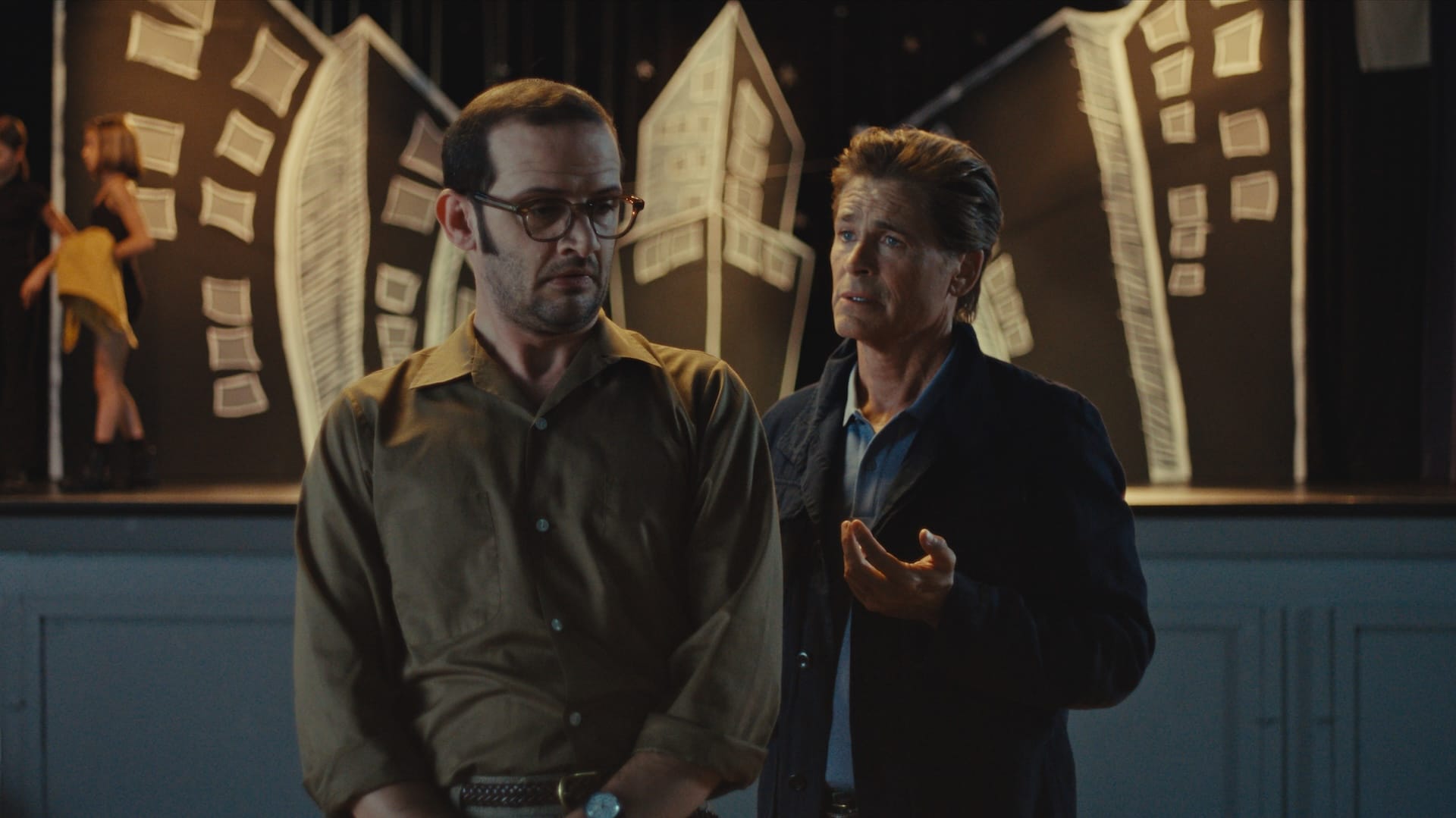
A great set-up widely misses the mark in this dark comedy. Will Brill stars as Doug, an awkward, failed playwright now working as a middle-school English teacher. He was recently dumped by the art teacher Abigail (Gillian Jacobs), he’s under the illusion that since she let him down easy with “we need to take a break,” there’s still hope he’ll get her back. That hope is quickly shattered when he learns she’s dating the smarmy Principal Brady (Rob Lowe), who wants to earn the school a Blue-Ribbon excellence award. Doug decides to take revenge by secretly producing a middle school musical about 9/11.
Watching The Musical, I couldn’t help but keep flashing back to last year’s Friendship or the sketches of I Think You Should Leave. Tim Robinson also occupies that aggressive, weird comedy that Brill seems to be going for with his performance, but there’s something strangely endearing about Robinson’s work, whereas Brill is immediately off-putting. The film tries to play Doug’s resentments as comically offbeat, but the actor never seems to find the proper wavelength for the character, so all of his actions play as grating and entitled. The fact that he chooses 9/11 as his “edgy” musical feels random, and he could have easily made it about any offensive topic given how little specificity there is to the character or his conflicts.
What’s even stranger is that the movie (and certainly Doug) seems indifferent to how musicals can be edgy, and often have been throughout the 20th century. 9/11 is arguably inappropriate for middle schoolers, but the musical they’re using at their front, West Side Story, is about racism in America. Musicals don’t inherently shy away from difficult material and thinking that 9/11 as subject matter automatically makes The Musical kind of edgy only highlights how the movie has nothing to offer beyond this one milquetoast joke. I was far more offended that the film wastes a comic luminary like Jacobs in a nothing love-interest role.
Run Amok (dir. NB Mager)
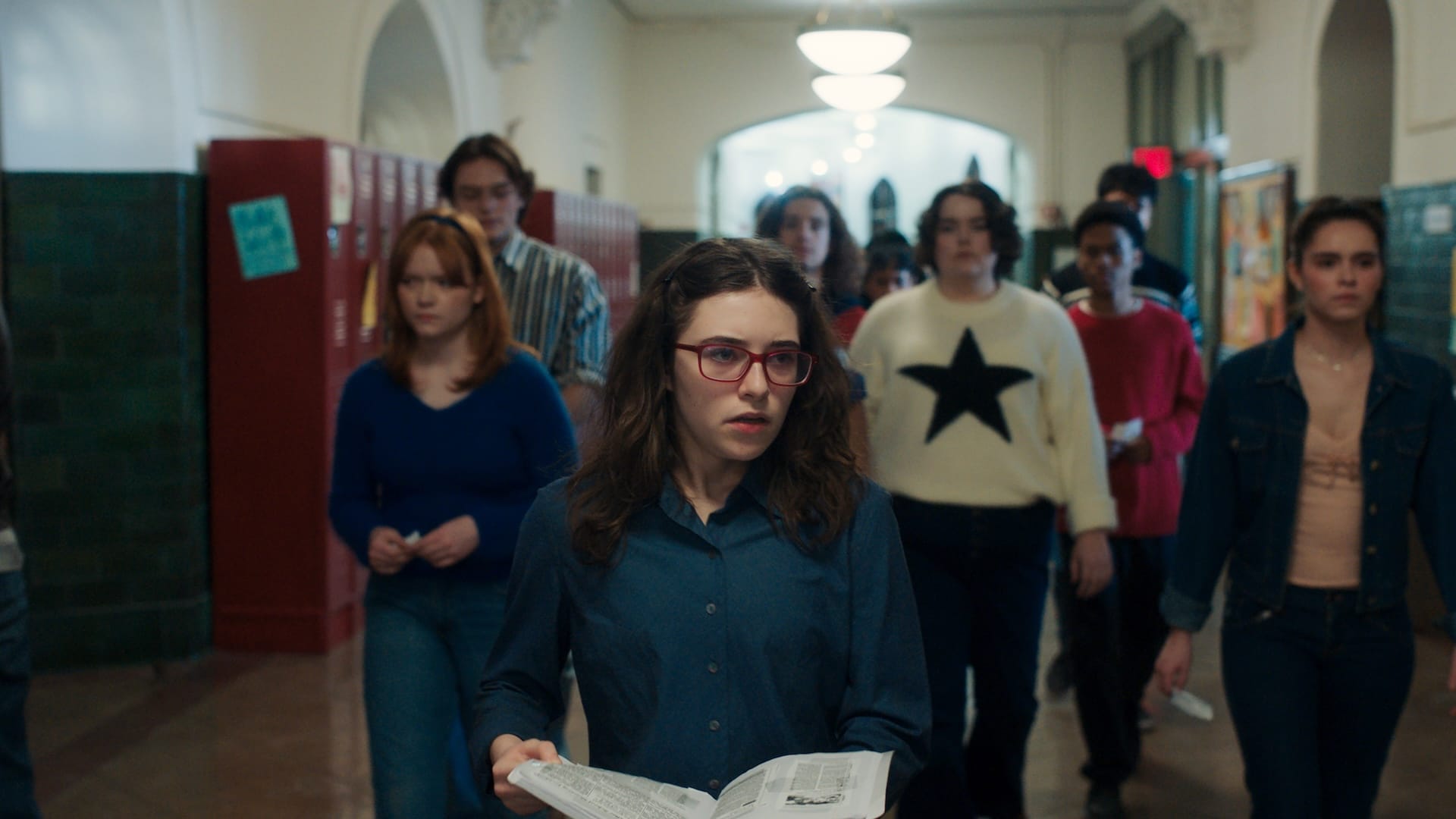
Another “this school musical production seems inappropriate” feature is Run Amok, but at least there are some real ideas undergirding NB Mager’s movie. The film stars Alyssa Marvin as Meg, a high-schooler now attending the school where her mom, a teacher, was killed in a school shooting ten years prior. The school seeks to do a “commemoration,” and while Meg implies that it will be a group performance of “Amazing Grace,” she and her classmates instead decide to stage a musical reenactment of the shooting to seek, as Meg puts it, “catharsis.”
Where Run Amok thrives is understanding that school shootings are an ongoing part of American life rather than an aberration. Kids have to do drills, there are at least 29 states where teachers are allowed to carry weapons, and our politicians have decided it’s not worth incurring the wrath of the gun lobby and single-issue voters to put any kind of common sense controls in place. But the trauma is still there, and Run Amok explores how adults are more interested in combating violence with violence rather than dealing with emotional fallout. All of the teachers in Run Amok are armed with bright orange pistols, and they’re quick to draw them out at the sign of any danger. Meanwhile, teenagers remain teenagers—they’re not always mature, they’re not always thoughtful, but they’re trying to make sense of the world around them. However, you can’t make sense of something inherently senseless, especially when the adults around you want to package it into tidy concepts of good guys and bad guys.
Unfortunately, the movie starts to strain as it adds in plotlines regarding Meg's loneliness and looking for people to fill the gap left by her mother. It's not that these plot lines are unnecessary, but it's harder to reach them organically, so their inclusion can feel somewhat forced. That said, the messiness of Run Amok tends to work in the movie’s favor as the film is about rejecting simple narratives in favor of embracing emotional chaos. At the very least, Mager is trying to wrestle with the complex reality of gun violence and its long-term effects, which is more than I can say about those we elect to power.
Seized (dir. Sharon Liese)
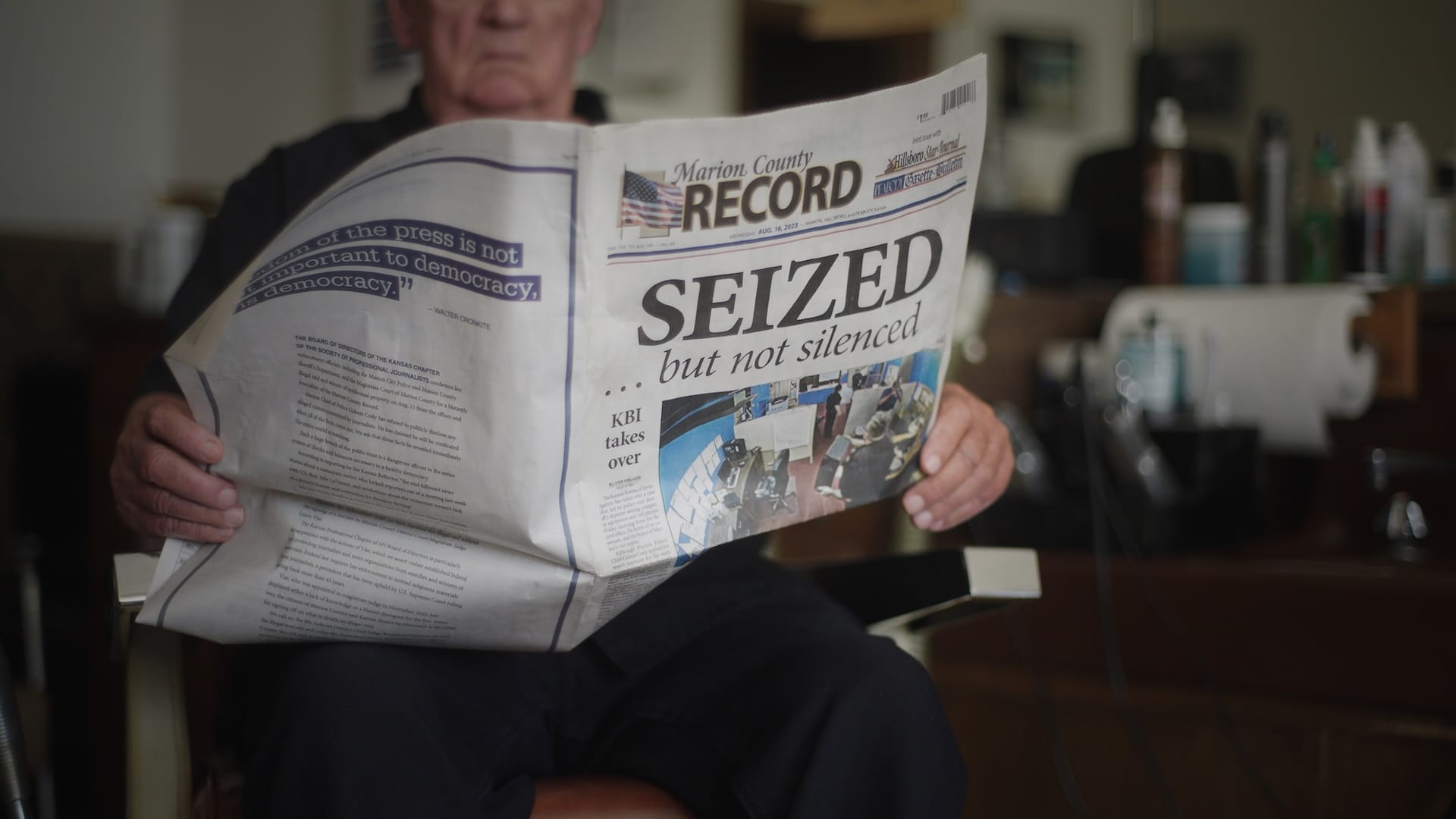
On August 11, 2023, police seized the Marion County Record in Marion, Kansas. They also raided the home belonging to Editor-in-Chief Eric Meyer and his co-owner/98-year-old mother, Joan Meyer (who died the following day in part because of the stress of the raid). The story instantly gained nationwide traction as a parable about government overreach and authoritarian forces impacting the power of the press by coming down on a small-town paper that serves a community of roughly 2,000 people.
Sharon Liese’s documentary picks up in the aftermath, trying to look beyond the immediate headlines to figure out what happened, why it happened, and what (if anything) it has to say about the state of journalism. It’s kind of a bizarre movie because so much has changed in the less than three years since the raid. A small-town paper stood its ground against authoritarian forces while The Washington Post happily sold out to the Trump Administration. CBS News is now run by a right-wing hack, and ABC News settled a lawsuit against Trump that they likely could have won. What was meant as a story about the press’s importance and independence now can’t help but look hopelessly quaint.
Where the film thrives is not so much in the factors of the case (in short: never underestimate the pettiness of dumb, powerful people), but in the friction between the paper and the community it serves. Meyer is not exactly the most beloved person in Marion, and while journalistic institutions rushed to celebrate his actions, the townsfolk are far more ambivalent because they don’t like him very much. It’s an interesting perspective on how the press serves a community that doesn’t respect the press. But through Seized, it only illustrates how being a journalist is a hard, lonely existence, which I think we already knew.
The Incomer (dir. Louis Paxton)

I was laughing pretty hard at this one from the jump. Louis Paxton’s weird little Scottish comedy concerns siblings Isla (Gayle Rankin) and Sandy (Grant O’Rourke), who have grown up by themselves on a remote isle believing that they’re meant to fight off “incomers.” When one such incomer arrives, Daniel (Domhnall Gleeson), a timid government bureaucrat, to facilitate their removal, they kidnap him and ponder what to do with someone they thought was their mortal enemy. However, as he tells them about the mainland and he learns about their whimsical way of life, all three discover they may have more in common than their distinct backgrounds suggest.
The film launches from almost a folk-horror standpoint. Isla and Sandy commune with the gulls by screeching at them, and they dress up in spooky bird costumes. They’re “uncivilized,” but in the way of children who never had to grow up. Isla also imagines conversations with a sea beast (a very game John Hannah wearing elaborate makeup to appear as a human/seal hybrid of some sort) who keeps trying to lure her into the water. And yet for all this swirling darkness, The Incomer is frequently funny and endearing, leaning into the camaraderie of these lonely people set against a unique backdrop.
I don’t know if the movie’s sense of humor will work for everyone, but I was on board throughout thanks to the film’s blend of strangeness and innocence. While we’ve seen the arrested development thing done numerous times in comedy, it’s never been done quite like this, and the three leads have terrific comic chemistry. Right now, The Incomer is easily the best narrative feature I’ve seen at Sundance 2026 so far.