Cannes 2026 Dispatch #2: No, An AI-Generated Feature Film Did Not Premiere At Cannes (And Reviews Of Things That Did)

Stephen David Miller gives his second update from the Cannes film festival, including a brief detour into the new AI-generated movie Hell Grind and reviews of Her Private Hell, Hope, Minotaur, and Paper Tiger.
Hello again, Decoding Everything! I’m back for another installment of my Cannes 2026 coverage, with reviews of some of the most pleasant surprises (and bewildering disappointments) of the festival so far.
I mentioned in the last dispatch that there would be one or two more of these coming, “schedule permitting.” So one might naturally assume that the presence of this extra write-up means things have started to calm down. One would, of course, be wrong!
In truth, this truncated festival experience of mine doesn’t “permit” much of anything; if I want to carve out time to write, I need to steal it. While waiting in line, say, or seated for a screening, or getting home 4 or 5 hours before the next alarm. Even now, as I type this, I’m staring at my watch as it counts down the minutes until I need to throw on my tux and go.
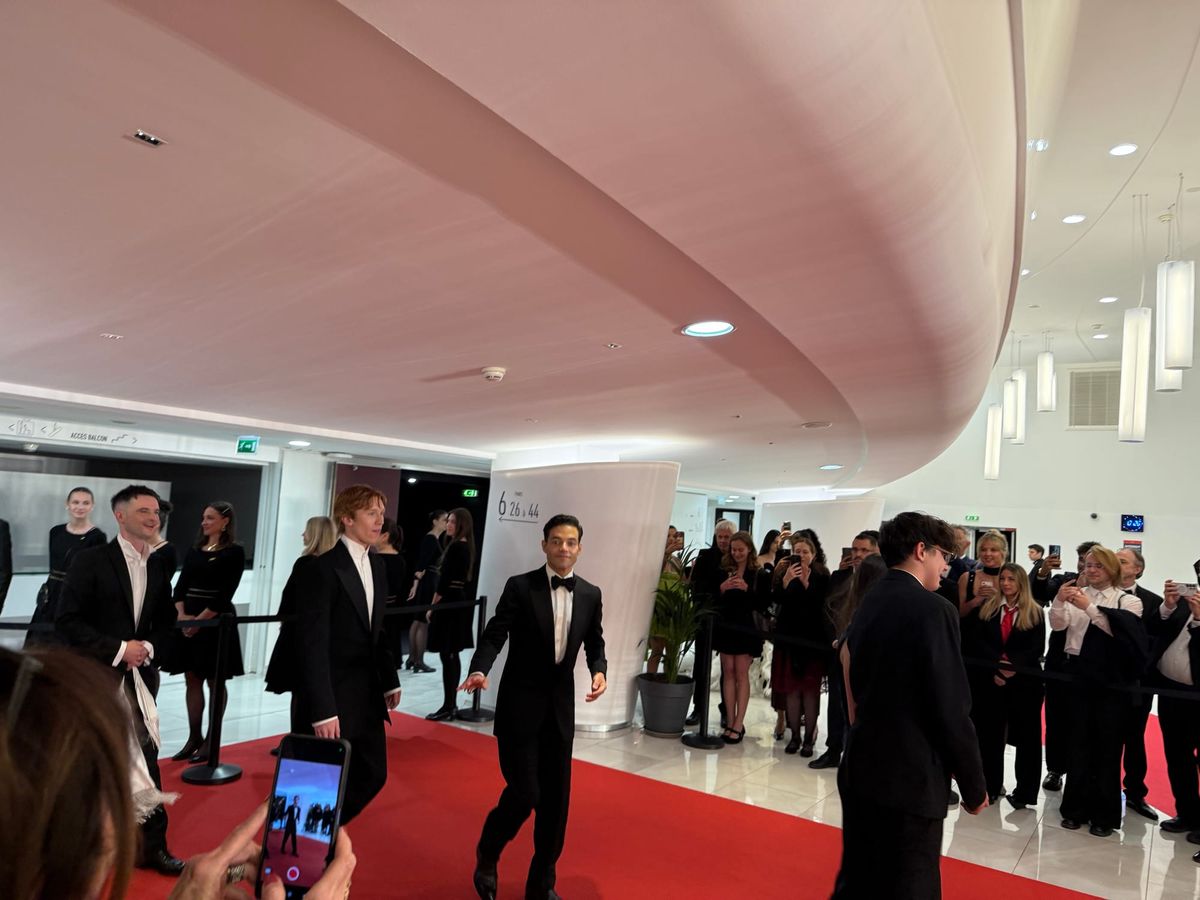
But if you’ve read any of these dispatches before, you’ve likely already surmised that I get joy out of the frenzy, and doubly so out of sharing it here with you! It's been a whirlwind few days, but I've found myself back on the red carpet, catching premieres and spotting celebrities as I race out the door. As Exhibit A, check out the above cover photo I snapped of Rami Malek.
The film Malek was promoting (Ira Sachs' The Man I Love) wound up being solid, but not quite memorable enough to devote a full review. Instead, I'll be unpacking four films which I suspect will get significantly more attention when they eventually come out in the States.
But first, a brief detour to talk about everyone’s favorite subject: Artificial Intelligence.
A Note About Hell Grind
I live in San Francisco and work in the tech scene. Save for photos of particularly famous celebrities on the red carpet, it’s rare that any news from Cannes breaks containment and enters that circle. But over the past couple days, multiple people have reached out to ask me some variation on the same question: Had I seen Hell Grind?
You see, recently word got around about the crossing of a massive new technical milestone. Numerous outlets, including The Wall Street Journal, reported that Hell Grind, a fully AI-generated feature film, was having its world premiere at the Cannes Film Festival. Social media chatter naturally inferred that this was a major, legitimizing moment—the gatekeepers of cinema, famously resistant to change, were now embracing this new medium! The founder of Higgsfield AI, the company whose technology was used to create it, made a widely circulated LinkedIn post to celebrate the achievement. “For decades, Cannes has been the room where new cinema gets legitimized. The first films with synchronized sound, with color, with CGI, with digital cinematography, all passed through here on their way into the mainstream. AI cinema crossing into the festival as a feature is the same kind of moment. Standing in that room and seeing it happen is something else entirely.”
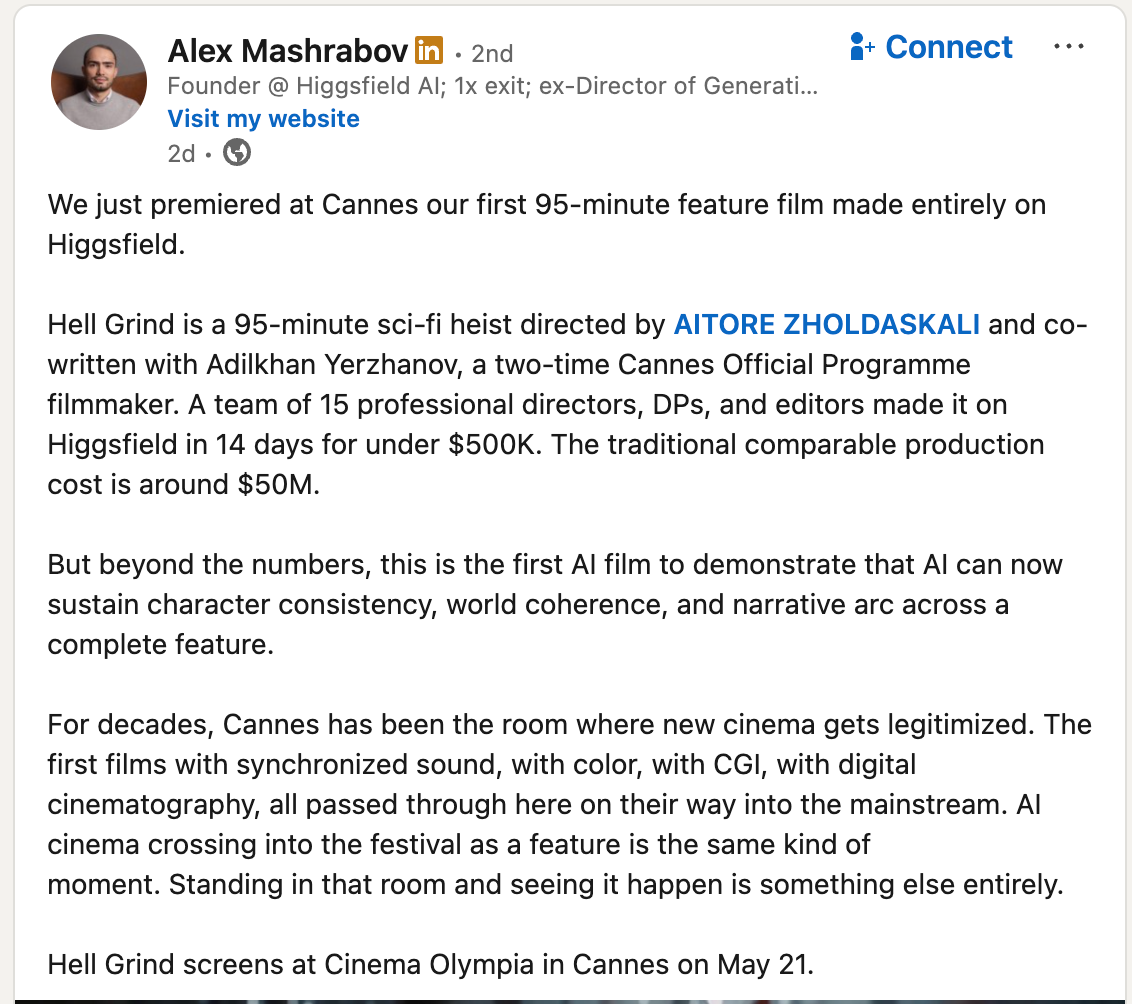
Given the breathless way this news has reverberated through Silicon Valley, it feels important for me to set the record straight: This is, at best, wildly misleading language. You see, I checked every single track of the festival, and none of them even mentions Hell Grind’s existence. This not only isn’t playing in competition at Cannes; it doesn’t seem to be related to the festival in any way. What does appear to be true is that some entity (presumably Higgsfield or the producers) arranged for one of the local theaters, The Olympia, to show a single screening of their AI film. One imagines this was a means of generating publicity, and attracting prospective partners or investors who would also be attending the fest—and judging by the messages I’ve received, it was wildly successful. But make no mistake, this AI-generated movie “premiered at Cannes” only to the degree that reserving a room at a karaoke bar in Indio, California would mean someone had “performed at Coachella.”
The truth is that Generative AI discourse is extremely hot at Cannes this year, specifically in the industry and tech-adjacent side conferences. I imagine that at some point in the future, a movie that leverages this technology will premiere at the fest—likely out of competition, and helmed by a director (say, Darren Aronofsky) whose clout can drag it across the finish line. When that day comes, it will indeed be controversial. But Hell Grind isn’t controversial or signaling a sea change of anything. It’s just a bit of clever marketing and some overly credulous people on LinkedIn.
Festival Round-Up: Highs and Disappointments
Now, let’s return to a few widely-discussed movies that actually did premiere here at Cannes. Today, I’m going to talk about four of them. I’ll give you the bad news first.
Her Private Hell (Nicolas Winding Refn)
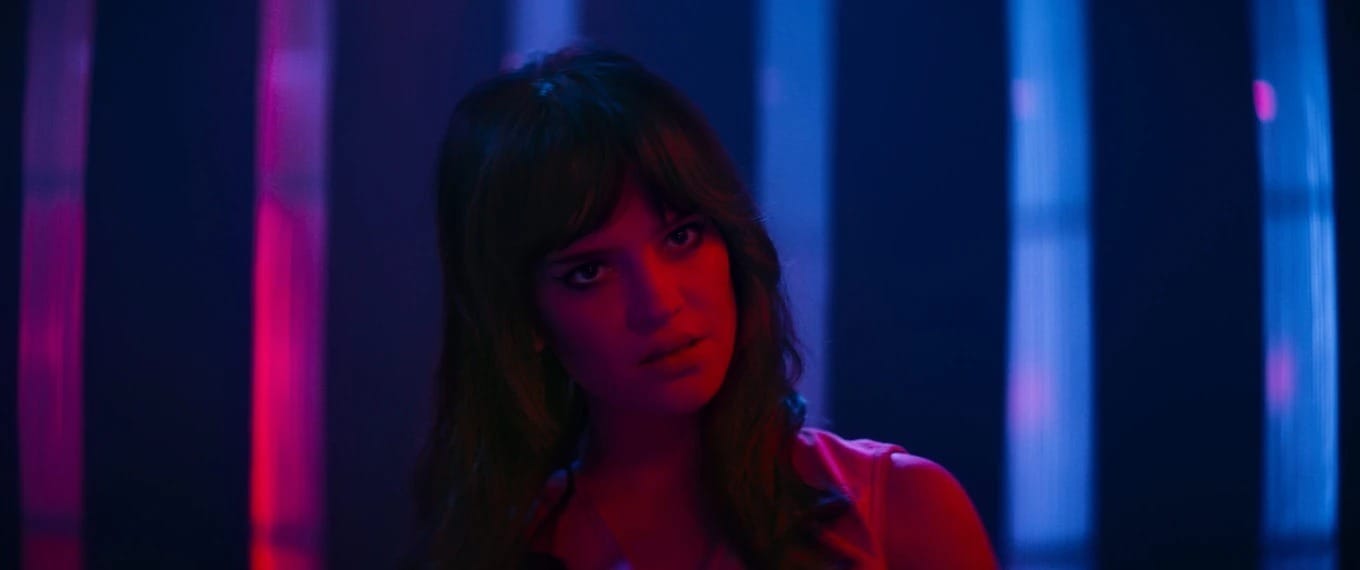
No one who has followed Nicolas Winding Refn’s career since Drive could have come into this festival expecting him to give us a crowdpleaser. Love him or loathe him, everyone can acknowledge that the Danish filmmaker has settled into a brand: Style clutching the steering wheel in a scorpion jacket and brown leather gloves, Substance planted wordlessly in the back seat. When I last saw Refn in 2019, at a “Rendez-vous avec…” (“Conversation with…”) event he was giving in support of his new Amazon Prime series, the focus was mostly on lighting and color palettes. I don’t recall a single reference to plot or characters. Which was, then, and continues to be now, completely fine with me. I love a big swing, and am happy to coast on vibes alone if that’s what the director intended. A full decade after the release of The Neon Demon, Refn finally returning to the scene with a late night, out-of-competition premiere featuring the word “hell” in the title sounded like a devilishly good time to me. If nothing else, at least it would be provocative!
Or so I’d hoped. Continuing NWR’s trend of prioritizing visual mood-building over story, the plot of Her Private Hell is almost entirely irrelevant to the project. Still, it feels important to describe it so you can understand the sandbox we’re playing in. Sophie Thatcher stars as Elle, a mega celebrity with a severe Electra complex who lives in a skyscraper with a coterie of young, bedazzled ingénues. When she, her peer-turned-stepmother (Havana Rose Liu), and a wide-eyed new recruit (Kristine Froseth) decide to make a new movie, things go off the rails. We depart from the realm of narrative and enter a series of bizarre, neon-lit visions, featuring a vengeful father (Charles Melton), a string of Yakuza baddies, and a mythical figure called The Leather Man—a kinky creature reminiscent of Dennis Hopper from Blue Velvet, who lurks in the shadows, waiting to tear unsuspecting female victims apart at the seams. “This movie is going to be hell,” Elle says early in the runtime, as if staring directly at the audience.
She’s right, albeit not in the way I’d have hoped. Her Private Hell is indeed a trial to endure, but not because it’s particularly intense or provocative. It’s hell because it’s a lugubrious, self-indulgent slog. Going nowhere, saying nothing, and taking forever to do it. Refn clearly wanted to emulate the look and feel of David Lynch here, and being a skilled visual stylist, he succeeded. But rather than mine the subconscious for genuine psychosexual inspiration a la Lynch, he seems content to loaf around with an ain’t-I-a-stinker grin. Bodies are mutilated while characters shout “Daddy!”, eyeballs are gouged out, and young women are chained to their captors like Leia to Jabba the Hutt. At one point, a character shoves semen-soaked underwear into another character’s mouth while shouting “Do you taste that soap?” It’s uninspired, lazy stuff, unpleasant in the manner of a troublemaking middle schooler who shouts curse words while his peers are trying to study. Craving attention for attention’s sake, and looking awfully needy in the process. I wish Refn had set his sights and considerable talents higher.
Hope (Na Hong-Jin)
One reason I prefer this multi-review dispatch format is that it gives me wiggle room to choose which films to highlight. At any given festival, I’m likely to see a handful of decent-at-best titles from creative teams you’ve never heard of. But I don’t see value in using a megaphone to tear them down. As David likes to remind us, it’s ultimately impressive that anyone makes a movie. In that spirit, I prefer to praise new-to-me artists rather than denigrate their work, and reserve my negative reviews only for targets that I deem big enough to take the hit: major releases with U.S. distribution, say, or movies helmed by already-beloved auteurs.
In this case, though, I’m making an exception. Because judging by the reviews I’ve seen since its Cannes premiere, I’m virtually certain that the new creature feature Hope will be coming to a theater near you at some point in the future. Riding the wave of popularity Korean action movies have been having in the States post- Squid Game, as well as the rise of festival-approved gonzo fare like The Substance, this will be billed as must-see entertainment. Nay, the future of action filmmaking! You will be tempted to buy into the hype, and part with your hard-earned dollars and nearly three hours of consciousness in kind. As happy as I am for anyone who gets a breakout hit at a festival, I consider it my solemn duty to warn you that it’s a trap.
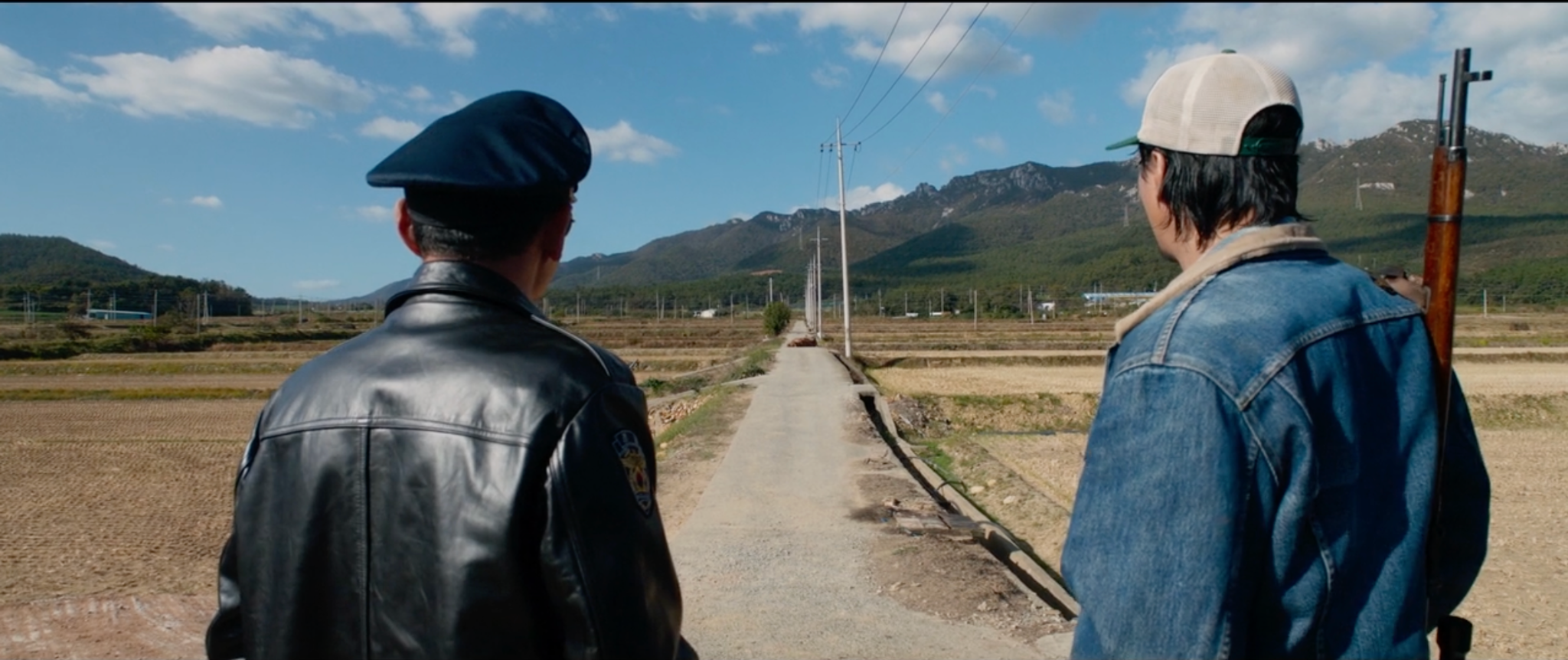
Strange things are afoot in Hope Harbor, South Korea, a remote town somewhere near the DMZ. The police chief Beom-seok (Hwang Jung-min) has been called in to investigate the scene: a dead cow found with massive claw marks on its hide, and soon after, a human corpse strung high up in the trees. It’s a mystery that lasts for all of ten minutes, before monstrous noises in the distance make the situation clear. They are under attack by a monster of some sort, and from this point on, you know all that the film wants you to know.
Virtually the entirety of Hope’s 160 minute runtime is spent watching Beom-seok, alongside his partner (Jung Ho-yeon, of Squid Game fame) and a handful of civilians (most notably a swaggering hunter played by Zo In-sung), either fleeing from or chasing the mystery creature. They run down alleyways; they run down other, near-identical alleyways; they run back in the other direction, fire their guns, and repeat. It’s all very high-octane, and admirably staged by director Na Hong-Jin and DP Kyung-Pyo Hong. But it’s also mind-numbingly redundant, featuring some variation of the exact same set piece dozens of times in succession, wherein a character either shoots at or narrowly avoids being clobbered by an enemy which, for long stretches of the first hour, remains off screen. I kept bracing myself for the twist that would explain why this was competing for the Palme d’Or. Maybe the repetition was intentional, and I would soon be relieved by some metaphor about meaningless violence. Maybe the true monster was the fear in the heart of mankind! But alas. The monster is very much real, rendered with CGI that feels pulled from an early 2000s video game, and explained via world-building that gets successively more ludicrous as the story unfolds. It goes on and on like an extended Transformers set piece, and its evident self-awareness does little to make it better.
I’m not trying to say that I hated this movie. If I were to stumble across this on Netflix and throw it on while doing something else on my phone, I would look up every few minutes and be reasonably entertained. To the film’s credit, it is clearly not begging for us to take it seriously either, featuring over-the-top violence and at least one extended poop joke that had me cackling in my seat. But critics and Letterboxd users alike are heralding this as some glorious spectacle, and that makes me feel like I’m losing my grip on reality. While this is nowhere near the worst film I’ve seen that premiered in the Palais (that honor belongs to Mektoub, My Love: Intermezzo), it is arguably the one whose presence in the Competition I find most bewildering. Even Shrek had a higher hit rate of zingers—and arguably better CGI.
Paper Tiger (James Gray)
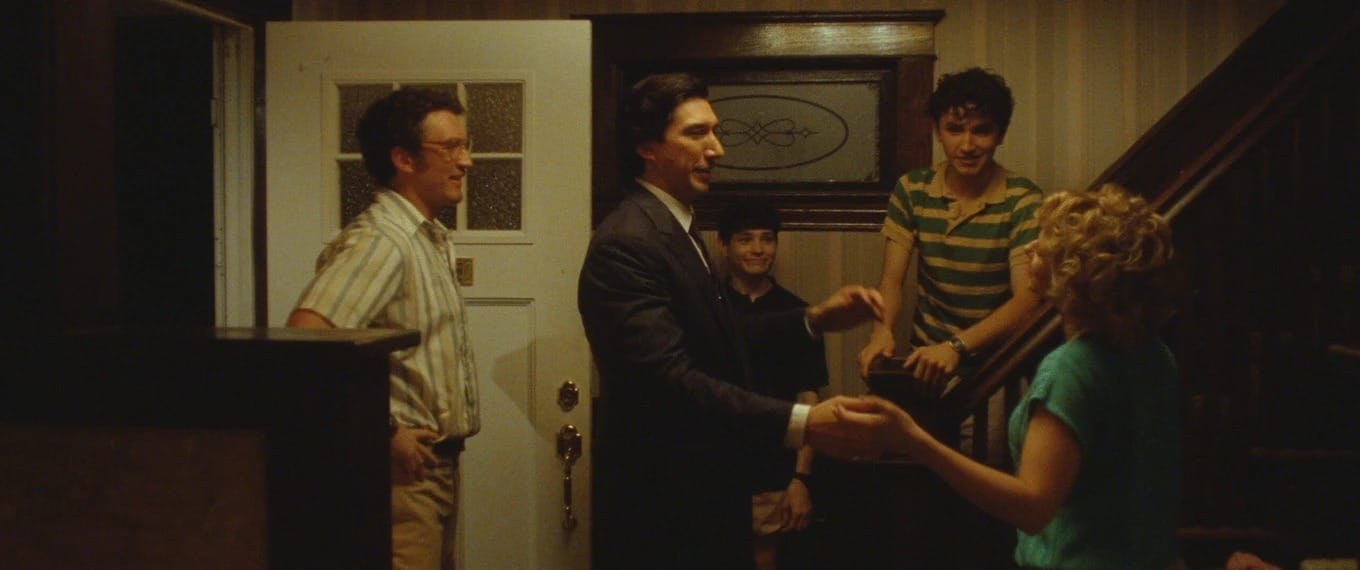
If you’re in the market for adrenaline, let me kindly suggest Paper Tiger instead. James Gray’s new drama is a period piece set in 1986. Though the character names and details have changed, it picks up almost exactly where Armageddon Time left off: in a two-bedroom home somewhere in a residential stretch of Queens, where a middle-class Jewish family whose biography loosely resembles Gray’s own is carving out their place in the American Dream. The patriarch Irwin Pearl (Miles Teller) is an engineer by trade, and though he still earns enough to support his family, times are tight. His wife Hester (Scarlett Johansson) wants them to consider moving up to the suburbs, but to Irwin, leaving the boroughs would feel like a defeat. There’s a siren song to New York City, a sense of untapped opportunities hiding just around the corner; the promise of real and enduring success if you only know where to look. Irwin’s brother Gary (Adam Driver), a former NYPD cop turned successful businessman, is a perpetual reminder of this temptation—the well-tailored suits, the shiny Mercedes, the endless supply of Peter Luger steaks. So when Gary shows up one night and offers him a gig consulting for construction projects in the still-nascent Gowanus neighborhood of Brooklyn, it doesn’t take much for Irwin to be persuaded. He tentatively accepts the job, and it seems too good to be true for all of 24 hours. Then the Russian mob gets involved, throwing the family’s lives into chaos.
What I love most about Paper Tiger is the masterful way it builds subterranean tension. It methodically tightens the screws, eliciting Uncut Gems levels of anxiety in the audience but rarely letting you see it break a sweat. In that sense it mirrors Adam Driver’s incredible performance as Gary: calm and collected on the surface, but turbulent underneath. Gary personifies the American myth of boundless potential, the promise that if you project the right brand of confidence the world will one day make it so. Dress for the job you want. You’ve got to spend money to make money. Just keep those plates spinning and they’ll eventually propel you out of your social strata, defying gravity like cryptocurrencies or Tesla stock. Gary works hard to maintain his standing in a world of crooked cops and shady wheel-and-dealers, with a ferocity that looks like strength but is ultimately paper thin. Stuck inside a nesting doll of corrupt systems, his freedom is far more limited than he realizes. Watching him navigate the maze is both thrilling and depressing.
Minotaur (Andrey Zvyagintsev)
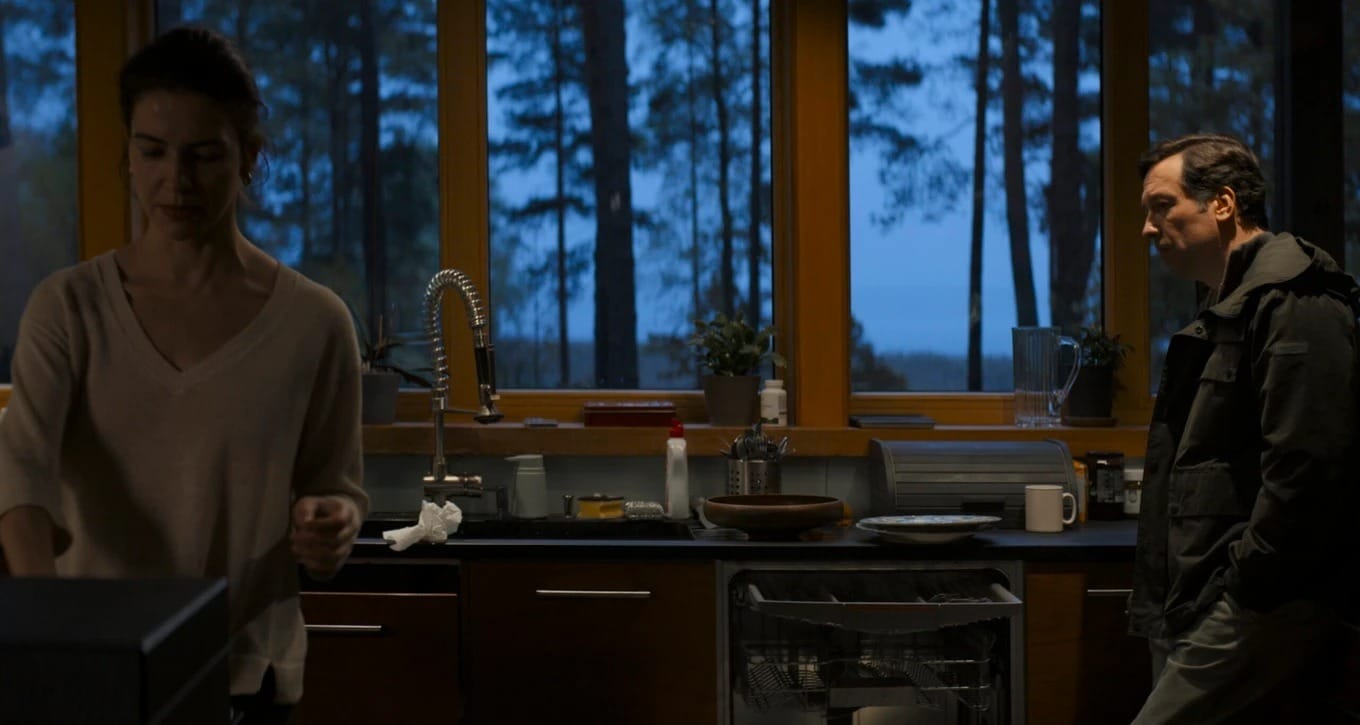
Power and corruption are common themes at Cannes this year, for reasons that I suspect are self-evident. We’re led to conceive of power as a hierarchy of opaque machines, wherein those who get access to the levers on one rung can only keep their status by mindlessly following whatever directive comes from above them. On and on to the top. As tempting as it is to imagine some high-level strategy for whatever the system ultimately spits out, the truth is likely more chaotic: the product of countless base, stochastic impulses. Pettiness. Jealousy. Boredom. What binds this joyless, broken Rube Goldberg device together?
Andrey Zvyagintsev’s Minotaur is extremely interested in this question, though it might not seem so at first glance. Literally speaking, the exiled Russian director’s brilliant new drama is about marriage. Gleb (Dmitriy Mazurov) is the CEO of a lucrative logistic business in an unnamed province of Russia. He and his wife Galina (Iris Lebedeva) live a life of luxury, and to the outside world they likely seem very happy. They have a vibrant social life, a well-adjusted teenage son, and a gorgeous modern home tucked away in nature. But pressures are starting to mount. The Russian invasion of Ukraine has only recently begun, and the number of troops being sent to battle is growing by the day. Personally speaking, Gleb is largely unbothered, knowing he can call in a few favors if anyone in his circle is asked to serve. But still, the threat of compulsory enlistment is straining his workforce and hurting his business. His stress is only compounded at home, where Galina has been growing increasingly distant. Denied bids for affection, heavy bouts of silence, day trips into the city for less and less plausible reasons. He has no proof, but he suspects she might be having an affair. And even though he’s had many indiscretions himself, the thought nearly destroys him.
As with Fatherland, Minotaur uses a personal relationship to get at more ambient political forces. You see, a marriage, like an empire, requires effort to maintain. In the early days of passion and conquest, Gleb surely shared something real with Galina, but it’s no longer obvious what compels him to keep it going. He’s visibly joyless with her, as he seems to be with every other aspect of his life. And if his suspicions are true, she surely feels the same. But the status quo has become an end to itself, a drive to maintain his own private hell with nationalistic fervor. He’s wounded, and angry, and desperate to find a way to drag her back down there with him. There’s no end to lengths he’s willing to go to maintain that equilibrium, nor to the wars he’s willing to wage on others in his quest. It’s a bleak but exhilarating portrait.
And on that lighthearted note, it's time to race out the door to catch my first of three black tie galas on the red carpet. See you on the other side!
Stephen David Miller is a film enthusiast and cohost of The Spoiler Warning Podcast, who writes on Letterboxd and his personal blog.