Cannes 2026 Dispatch #1: Catching Up With New Films By Jane Schoenbrun, Ryusuke Hamaguchi, Paweł Pawlikowski, and Hirokazu Koreeda
Stephen David Miller shares his take on the buzziest films of Cannes 2026.

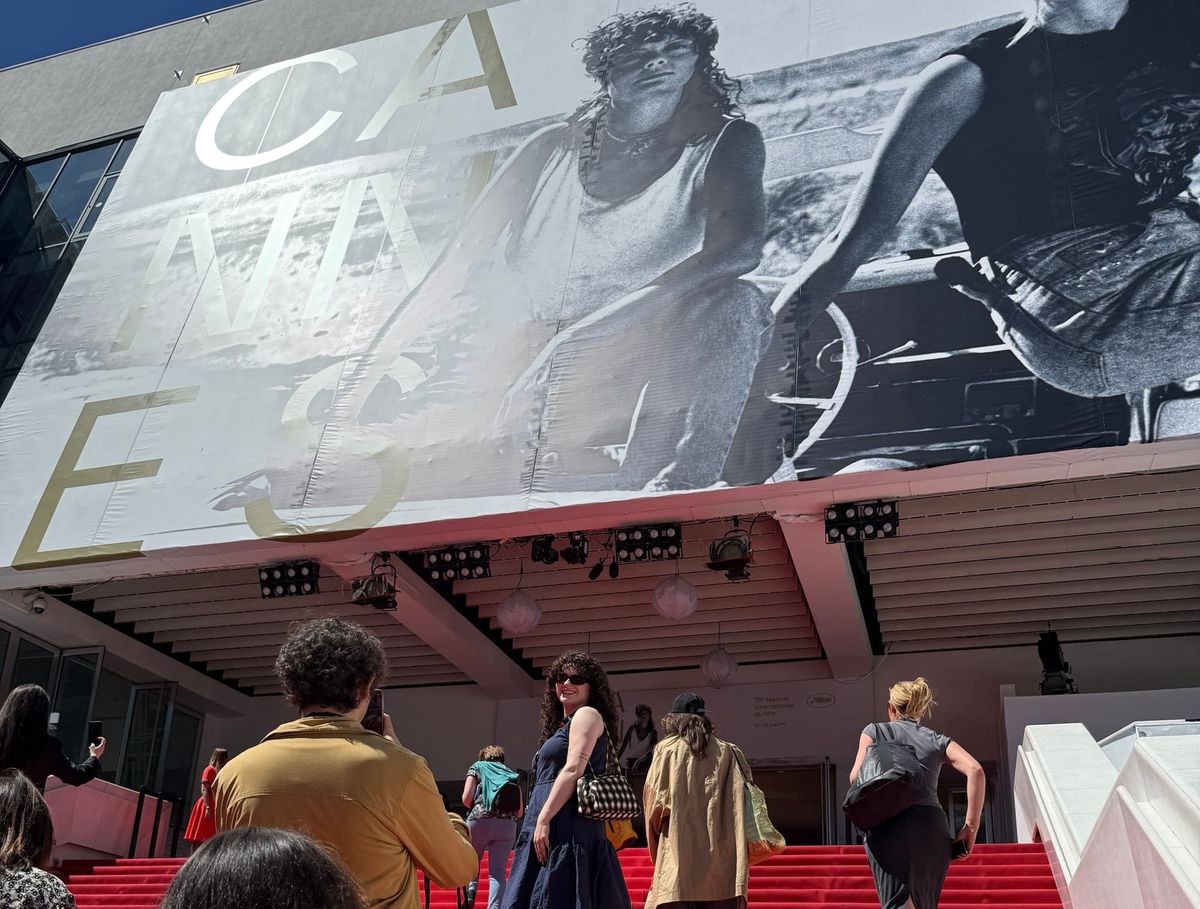
Stephen David Miller gives his first of 2-3 updates from the Cannes film festival, including mini-reviews of new films by Jane Schoenbrun, Hirokazu Koreeda, Ryusuke Hamaguchi, and Paweł Pawlikowski.
Bonjour again, Decoding Everything readers! It’s the middle of May in a year that isn’t yet locked down due to a virus, which means I’m back on the Croisette, ping-ponging between espresso and melatonin to attend the Cannes Film Festival. Over the course of two or three recaps (sleep and screening schedules permitting), I’ll be bringing you coverage of the highest profile premieres and undersung gems of the slate.
This marks my sixth time attending Cannes in person, and my third covering it for this site in particular. If you’re wondering how a decidedly non-famous person can get into the festival, or curious about the mechanics of its multi-track schedule, black tie premieres, or Sisyphean online booking system, feel free to check out my previous coverage.
In prior years, I’ve managed to be on the ground for the full 12-day duration of the fest. But this time around, my travel schedule has kept me limited to the second week. When the first batch of movies premiered, I was still at my day job back home in the States. So before donning my tuxedo and stumbling up the red carpet like an out-of-touch White Lotus guest, I needed to spend my first few days catching up with the titles I’d missed from week one.
Playing Catch-Up
The Official Selection at the Palais des Festivals runs on a very predictable schedule. Every night, two or three films will premiere on the red carpet, generating those star-studded photos you see back at home. The following morning, they’ll screen once or twice again before a new wave arrives to boot them out for good. If you’re more than one day late, that means the only way to catch them is to leave the festival grounds and head to one of a handful of smaller, participating venues. If you’re not fluent in French, your only option is the Cineum.
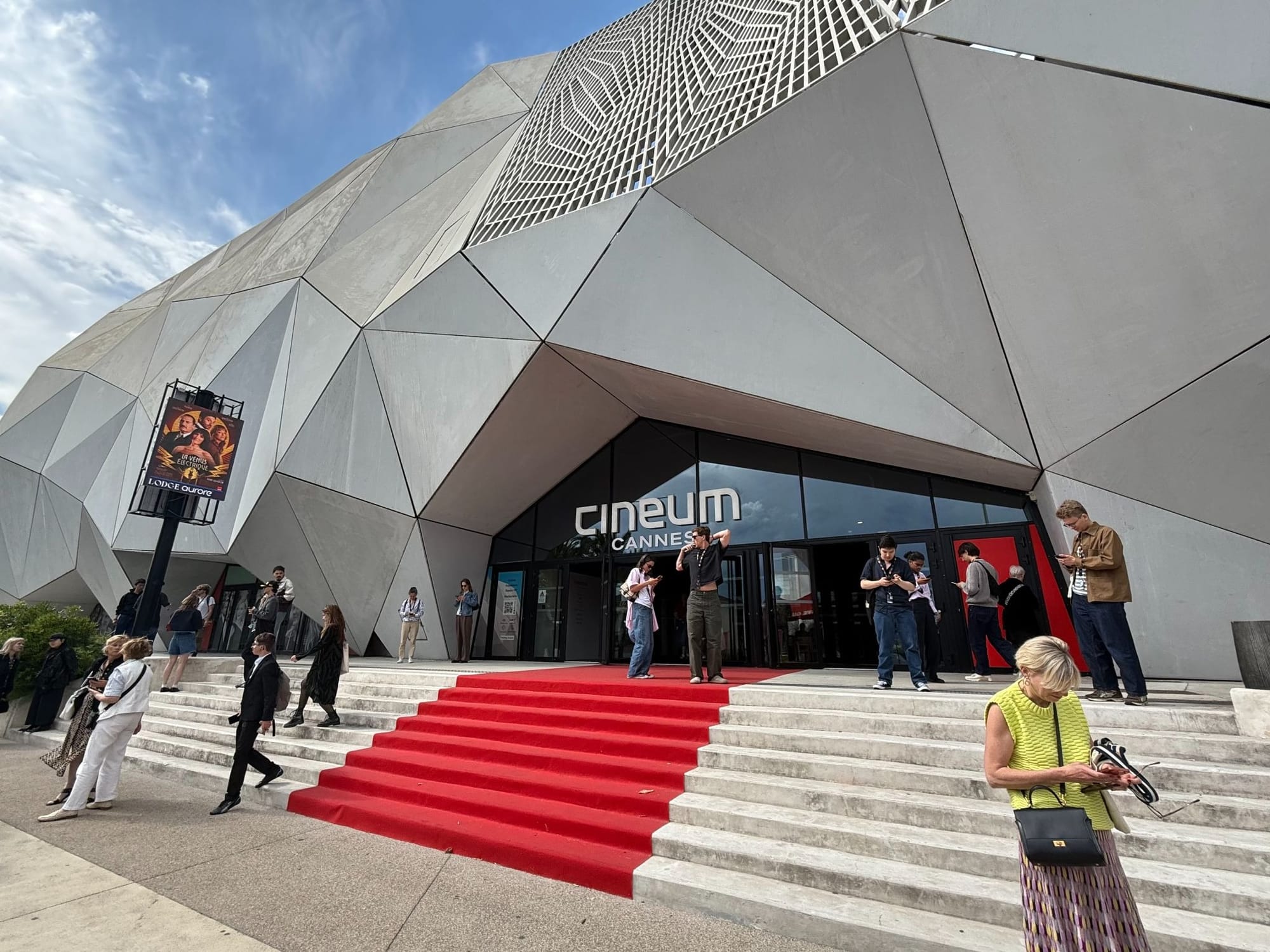
The Cineum is the most popular cineplex in town, and on paper, it promises a much more laid-back festival experience. It’s located only 6km away from the main festivities, with a shuttle that runs roughly every 8 minutes. Being an actual theater chain, it offers all the typical accoutrements the festival refuses us: concession stands, reclining seats, no dress code to speak of, and a distinct lack of Draconian security guards. To aid international filmgoers, they’ve retrofitted each theater to add a second mini-projector dedicated exclusively to English subtitles, which it beams separately onto a bar under the screen. And with its less glamorous locale weeding out the more Instagram-inclined attendees, it is significantly easier to book screenings here than at the Palais. You might never even need to hold a sign and beg!
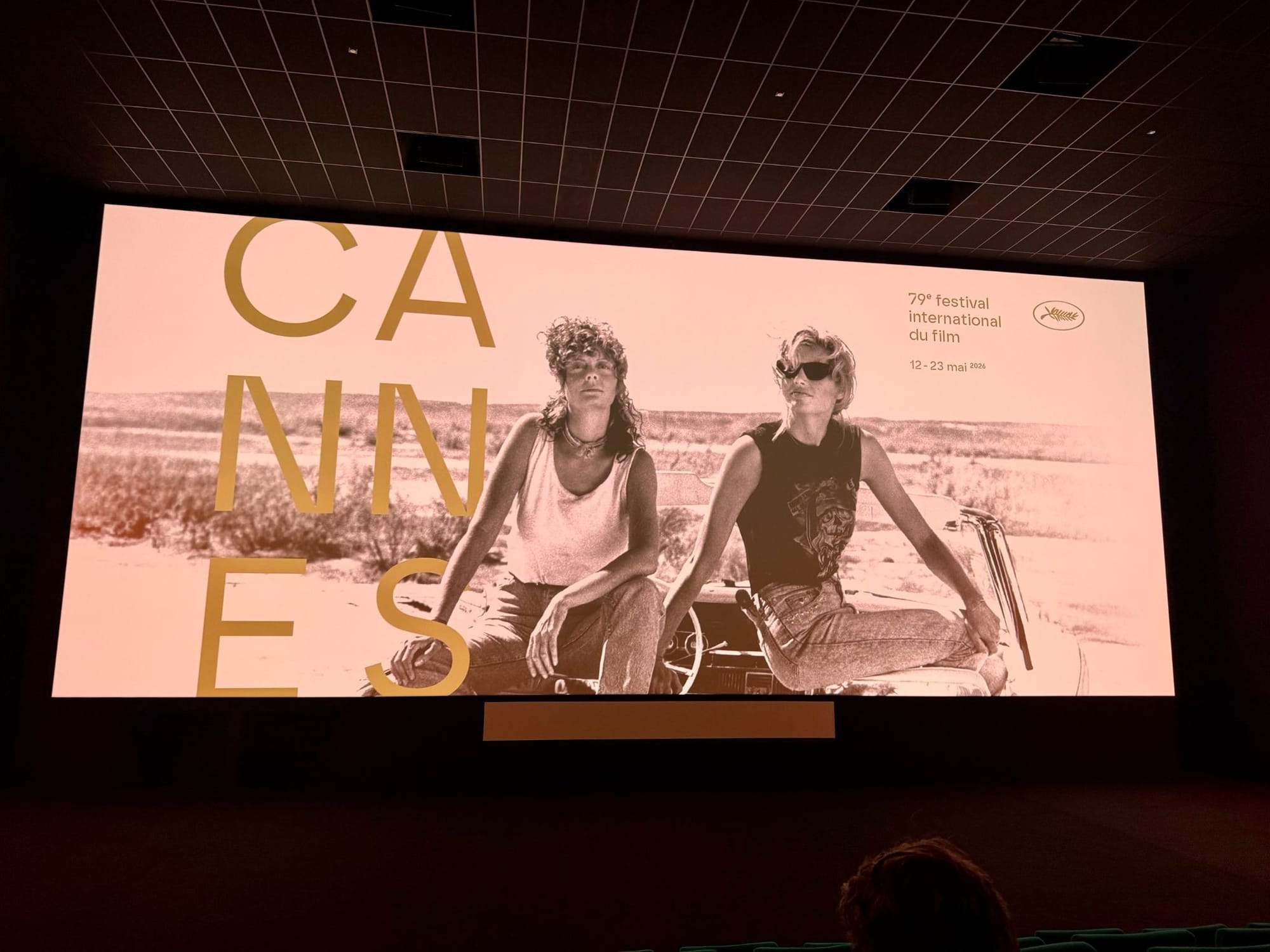
Though I was sorry to miss the energy of the galas, a part of me was relieved that my schedule had shaken out this way. As I boarded my flight out of San Francisco, I already had my first two days fully ironed out, complete with tickets in hand and travel buffers factored in. After a leisurely ride from the airport and a pre-arranged bag drop at my AirBnB, I would take a nostalgic walk on the red carpet for one of those morning-after screenings before switching to the Cineum, where I would spend the next few days. It sounded downright relaxing!
Man plans, Cannes laughs. What promised to be a chill affair has instead been, by a wide margin, my most intense introduction to the festival to date.
First, my flight from Frankfurt to Nice was delayed on the tarmac, leaving me with virtually no time to make it to my screening. After an eternity spent staring at a glacially-paced baggage carousel, I snatched my suitcase, hopped in a cab, and told the driver I would pay extra if he got me to the Palais on time. Miraculously it worked with a minute or two to spare, but I arrived on the red carpet sweaty and delirious.
After the movie concluded, I lined up for a Cineum-bound shuttle which, naturally, never came. I pivoted to a taxi, which Google Maps assured me would still barely make it despite traffic ballooning the journey into a 30+ minute drive. But about a mile from the venue, that trickle of cars was reduced to a standstill, and my driver informed me that a massive “strike” had “blockaded” the thoroughfare. With roughly 30 sleepless hours under my belt and only ten minutes left until my screening, I leapt out of the cab and sprinted the remainder in jeans and a button-down in the Mediterranean heat. Weaving through the blockade, seeing fire and hearing shouting, I couldn’t help but set aside my frustration and feel inspired by the bold political action I assumed was taking place. I snapped a picture and gave an encouraging wave before continuing on to my screening.
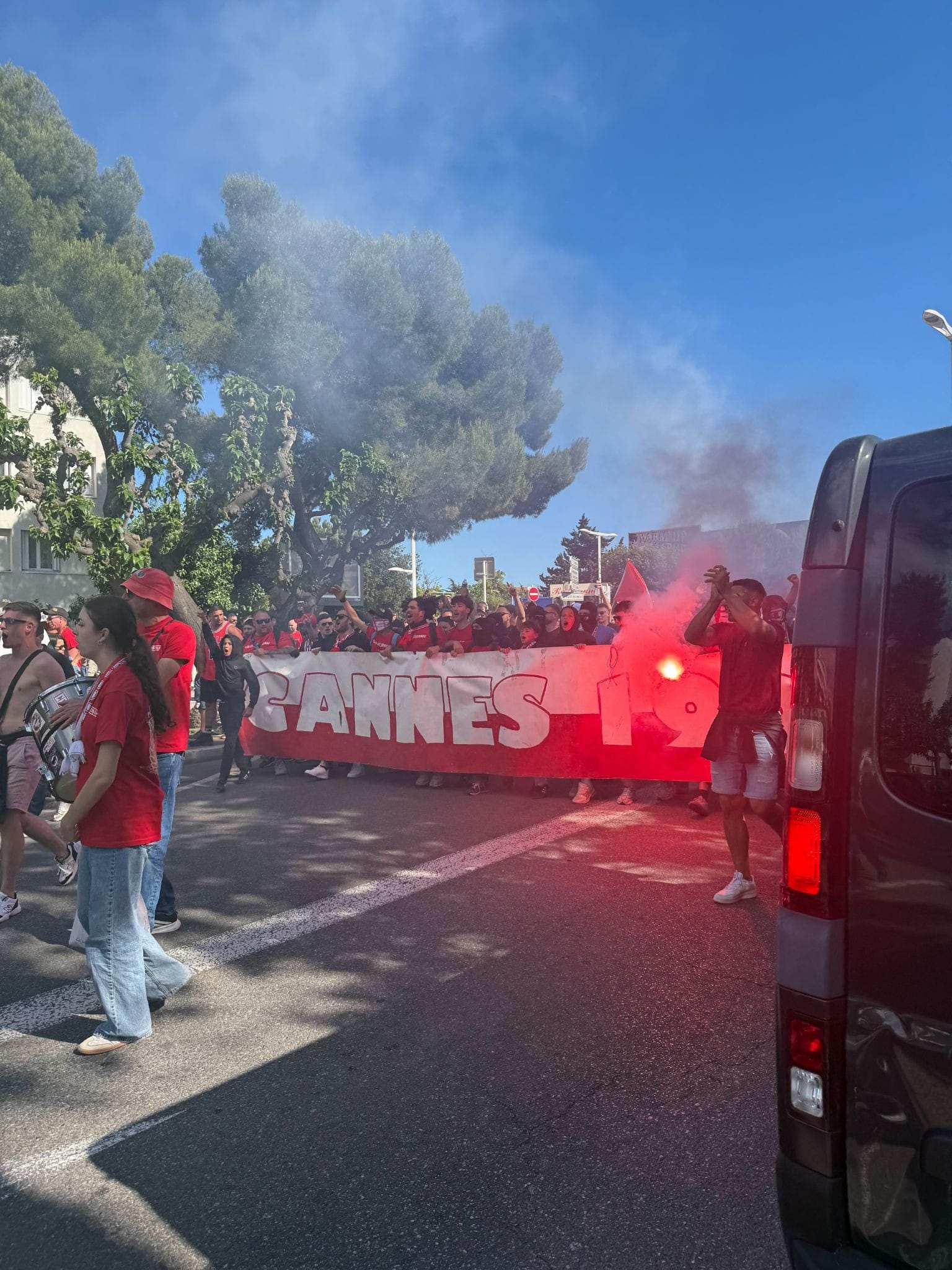
A local friend later informed me that this wasn’t a protest at all, but rather an impromptu parade about football. Viva la résistance!
My re-entry since has continued to be turbulent, complete with multiple failed Uber pickups, unexpected mad dashes, interminable concessions lines that I eventually bail from empty-handed, and myriad revisions to my schedule. But as with every year, the heartache and frustration only serve to make the movies at the center feel more precious. So let’s switch gears and get into a few reviews.
Festival Round-Up
Despite my unexpected reversion to the Cannes chaotic mean, I succeeded in my mission of catching every major title that premiered over the previous week. Today I’ll highlight four of them, all of which are helmed by a filmmaker I admire, and three of which I can highly recommend.
Sheep In The Box (Hirokazu Koreeda)
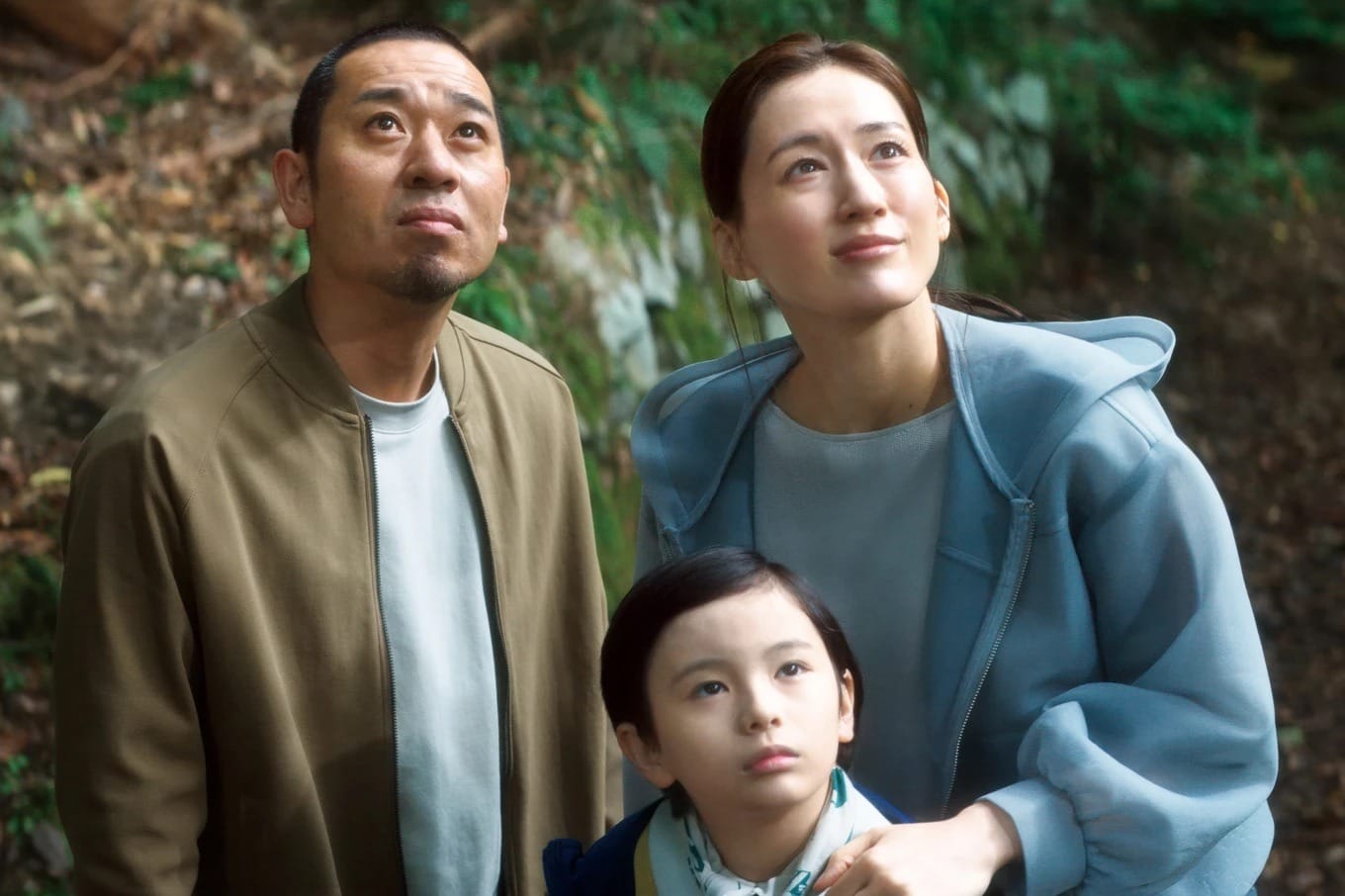
The films of Hirokazu Koreeda hold a special place in my heart, particularly in the context of Cannes. The first time I came here in 2018, an early morning viewing of Shoplifters left me sobbing in the Debussy Theatre. It felt like an emotional magic trick, the way the director’s stripped-down sentiment combined with my travel fatigue to put me in a heart-open state. Five years later at the world premiere of Monster, I similarly fell under the director’s spell. So it is with no joy that I report to you that Koreeda’s latest is a strangely lifeless misfire.
Sheep In The Box is set in a near future Kamikura, where a woman (Haruka Ayase) and her husband (Daigo Yamamoto) are grieving the loss of their son Kakeru. When they encounter a pamphlet for a company that builds AI-powered humanoid robots to personify lost loved ones, they’re initially skeptical but decide to give it a go. The story that follows has all the ingredients one would expect from a Koreeda tearjerker: a child performance at its center, an interrogation of the complexity of parenthood, and gentle dialogue about sharp emotional truths. Yet there’s surprisingly little legible human emotion one can latch on to. Part of that distance is baked into the premise, as the character at the center is quite literally a robot, with no history to draw from nor wellspring of feelings to let loose. But the adults processing around him feel similarly manufactured. Rather than grant them backstories or three-dimensional characterizations, they come across as archetypes, governed less by interior logic than a Kübler-Ross-mandated flow chart. There are grand, weepy monologues and moments that are meant to feel revelatory, but they all struck me as vaguely phoned in or uncanny. Like an LLM trained on Koreeda’s oeuvre and other, better science fiction films (AI: Artificial Intelligence, After Yang). The sentiment might look convincing at a glance, but it’s a poor substitute for the genuine artifact.
Fatherland (Paweł Pawlikowski)
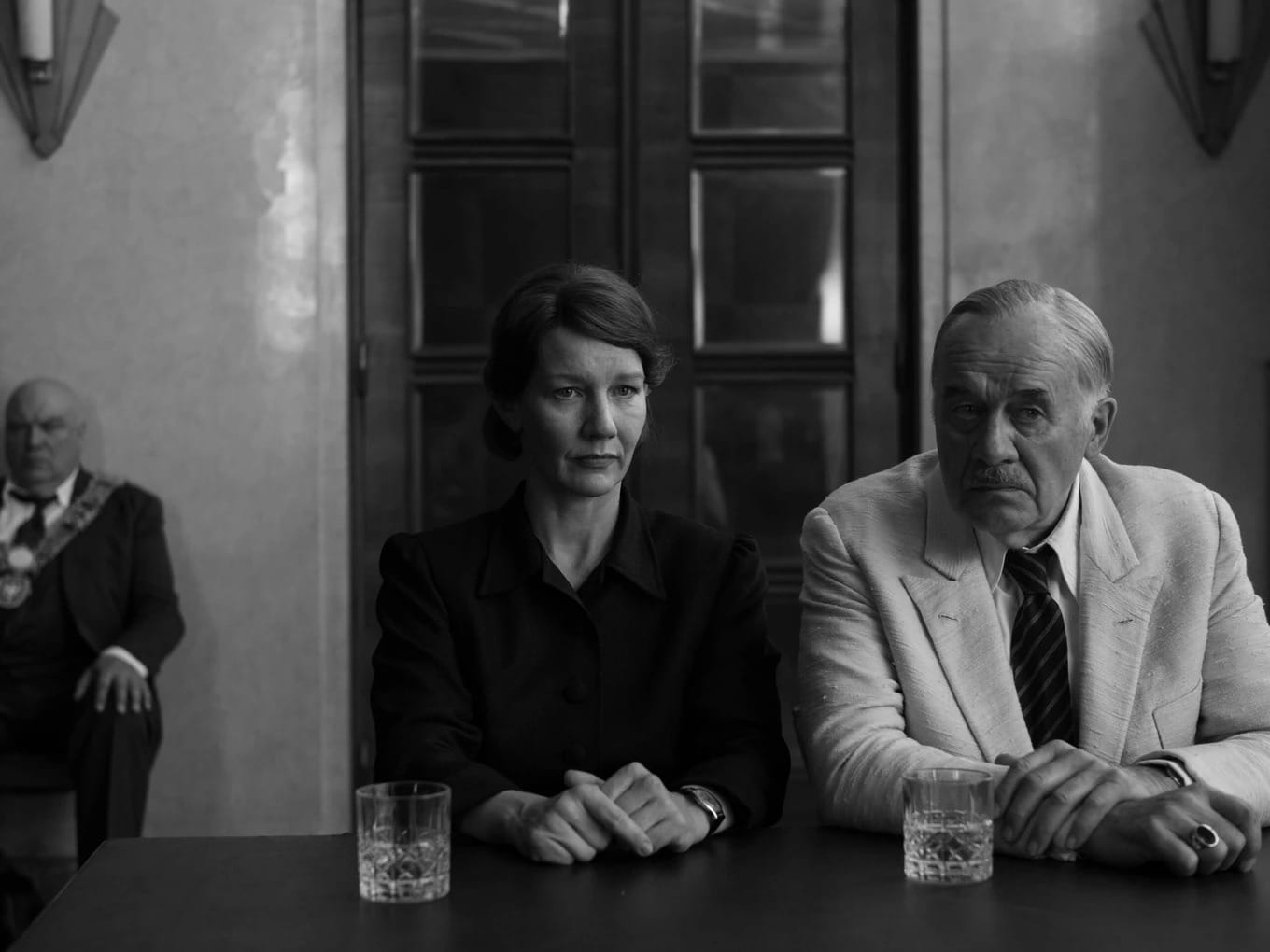
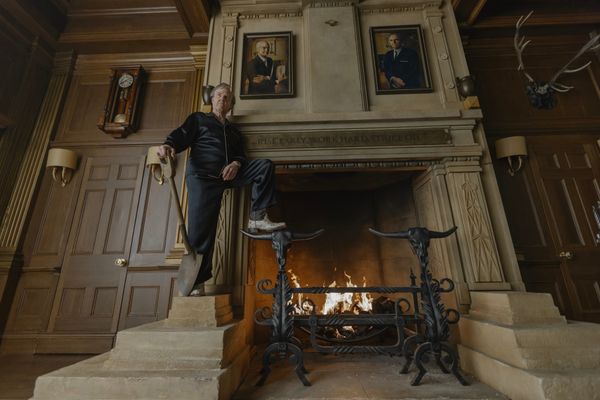
If Sheep In The Box was an oddly hollow drama in the trappings of a tearjerker, Paweł Pawlikowski’s Fatherland may be its polar opposite. It’s a deeply moving work, whose chilly formal aesthetic is designed to mask the thrum of grief inside. Set in 1949, the film follows novelist Thomas Mann (Hanns Zischler) and his daughter Erika (Sandra Hüller) as they return to a fractured Germany for a string of speaking engagements, after years spent in exile in the States. I have little knowledge of the real-life author or the conditions that led to his departure, but my lack of context only underlined the story’s tensions. From the moment they arrive in their homeland, everything feels airless, hazy, abstract to the point of being empty. Event after ostentatious event portends to celebrate Mann’s achievements, complete with rousing speeches and thunderous rounds of applause. But none of the attendees seems interested in grappling with the content of his work, so much as having an excuse to pretend to celebrate something. You get the distinct sense of a collective, repressed thought, a historical context looming large yet remaining unspoken. Łukasz Żal’s richly textured black and white cinematography notwithstanding, it’s a bleak portrait. Be it the smothering McCarthyism that permeates the West, or the pomp-and-circumstance denialism of the Weimar Republic, it’s as if the groupthink endemic to the Third Reich hasn’t been dismantled so much as transferred to whichever ideology happened to be nearest. The Zone of Interest with different players but the same core affliction. Rather than self-reflect, the world presses onwards.
As with his previous two films, Ida and Cold War, which comprise an informal trilogy with Fatherland, Pawlikowski uses family drama as a metonym to unpack broader societal forces. A few days into the Mann family’s visit, word arrives that Erika’s brother Klaus (August Diehl) has taken his own life. Thomas refuses to engage with the tragedy, choosing to focus on the more “important” task of leveraging his platform to advocate for change. But Erika lacks her father and her country’s knack for cognitive dissonance. As the film continues in its muted trajectory, we get hints of deeper feelings that are stirring beneath the stifling surface. Unlike the Beethoven work used to great effect late in the runtime, this is not an ode to joy, so much as an ode to feeling anything at all with a first-person conviction, however much dust and debris it might cough up in the process.
Teenage Sex And Death At Camp Miasma (Jane Schoenbrun)
The challenge of feeling things in the first person is very much a through-line in Jane Schoenbrun’s work. In We’re All Going To The World’s Fair, a lonely teen tries to forge an identity by filming creepypasta videos of herself. I Saw The TV Glow took that concept and exploded it, featuring not only characters who relate more to television than real life, but a story that collapses the distinction. Both works have been read as allegories to the trans experience, capturing the numbness of dysphoria and the longing to escape outside of yourself. They also both placed high on my Best Of list in their respective years. Needless to say, I was excited to see what Schoenbrun would do next.
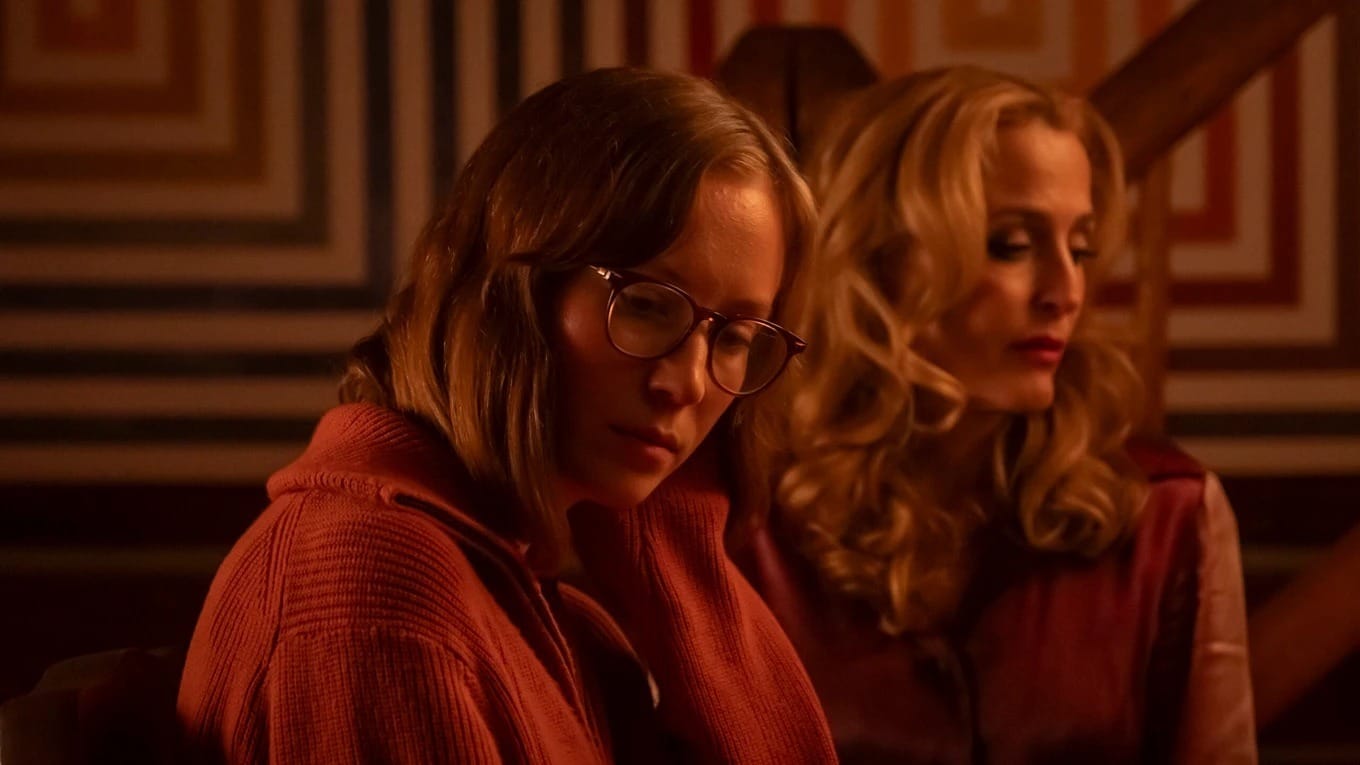
Teenage Sex And Death At Camp Miasma continues some of the threads of Schoenbrun’s previous work, but shifts the focus from tragedy into giddy celebration. This is easily the most upbeat film they have directed to date; it’s also the most overtly autobiographical. Kris (Hannah Einbender) is an up-and-coming director, beloved on the Sundance circuit for her queer deconstructions of pop culture. She’s been tapped to revive the “Camp Miasma” franchise: a long-dead slasher series centered around a Jason-esque villain (Jack Haven) and a Final Girl played by a since-forgotten actress (a hilarious, drawling Gillian Anderson). Kris isn’t naive: She knows the material she’s adapting is wildly problematic, and that cynical execs want her to revive their IP with some fresh subversive-yet-“woke” coat of paint. But she doesn’t want to be the navel-gazing artist who always insists on subversion, or on “elevating” horror into a metaphor for something less uncouth. As regressive as the slasher genre might be, her love for it resides somewhere deeper than logic. She relates to the story, somehow; sees herself reflected in its campy, bloody textures. It’s confusing, unironic, and strangely erotic.
True to form, Schoenbrun’s film doesn’t play like a haunting meditation or deconstruction of anything. Teenage Sex And Death At Camp Miasma is a wildly silly romp through all the slasher tropes, complete with an undying baddie, a mingling of horniness and violence, and geysers of the phoniest blood you’ll find this side of Scary Movie. This carries none of the contemplative undertones of I Saw The TV Glow, and viewers who expect it to are liable to leave disappointed. But I loved it all the same, both for its ridiculous excesses and the evident heart that pulses beneath the mayhem. Despite the screenplay’s dogged insistence to the contrary, the overthinking critic in me can’t help but see a queer subtext in the exercise, one which (sorry, Kris and Jane) genuinely elevates the experience. Not a one-to-one metaphor, per se, so much as a message baked into the fact that it was made. It’s about examining the messy, uncomfortable tensions within us and choosing to embrace them. Change the things you want to change, own whatever hangups or traumas still linger, and take a cleaver to any critic who tries to dictate the terms of your story. As Andy Shauf sings over the closing credits, “Don’t watch yourself, watch the movie.” You can’t control the hand life deals you, but you do have the power to play cinematographer and actor, reframing your narrative into whatever brings you the most joy to perform. Not every audience will get it, but when you find someone who does—someone whose vision of you gels with the third-person self you’ve been chasing? That’s a euphoria worthy of all the flesh, fluids, and shrieking you can muster.
All Of A Sudden (Ryusuke Hamaguchi)
Do you remember that special English-language subtitle bar I mentioned earlier in this dispatch? Well, about an hour into my screening of All Of A Sudden, the projector responsible for it went on the fritz: first dimming, then defocusing, then fully shutting down. From my perspective, this meant the movie continued while the dialogue slowly became less and less legible, smearing into partially discernible fragments of sentences then ultimately fading to black. For the 10 minutes or so before a technician fixed the issue, I strained to keep following the arc of the conversation, using only the timbre of voices as my guide. And honestly? I can think of no more fitting way to experience Ryusuke Hamaguchi’s latest film, which is currently my favorite of the festival.
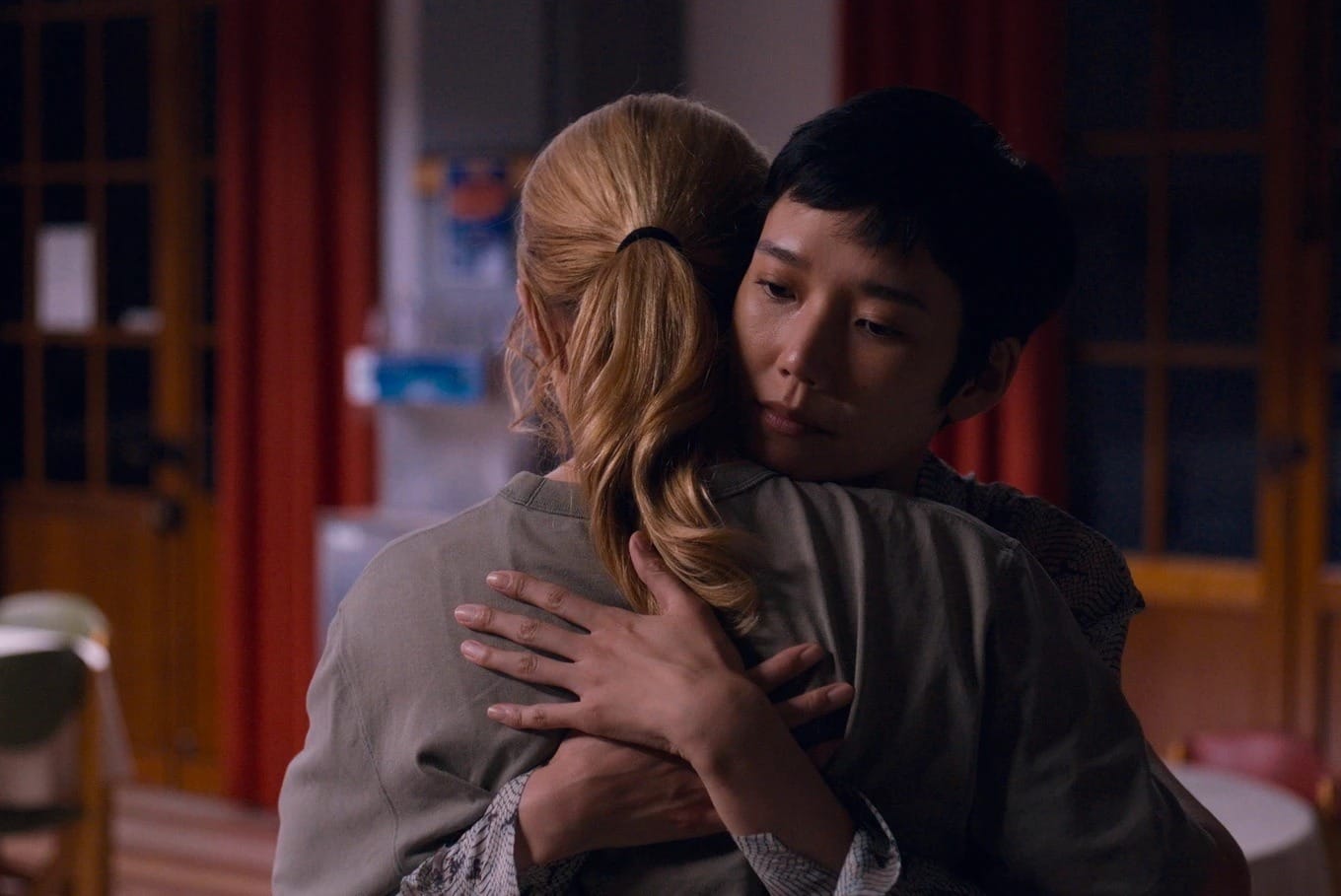
All Of A Sudden is a meditation on language, communication, and why we shouldn’t mistake the former for the latter. We open with Marie-Lou (Virginie Efira), the director of a private care facility in Paris which houses elderly patients experiencing severe cognitive decline. Though the residents have lost their ability to speak to her directly, she’s convinced that they deserve to be heard. Using eye contact, touch, and other nonverbal gestures, she does her best to create a space where they can express their intent. On the periphery is Mari (Tao Okamoto), a stage director visiting from Kyoto to tour her latest play. Her minimalistic work is designed to blur many distinctions: between languages, between performer and spectator, between sanity and madness. At first blush, it feels as if the two characters are inhabiting entirely different films. Marie-Lou’s story moves to the rhythms of a social realist drama, while Mari’s plays like an experimental fiction in the vein of Drive My Car. Then they collide, and both templates get thrown out the window.
One of the great pleasures of this film lies in having no idea where it will carry you, so let’s blur out the characters and focus on the tone. This is essentially one slow, soulful, 3+ hour conversation Hamaguchi is having with his audience. Although there are mysteries to coax from it, it’s didactic by design, unafraid to say precisely what it means. With the fluidity of Waking Life, we find ourselves slipping between subjects like capitalism, ableism, art, philosophy, and our plunder of the natural world. But for as much as the film wants to tell us something vital, it also aims to teach by way of demonstration. With his unhurried pace and lack of narrative urgency, Hamaguchi is pleading for us to slow down and listen. He posits that the most radical thing we can do in a world built on endless productivity is to stop. To carve out space where illogical compassion can flourish, both for others and ourselves. As Mari puts it, “it’s only when you relax that you can see inside yourself, finding even the tiniest strength.” It’s a beautiful, humanistic message. Three days into a festival that has been defined by non-stop, frantic motion, it’s also one I desperately needed to hear.
Then again, I drafted that last section via a dictation app on my iPhone while literally sprinting in between screenings. Baby steps, people. Baby steps.
Stay tuned for more coverage, including reviews of new films by James Gray and Nicolas Winding Refn, as well as a play-by-play of the closing ceremony that awards the Palme d'Or.
Stephen David Miller is a film enthusiast and cohost of The Spoiler Warning Podcast, who writes on Letterboxd and his personal blog.