'Lee Cronin's The Mummy' Was Gross and Upsetting (Complimentary)
David reviews 'Lee Cronin's The Mummy' and shares some brief thoughts on Steven Soderbergh's 'The Christophers.'

I often feel myself getting older.
It manifests itself in different ways. Sometimes, it’s the twinge of pain up my lower back when I get into the car. Or the way new features appear on my face when i look in the mirror. But sometimes it’s in my sensibilities. The things that used to excite me in my youth no longer have the same pull, or if they do, the pull is not quite as strong. Stuff that I might have found daring or pleasantly gonzo can tire me out.
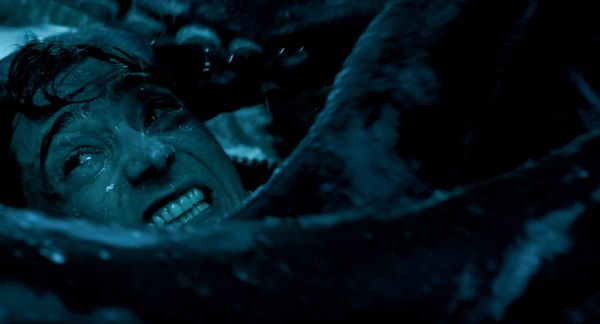
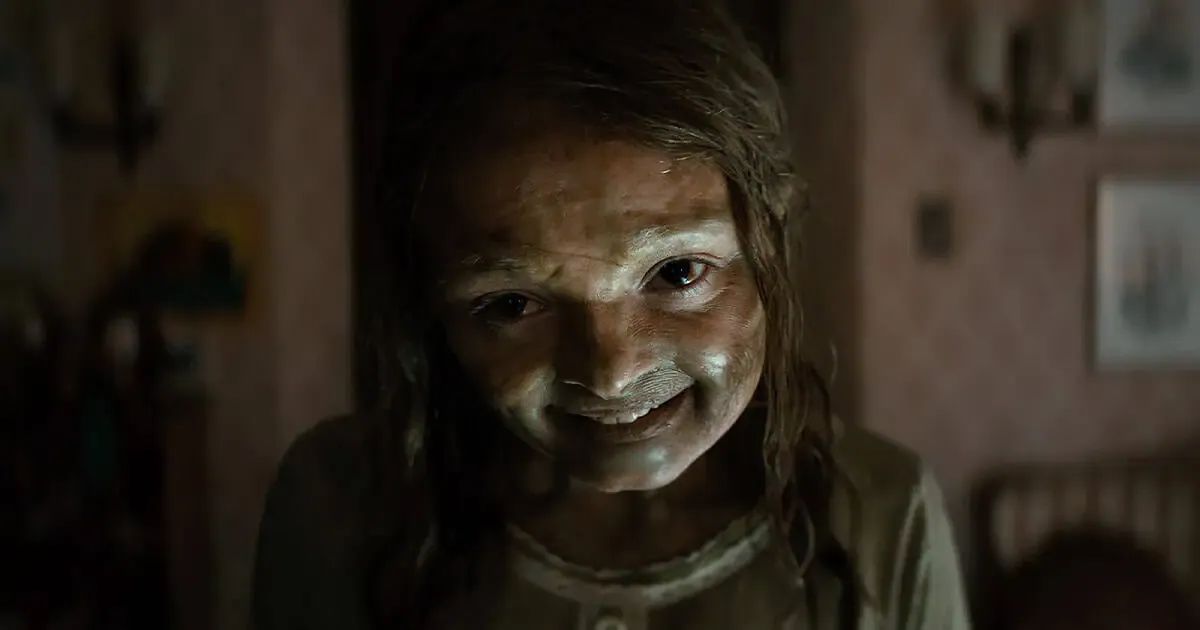
I thought about my inevitable march towards the grave while watching Lee Cronin’s new film, Lee Cronin’s The Mummy (named such partially to distinguish itself from the multiple other franchise versions out there). The film subjects horrifying and upsetting things to the human bodies of parents and children alike, with multiple outrageous moments clearly intended to shock its audience. I had a good time with the film, even as multiple scenes had me peeking through my fingers, but at a languorous 2 hours and 15 minutes, I did start to wonder by the end: Is this really worth it?
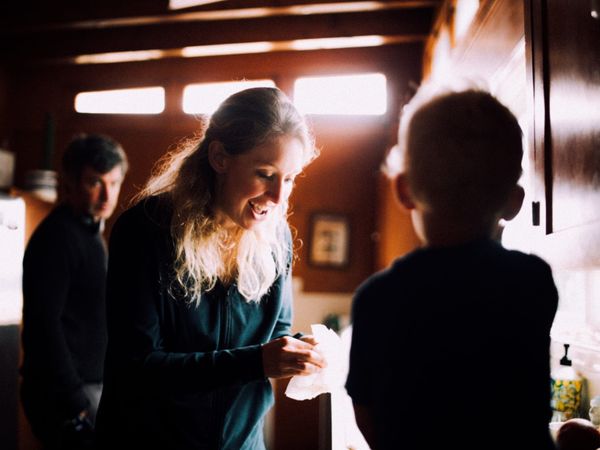
Charlie Cannon (Jack Reynor) is an investigative journalist living in Cairo, Egypt with his wife, Larissa (Laia Costa), and their two children, Katie and Sebastián. One day, Katie is abducted by a strange woman who shows up in their garden and even though Charlie gives chase, he cannot find them. Eight years later, Katie reappears in Egypt, but she's dramatically changed. Katie begins behaving in extremely disturbing ways. Can the family adapt and survive their new reality?
The Mummy feels like a maximalist film, where all the impulses of the director are on full display. There’s maiming and self-harm and vomiting — virtually every bodily fluid comes out to play. And there’s an undeniable pleasure to seeing a director seemingly let off the chain to explore the gut-wrenching horrors and visuals that would otherwise remain in the deepest caverns of the human mind. But for a film that feels only slightly about anything (e.g., the sacrifices of parenthood, the challenges of raising a child who’s gone through something unimaginable), it was a lot to sit through. Maybe a younger me would’ve taken more glee at these proceedings, but present me found myself reaching my limit pretty quickly.
Cronin is undoubtedly a talented filmmaker; his Evil Dead Rise successfully reinvigorated the franchise and had some memorable visuals and ideas. With an even broader and more ambitious canvas here, there are moments in The Mummy where I experienced cinematic highs — visuals and emotional beats that left me breathless. But the connective tissue between them felt sorely lacking, and as a result, by the film’s end I felt less like I’d had an emotional catharsis and more like I’d been bludgeoned.
Perhaps I’m the one that needs to start thinking about getting into a sarcophagus.
Lee Cronin's The Mummy is out in theaters now.
'The Christophers' Is a Thought-Provoking Meditation on Art
Speaking of getting old.
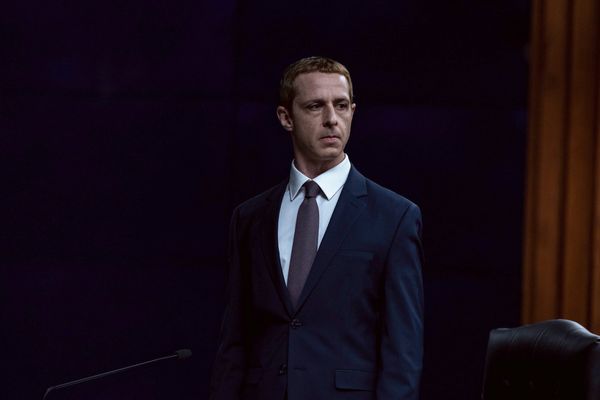
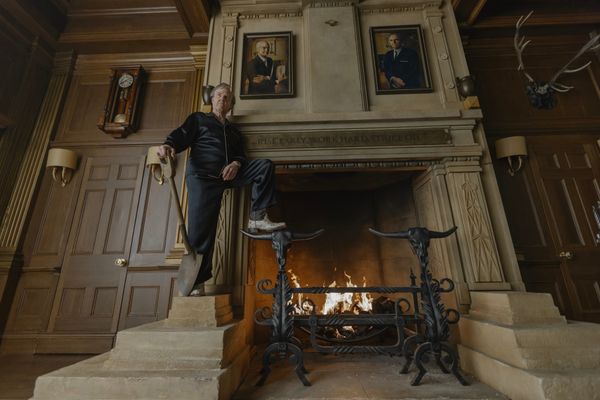
In Steven Soderbergh’s The Christophers, Ian McKellen plays a brilliant, aging artist, Julian Sklar, who’s long past his prime and spends most of his golden years making Cameo-like videos for fans. Meanwhile, Lori Butler (Michaela Coel) plays a talented artist who’s contracted by Julian’s scheming children to fraudulently complete a set of Julian's unfinished paintings (the titular "Christophers") so that they can be sold for millions upon his death. But as Lori spends more time with Julian, she finds that completing the task may be more challenging than it was initially thought.
The Christophers is probably the polar opposite of Lee Cronin's The Mummy. There are no gross-out set pieces; it’s pretty much just people talking in rooms. Instead of a multi-continental story, most of the film takes place in one location (Julian’s house). This is Soderbergh as a minimalist filmmaker but that’s by no means a bad thing. The film mostly rests on the strength of Ed Solomon’s script and Coel and McKellen’s performances, the latter of whom have lovely chemistry together. McKellen in particular vanishes into his role as a character who just does not give a fuck anymore, at least on his toughened exterior, yet still has a few more demons to wrestle with before his soul ventures into the wild blue yonder.
The Christophers is one of those movies that raises interesting ideas and questions and leaves it to you to come to your own conclusions. It’s about how and why we value art. Is it because of the work itself? The person who created it? Some intangible combination of the two? And it’s about how, in the end, the most important things an artist leaves behind may not be his art after all.
The Christophers is out in theaters now.
Other Stuff David Chen Has Made
- Over on Decoding TV, Patrick Klepek and I finished our coverage of The Pitt season 2 (which was quite good) and kicked off our coverage of Euphoria Season 3 (which is probably not going to be).
- Also on Decoding TV: We discussed the first season of DTF St. Louis, which ultimately proved to be worth the journey.
- On The Filmcast, we discussed The Drama, which my co-host Jeff did not enjoy but I greatly appreciated.
- Over on Dave Chen Travels, I visited the incredible Sanctuary of Bom Jesus do Monte in Braga. We also talked about it on my Patreon [paid only].