‘Michael’ Is a New Low for Music Biopics
Antoine Fuqua’s film makes the King of Pop into a blandly pleasant mascot.

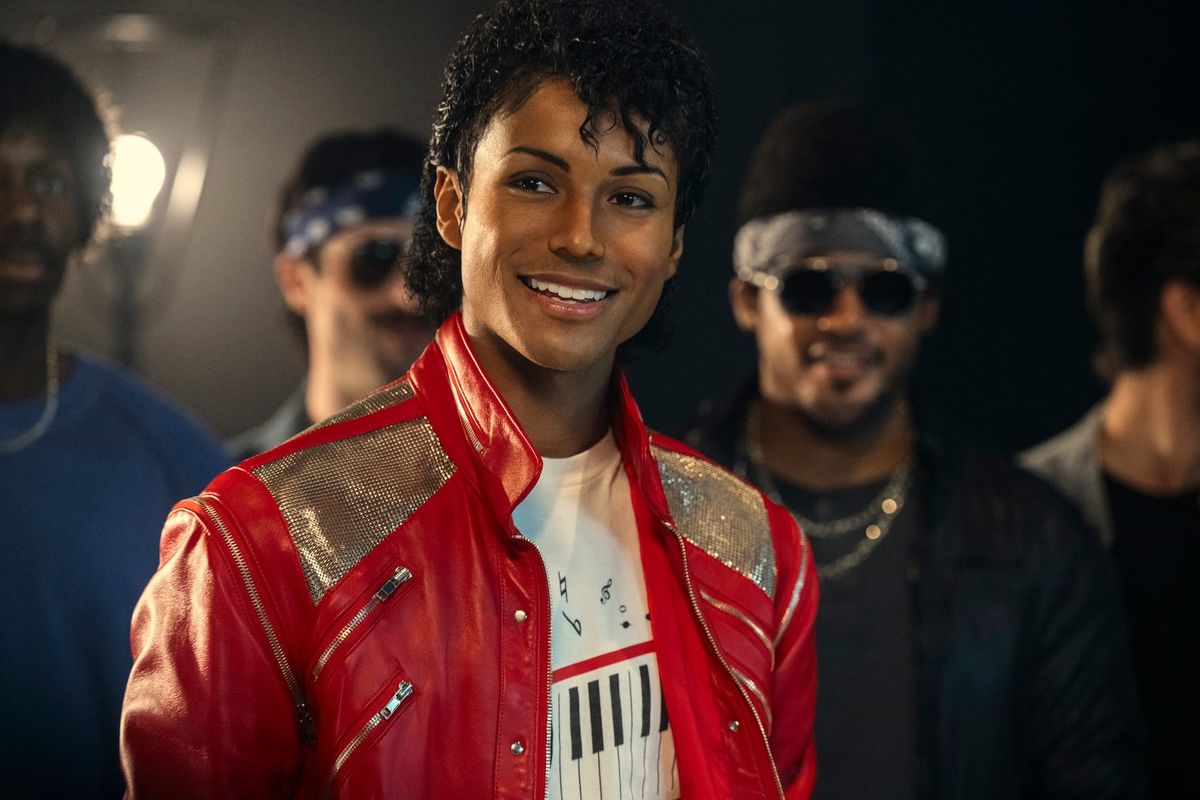
The music biopic may be among the worst genres permeating Hollywood right now. Say what you will about franchises and remakes, but at least they dwell in a realm of bombastic fictions unrelated to our reality. No one has to worry about what the real Captain America would do. Music biopics, on the other hand, tend to reek of lazy cash-ins where the living get their say over the dead. While there had been staid biopics in the past like Ray and Walk the Line that gave way to the brilliant Walk Hard: The Dewey Cox Story, 2018’s Bohemian Rhapsody, with its $910 million worldwide box office and four Oscars, said that quality and honesty were irrelevant. Shut up, play the hits, and success will follow. While that hasn’t always been the case for biopics in its wake, Bohemian Rhapsody producer Graham King now returns with Michael, dumbing down a music icon for a movie that’s little more than a compilation of performance recreations. Even if you don’t believe the allegations against Jackson, there’s little here exploring what made him a pop music genius. Instead, the genius is taken for granted. We’re expected to bask in it, then come back for more since the movie ends in 1988. To even call Michael “half a story” would be giving it too much credit.
Before Michael Jackson goes on stage to perform, we flash back to the cramped home in Gary, Indiana in 1964, where Joe Jackson (Colman Domingo) lords over his family, threatening and abusing them into the musical force—the Jackson 5. Young Michael (Juliano Krue Valdi) is the true star, and everyone knows it. Joe endeavors to keep the boy under his thumb, but when Michael gets older (Jafaar Jackson, Michael’s real-life nephew), he wants to go solo. As he sets to work on his solo albums, he must learn to stand up to his domineering father, who treats Michael—a man who fills his room with toys, buys exotic pets like giraffes, and idolizes Peter Pan—as a child for some reason.
Perhaps the greatest sin in Antoine Fuqua’s movie is that it wants you to believe that Michael Jackson is both boring and musically gifted. Because the project of this film is to re-mystify the artist, there’s no room for any personality or artistry here. How did Jackson come up with the music video for “Thriller”? He was watching classic horror movies. Where does Jackson get his unique choreography? He just likes to move and has a natural sense of rhythm. In Michael, Jackson’s whole thing is about wanting to express himself, but there’s no self to express. His ideas exist as little more than scrawling on various scraps of paper. He has no inner life beyond loneliness, being nice to people, and professional ambition. That makes Michael Jackson indistinguishable from a politician.
Even Jackson’s solitude, the most interesting thing about this character, isn’t worth unpacking for fear that giving this version of any psychology could be off-putting. This Michael Jackson isn’t weird or problematic. He’s eccentric. He buys a pet chimp, names it Bubbles, and everyone laughs. His best friends appear to be, in this order: Bubbles, Michael’s chauffeur/bodyguard Bill Bray (KeiLyn Durrel Jones), and lawyer John Branca (Miles Teller). That should be extraordinarily sad, but Michael never acknowledges it as such. This Jackson doesn’t make bad choices, and he can’t do wrong; he can only be wronged, and he’s only wronged by Joe Jackson.
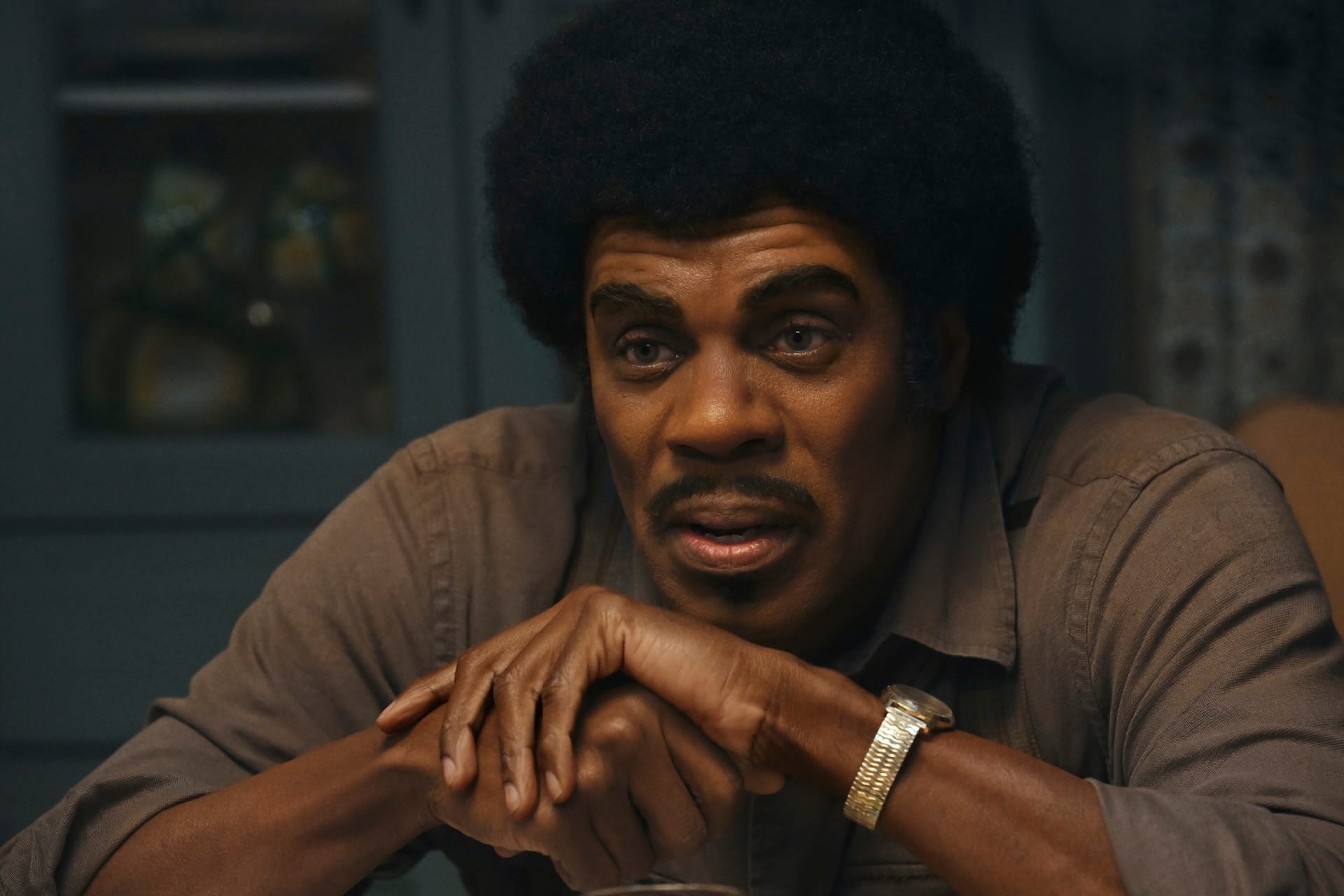
The movie seems to miss the irony of making Joe the villain. Setting aside that Domingo gives the film’s best performance despite a one-dimensional character, Joe is “bad” because he doesn’t recognize Michael’s individuality. Joe would prefer to keep Michael as part of the Jackson 5 and exploit him endlessly. And yet the filmmakers don’t realize that they’re engaging in the same practice: denying Jackson the texture of his humanity, ignoring his artistry, and using him for as much money as they can get out of him. No one involved, from King to Fuqua to the film’s estate, cared about getting Michael Jackson right as much as making sure that they could manufacture him (they can’t; Jafaar can only try to imitate his uncle’s magnetism) to sell his music in a new format. Those Spotify tracks won’t stream themselves!
Most of Michael are just these tracks. The film’s first 25 minutes, featuring the Jackson 5, set the tone for the rest of the movie in that it’s a collection of recreated performances showing off Jackson as a dynamic, exciting performer with brief scenes that move the bare semblance of a plot along. The story tends to be either Joe scheming to stifle Michael’s career or Michael working on his next hit. You could feasibly recreate at least half of this movie by stringing together YouTube clips of the Jackson 5 or Michael Jackson performing from 1964 to 1988.
That’s right: the movie ends in 1988 after a performance of “Bad” in the UK, and then has a title card saying, “His Story Continues,” which it presumably will if Michael is a hit. Jackson passed away in 2009, so there are roughly two decades the film ignores. But even within these 24 years, the film delves into nothing substantive about his life. We spend 130 minutes with this man to learn that his father was a bully, he felt isolated, and made a bunch of hit songs. Even accepting that the filmwon’t address the allegations against Jackson, it feels cowardly and cynical to trot out a cardboard cutout of the artist and pretend it’s a celebration of his life or his art. The motives behind the movie are no deeper than Joe Jackson sending out his son to do a Pepsi commercial. He’s a pitchman, not a person.
If anyone involved with the movie genuinely cared about Jackson as one of America’s greatest entertainers, it would mean unpacking Jackson’s art and life in a real way. That may even mean wrestling with the reality of how talented people can do monstrous things behind closed doors, as was done in the documentary Leaving Neverland (which his estate buried and now can’t be seen in the U.S.). But Michael has no interest in any of that. It cares as much for Michael Jackson as this version of Joe Jackson, which is that he only matters if he’s making hit songs. He can have his cutesy animals, but he’s here to perform. There’s money to be made, and thinking about Michael Jackson as a person is a speedbump towards profits. So don’t worry about nuance or art or context or why music even matters. Just bop along to “Billy Jean” and forget about the rest.
Michael opens in theaters on April 24th.