‘Clayface’ Is Only Skin Deep
The DCU’s new body horror experiment avoids the lows of ‘Morbius’ but also the highs of ‘Wonder Man’


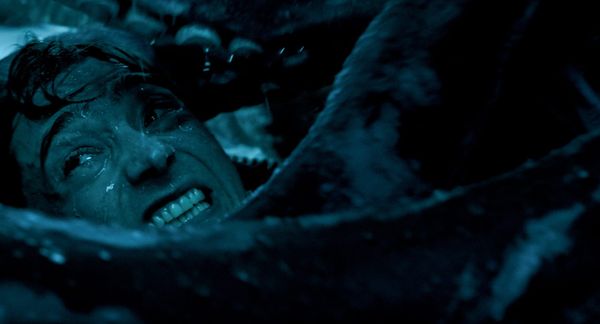
Superhero movies like to talk a big game about homaging other genres, but few have put their money where their mouth is like DCU’s new installment, Clayface. It isn’t a body horror thriller in the somewhat noncommittal way Captain America: The Winter Soldier is a 1970s political thriller or The New Mutants is a teen horror flick. It’s a truly gnarly little R-rated movie that may test even the not-all-that-squeamish with its images of arm flesh being shaved like slices of ham, scissors hovering near eyeballs on turbulent flights, and blood pouring from sliced faces by the bucketful. While it’s nothing true goreheads and/or David Cronenberg fans haven’t seen before, it’s still pretty edgy for a film that exists under the same “shared universe” branding as James Gunn’s Superman and HBO’s Lanterns.
The trouble is everything around those gloriously unhinged scenes of gore. Clayface wants to evoke schlocky low-budget exploitation thrillers with a dose of gothic romance a la The Phantom of the Opera or Strange Case of Dr Jekyll and Mr Hyde. But with its clunky Gotham worldbuilding and endless scenes of faux science exposition about nanotechnology, it winds up closer to Sonyverse superhero experiments like Morbius and Venom. While it seems improbable that a movie this admirably gross is also capable of being boring, Clayface somehow manages to pull off the shapeshifting double act.
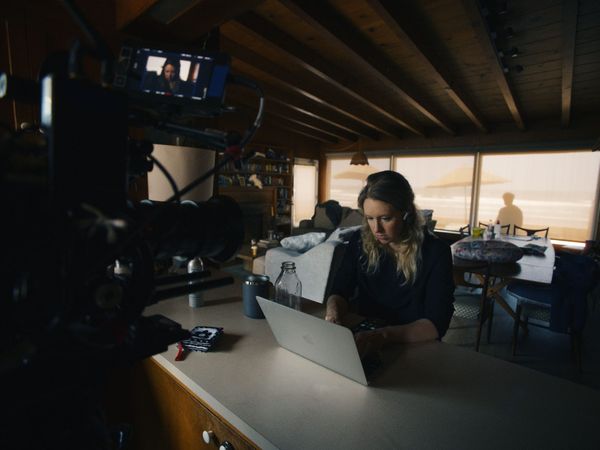
Earlier this year, Wonder Man proved it’s possible to use the superhero genre to deliver a funny, incisive, unexpectedly moving satire about the entertainment industry, but Clayface takes a more surface-level approach. Matt Hagen (Tom Rhys Harries) is a Gotham-born actor on the cusp of true movie stardom thanks to his first Academy Award nomination. But after a one-night stand with the wrong girl, he wakes up to his face being sliced and diced by her mafioso boyfriend. Desperate to get back the good looks that once fueled his career, he turns to rogue scientist Dr. Caitlyn Corr (Naomi Ackie) and her experimental work around AI-infused regenerative stem cells. Caitlyn’s still at least a year away from human trials, but Matt volunteers to be an early guinea pig, no matter the risk. Cue the big needles and bubbling red goop.

Though Matt’s driven by a desire to return to his life as an actor, Clayface doesn’t really seem to know which elements of the actorly experience it’s riffing on. Perhaps realizing it would be unbelievable for the public to turn on a likable young Oscar nominee simply because he’s been brutally attacked, Clayface also has Matt’s hook-up accuse him of drugging her and bringing her back to his apartment, which adds an uncomfortable, incredibly unnecessary false accusation thread to the mix. That, in turn, spills over into a broader cancellation storyline as childhood acquaintances come forward to tell stories about how Matt’s actually not such a nice guy. Except once Caitlyn’s tech manages to fix his face, he’s excitedly welcomed back into Hollywood—not in a way that feels like a commentary on how easy it is for hot men to be “uncancelled” (which would have been a strong satirical angle) but more so because it feels like the movie forgot it established those other throughlines at all. Not that it really matters because Clayface quickly drops the stardom angle altogether to become more of a Gotham crime world thriller than anything else.
That feeling of gesturing at something but never really diving deep colors the first two-thirds of the movie. On paper, there are thorny relationships here including Matt’s lifelong best friendship with a fellow actor (Joshua James) and his growing closeness with Caitlyn despite her engagement to Gotham detective John Borrelli (Max Minghella). In practice, however, none of those dynamics feel steeped in the kind of angst and melodrama Clayface is ostensibly aiming for. Two blonde men sitting on a beach together telling each other they’re best friends does not a complicated best friendship make. Perhaps something got lost in translation when original writer/director Mike Flanagan left to make Carrie and new director James Watkins (Woman in Black, 2024’s Speak No Evil) and screenwriter Hossein Amini (Drive, McMafia) reworked the project. Or maybe it’s the fact that nearly the entire cast is from the UK but working in American accents, which gives an uncanny feeling to every interaction.

Whatever the case, Clayface ultimately works best as a character study of Matt’s slow descent into madness, as his self-healing powers evolve into shapeshifting ones and the ability to take what he wants by force becomes more tempting. There’s manic fun to be had watching Matt make increasingly reckless decisions, and it’s refreshing that the DCU is willing to let him go full villain at times without limiting him to the kind of antihero glass ceiling so many of these fringe superhero properties deploy. There’s real juice to a third act nightclub sequence that allows Matt to tap into his actorly instincts. Throughout it all, Rhys Harries is a steady hand at the shapeshifting wheel, his sad puppy dog eyes providing an interesting contrast to Matt’s subtle sense of entitlement, even if it feels like the script barely scratches the surface of who Matt is or what he’s repressing under his fractured actorly identity.
In the end, Clayface is full of memorable images without ever quite becoming a memorable movie. It coheres better than this summer’s Supergirl (admittedly, a low bar), but it’s so standalone it doesn’t exactly sell the necessity of the shared universe concept either. In fact, its take on Gotham is so generic, it’s almost distracting whenever the name comes up. Setting this story in the sordid world of Hollywood might have allowed it to go more than skin deep. As is, this is a B movie with B movie aims and that means the real pleasure will be seeing it with a squealing crowd. Hopefully they know what they’re getting into.
Clayface opens in theaters on October 23. Caroline Siede is a film and TV critic who runs the newsletter Girl Culture.