In ‘The Dog Stars,’ Ridley Scott Only Scratches Surface of a Post-Apocalyptic America
The muddled drama never seems fully certain about its ideas on American identity.

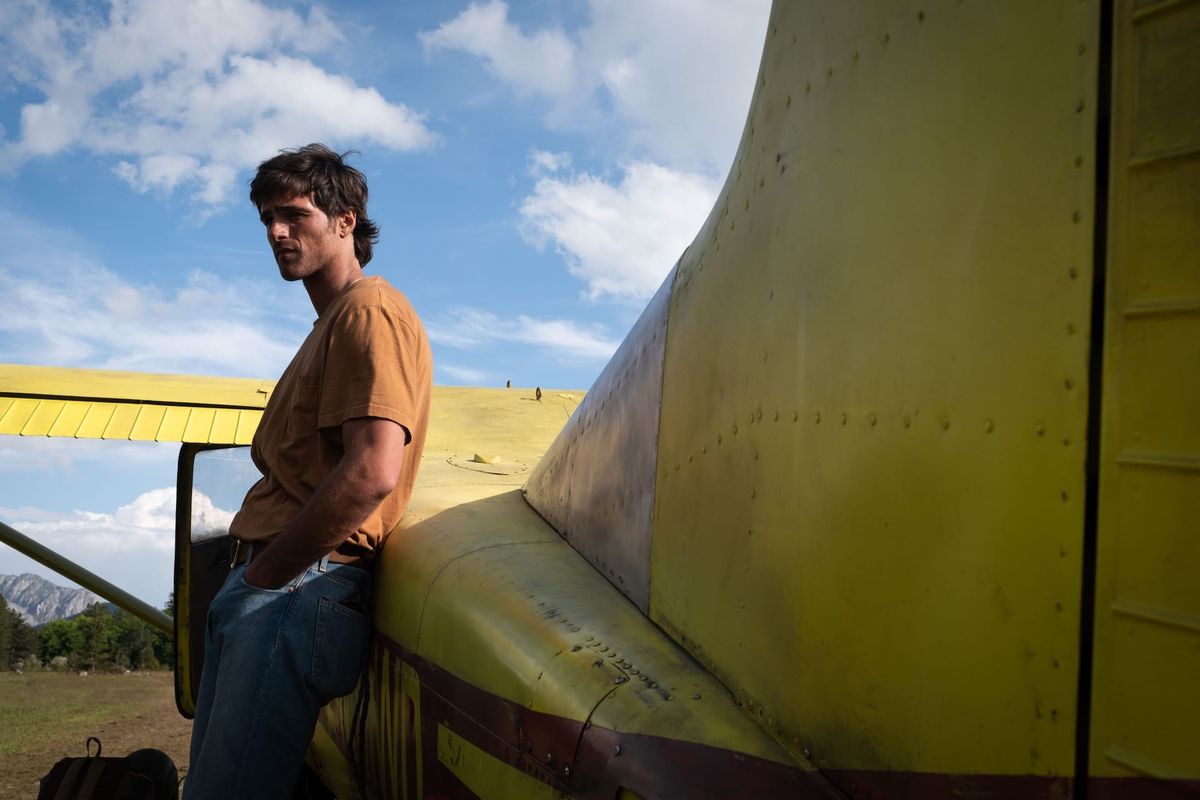
The biggest surprise about The Dog Stars is that it’s ultimately a hopeful movie. For other filmmakers, that may be standard, but Ridley Scott’s filmography frequently signals his disdain, or at least his cynicism, for people with a collection of “Look at these bozos,” features dating back to this debut, The Duellists. Here, the British filmmaker turns his eye towards a post-plague America where people have retreated into isolationism as a matter of survival, and the broad political strokes are obvious. And yet despite capturing a canvas that also seeks to admire parts of the American character, the clunky storytelling never quite has a sharp enough edge to cut into anything it observes whether it be grief to the concept of the individual versus the community. As much as the movie conveys natural beauty of the world, it lacks a grasp on any texture or nuance.
Hig (Jacob Elordi) is a mechanic and pilot eking out a living a post-apocalyptic country ravaged by a flu virus. He goes on supply runs into Denver with his dog Jasper and then returns to a base with his pal and survivalist Bangley (Josh Brolin). Bangley is perfectly content living an isolated existence punctuated by sniping anyone who might trespass onto their land, but Hig hopes there may be something more out there, especially after hearing a transmission from Grand Junction. After an attack on the base, Hig resolves to find the source of the transmission, but on his way, he’s forced to make an emergency landing near a ranch where he finds Cima (Margaret Qualley) and her dad Pops (Guy Pearce). And yet no place is secure in the post-apocalypse, especially with the arrival of a dangerous tribe known as “Reapers.”
Despite the marauders, The Dog Stars is largely a tranquil picture. This isn’t set at the level of The Walking Dead or The Last of Us where a zombie threat or violent scavenger could lurk around every corner. Instead, Scott leans into the rich landscape of the natural world to juxtapose the violence and chaos of humanity. That chaos is somewhat minor when you consider how much of the movie is only two to three characters hanging out. The film feels conscious of how much people retreat after tragedy, and as broad social commentary, that works fine enough. The isolationism of Hig’s survival exists in reasonable tension with his desire for human connection beyond the gruff and pessimistic Bangley.
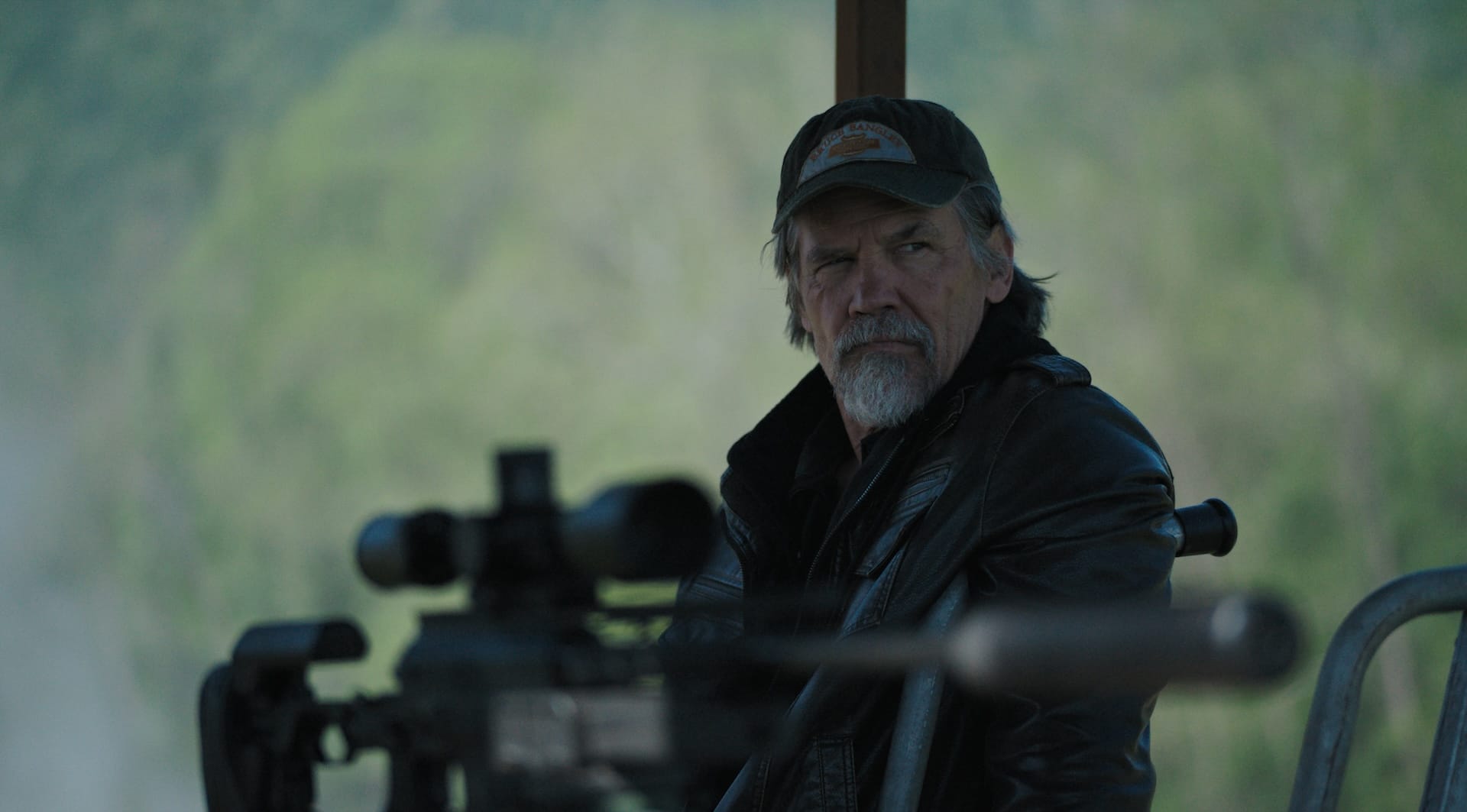
However, the closer the film gets to anything specific, the shakier it becomes. Hig’s grief over losing his wife is as generalized as possible with not a single definable trait for his deceased spouse beyond “She was pregnant.” The marauders themselves also have no interiority, simply reduced down to wild raiders that may as well have stepped out of the fever dreams of nativists who constantly whine about border control. The movie wants to question the limits of survivalism but also reinforces such behavior when these subhuman hordes come to rampage. And then there’s a particularly wild encounter in the third act that feels as sharply satirical as the film gets but is so abruptly introduced and dismissed that its greatest impact comes from its awkward plotting rather than the substance of the subtext.
If Scott wanted to make a post-apocalyptic action-thriller, he could have done so, but he’s playing it more for drama. And yet, the movie rarely leans into the specifics such drama requires. Despite a quartet of strong actors, none of them have rich characters to play. Everything exists on the surface, and such an approach shows the limitations of engaging with the idea of America that Scott seeks to portray. It’s nice that the film upholds an American religious tradition of pacifism when Hig hangs out with some Mennonites, but how such a group would ever hope to survive in this context without violence is never explored. It’s nice that composer Harry Gregson-Williams draws on folk music for his score, but it also serves as reminder of how overwhelmingly white this world is (it’s cool to see Benedict Wong here as a Mennonite, but he has maybe ten lines of dialogue in the entire movie). The film’s strongest asset by far is Erik Messerschmidt’s cinematography, which makes gorgeous use of natural lighting and almost seems designed to rebut John Mathieson’s critiques about filming on Gladiator II.
But unfortunately, the superficial typically wins out in The Dog Stars. Watching the movie, I was reminded of another recent post-apocalypse-as-national-critique film, 28 Years Later. However, the audacity of Danny Boyle’s movie pairs nicely with clear touchstones of post-Brexit life. Scott never sees America clearly enough to drill down past the broadest observations. It’s still welcome to see the director working in a more hopeful tone, but he also shares his protagonist’s restlessness, an eagerness to move on to the next thing and worry about fixing any issues somewhere down the line. For a film that excels when it soaks up the majestic power of nature, The Dog Stars can’t coherently convey the meaning of its surroundings.
The Dog Stars opens in theaters on August 28. Matt Goldberg is a film and TV critic who runs the newsletter Commentary Track.