‘The Further Mis-Adventures of Cliff Booth’: Tarantino and Fincher Succumb to the Demands of Content
The ‘Once Upon a Time…in Hollywood’ sequel has its shaggy charms, but no one pulled any muscles with this weightless follow-up.

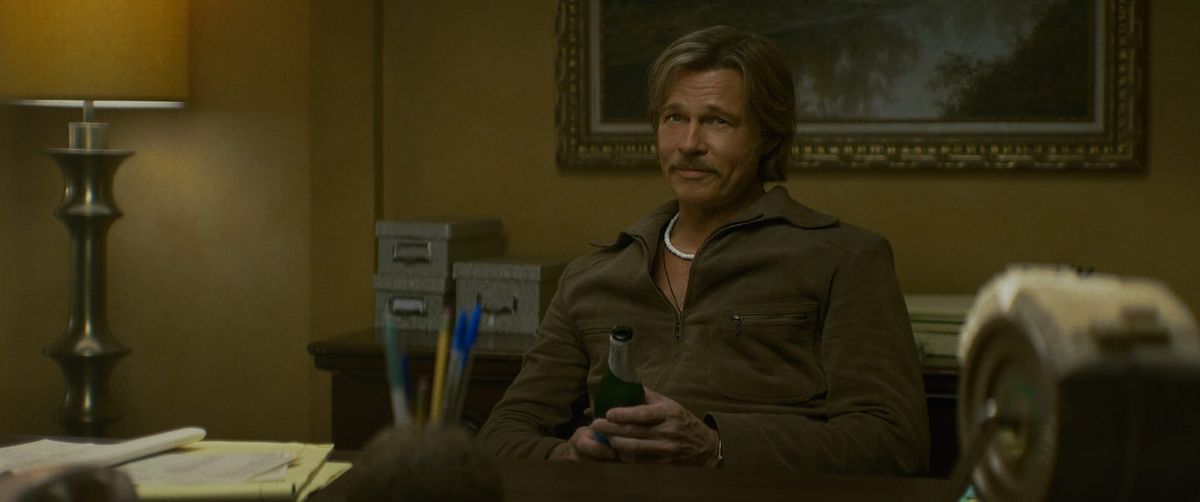
I’m trying to imagine going back to 2011 and telling myself that not only will David Fincher and Quentin Tarantino collaborate on a movie, but that movie will feel like hollow imitation of their strongest tendencies. How could these acclaimed directors with multiple masterworks between them create something that feels so empty? The answer lies somewhere in the ramshackle nature of The Further Mis-Adventures of Cliff Booth, a sequel to Tarantino’s 2019 film Once Upon a Time…in Hollywood. With Tarantino as screenwriter and Fincher as director, we can see how awkwardly these two tones come together, and while Brad Pitt’s titular character and the supporting cast make for a watchable picture through sheer charisma, there’s little here that feels essential or daring. As even Cliff admits at one point, “I’m just not that deep,” and neither Tarantino nor Fincher seem to mind wading around in such shallow waters. The film feels akin to the novelization of Once Upon a Time…in Hollywood in that it’s bonus content rather than a thrilling yarn.
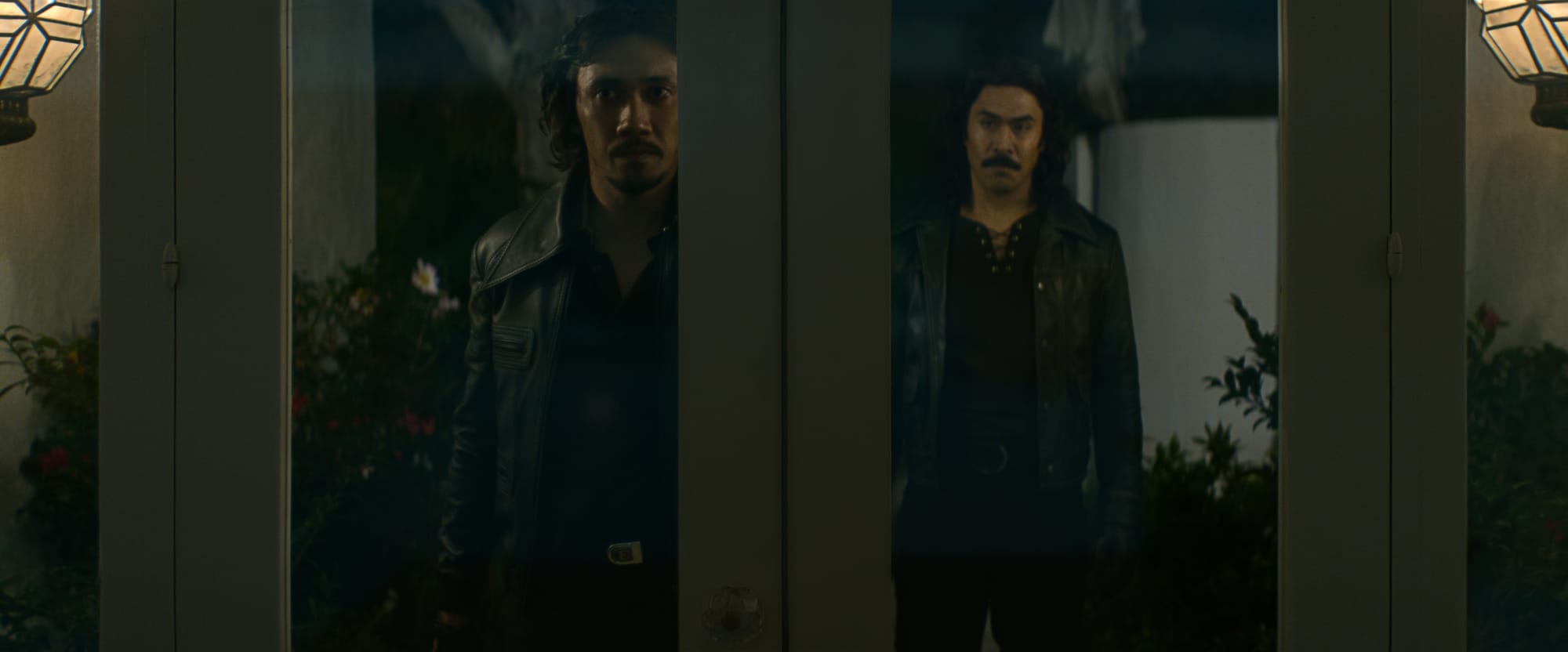
Picking up in 1977, Cliff Booth (Pitt) is now working a series of odd jobs in and around Hollywood. He works at a movie house (The New Beverly, which is owned by Tarantino, in case you want to roll your eyes early in the picture), tends bar, and also operates as a fixer for friends. While not a straight-up sociopath, the unflappable Cliff is, as we know, comfortable with violence. This gets him the attention of TV star Charlie Peters (Scott Caan), who needs Cliff’s help getting out of a jam involving dangerous Filipino gangsters, the Verdusco Brothers (Matt Groove and JB Tadena). Cliff reluctantly agrees, but his eye is more on Charlie’s fetching agent, Karen Crosby (Elizabeth Debicki). Across the course of a week, Cliff attempts to charm Karen while untangling the situation with Charlie and the Verduscos.
The Tarantino Problem
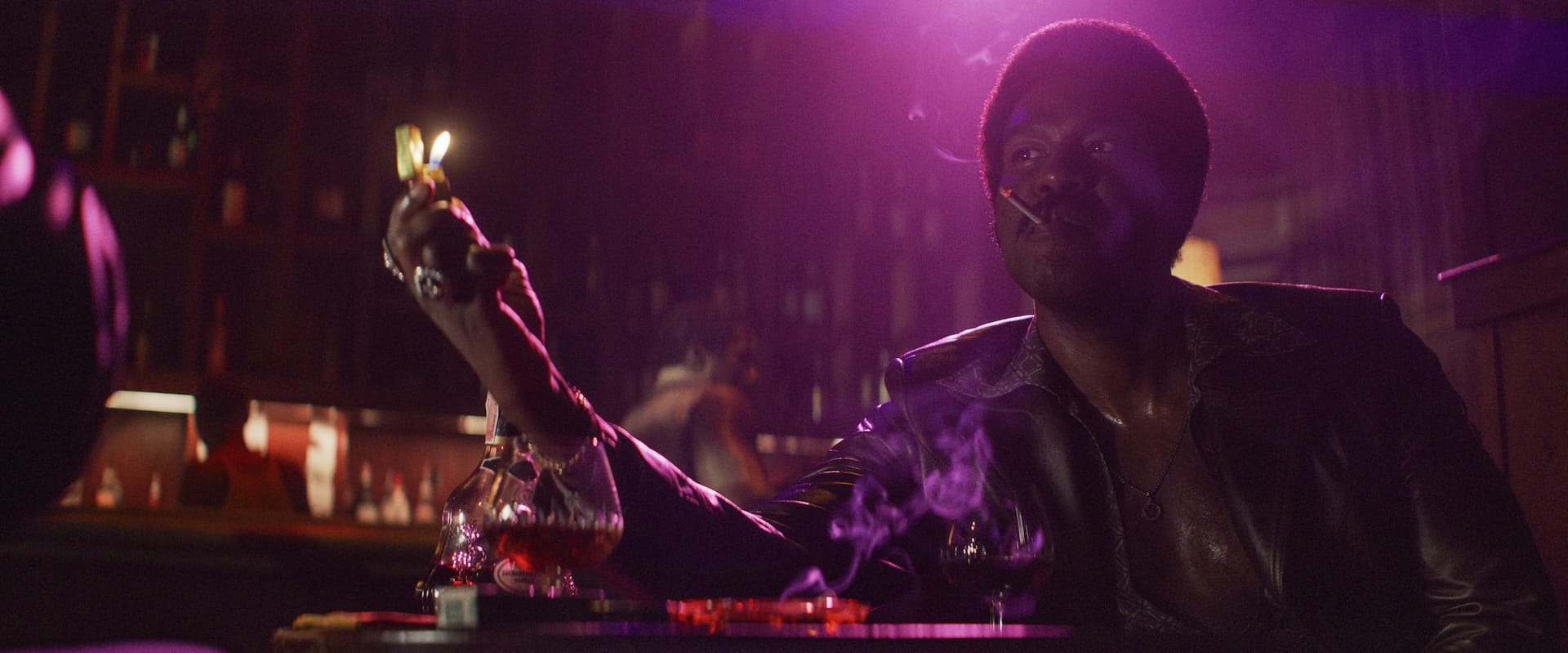
What rankles here is that neither Tarantino nor Fincher feel like they’re giving this picture their all. Once Upon a Time is also a loose hangout picture, but the fairy tale aspect combined with the pathos derived from the real-world loss of Sharon Tate (Margot Robbie) infuses the picture with a sense of romance and loss. It’s a world that Tarantino wants to be a part of and never wants to end, and the love he has for it as well as the love between Cliff Booth and Rick Dalton (Leonardo DiCaprio) makes the picture come alive even if it’s never hurried to get anywhere.
By comparison, Mis-Adventures feels like the leftovers of half-formed ideas scattered about Tarantino’s brain. Setting aside his neurotic fear of making more than 10 movies, Tarantino’s failure to fully invest in this one leaves it playing more like a collection of extras and discards; a fruitcake of individually delicious things that don’t taste great when smashed together. You can see not only an assortment of Cliff Booth plots (love interest, family, various jobs), but even elements of Tarantino pulling from other previous works. Early on, there’s a film-within-a-film that pulls from the Once Upon a Time…in Hollywood novelization about the hard work and tenacity it takes to sexually traffic women (it’s gross in the book, and it’s not much better in the movie). Karen also used to be a film critic, and her material appears to come from an abandoned project that could have been Tarantino’s 10th movie.
Perhaps in Tarantino’s hands, this could all coalesce, but on a screenplay level, it’s a bunch of scraps, and the movie always feels incomplete because of it. For example, Yahya Abdul-Mateen II plays an athlete-turned-actor, but he’s barely in the movie. Crosby has a long monologue about how movies can never rise above being entertainment into art, which feels like it belongs in a different film that wants to unpack that idea. But within Mis-Adventures, there’s little forward momentum. Even the central conflict involving Charlie and the Verdusco Brothers is almost an afterthought with the Verduscos coming into the picture about forty minutes in and then disappearing for almost an hour.
It all gives Cliff Booth an airy aspect, and perhaps fittingly unhurried for its laconic protagonist. But Booth is so placid that nothing gets to him, and we know nothing can. Tarantino has had fun in the past taking such confident men and testing their resolve. Dr. King Schultz in Django Unchained is similarly self-assured and capable, but when faced with the unflinching brutality of slavery in the South, he can’t abide the mockery of manners he sees in men like Calvin Candie. The unstoppable force hits the immovable object, but Cliff Booth never met an object he couldn’t move. Once Upon a Time at least provided the friction that he was blacklisted because people think he killed his wife. In Mis-Adventures, only the positive legend remains. He’s the guy that kicked Bruce Lee’s ass and killed the Manson cult members. Cliff greets those tales with an “Aw, shucks,” attitude, but the man is untouchable. It’s strange to see what amounts to a macho fantasy for Tarantino, and the fantasy also works in Tarantino’s movie theater. It’s stranger still when you hand him over to David Fincher.
The Fincher Problem
Say what you will about Quentin Tarantino, but he wears his heart on his sleeve in his movies. They are a collection of his interests and fetishes, and despite not being able to act his way out of a paper bag, he never seems happier than when he’s in front of a camera playing a character. This is a striking inverse to the cold, calculating Fincher, a man with a wry, dark sense of humor who is more interested in the interiority of his characters. His movies aren’t humorless or dull, but they’re aggressively fine-tuned. The lifeblood that runs through them are Fincher’s fascinations with the bleaker side of human nature rather than in chaotic uplift.
Since his unhappy experience on Alien 3, Fincher has made total control of his movies a priority. His partnership with Netflix for the past decade speaks to an exchange he’s willing to make for less cultural permeation in exchange for no notes on Mank, The Killer, and Mindhunter. And while these Netflix projects have varying degrees of success, they all feel like the work of a filmmaker whose personality and vision infuses his art with a distinctive energy. By comparison, Cliff Booth almost feels like a work-for-hire job, no different than the countless commercials he’s done over his career. It’s almost like Fincher is doing a solid for Pitt (who also serves as a producer) and wrapping up his commitment to Netflix. Despite working with frequent collaborators like cinematographer Erik Messerschmidt, editor Kirk Baxter, and composers Trent Reznor & Atticus Ross, there’s little of Fincher’s personality here.
When it does arise, it’s almost like wandering into an entirely different movie, and it shows how far apart Tarantino and Fincher are in their sensibilities. While both directors have no problem with shocking violence, for Tarantino, violence is a cathartic force. It’s bloody, but oddly fun akin to the exploitation movies he adores. For Fincher, violence scars, and tends to be disruptive to the social order. In a movie like Zodiac, it can reach out so far, it will twist the lives of those who seek to understand such mindless brutality. When you toss that approach into Tarantino world, you get a jarring sensation like someone spliced scenes from Manhunter or In Cold Blood into Once Upon a Time…in Hollywood. To then return to the stoner noir of Tarantino’s approach never fully connects, and it sends uneasy shockwaves through the rest of the picture.
The Pitt Problem
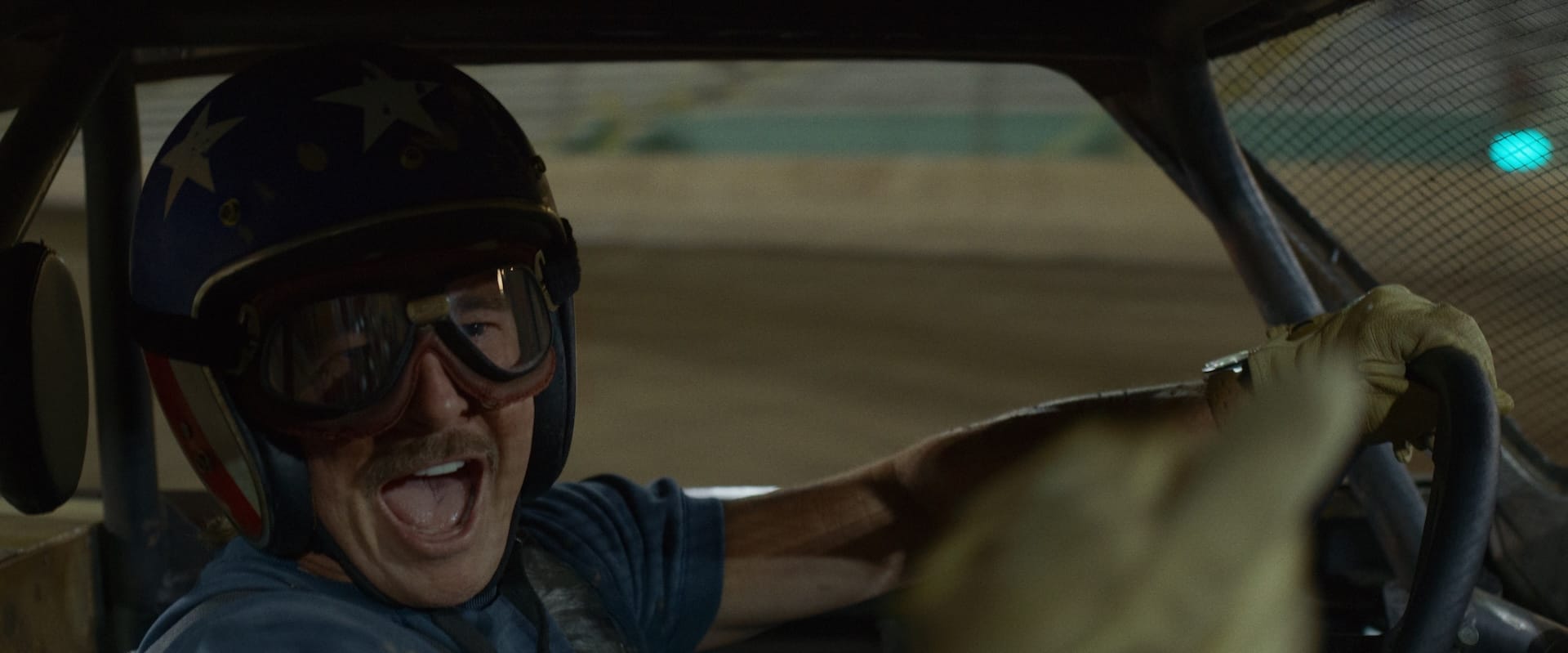
If there’s an element that largely works in Cliff Booth, it’s the performances across the board. Pitt knows he has a winner of a character in Booth, and why wouldn’t he want to play a guy who always wins and is always cool? He’s still clearly having a lot of fun with his Oscar-winning role, and this time out, there’s even less to chew on. There’s an interesting idea the movie never pulls at with how the darker side of Cliff has been erased by time in favor of his positive reputation. Everyone loves Cliff, and the notion he may have killed his wife is never mentioned. That feels like a pointed choice given Pitt’s ongoing popularity despite recent allegations of his behavior towards his family. Pitt even joked in one of his SAG acceptance speech for Once Upon a Time about it wasn’t a stretch to play a guy who doesn’t get along with his spouse. That reads darker now, and the fact that the film won’t even dare to add that inkling of darkness to the character makes it feel like it exists more to burnish Pitt’s reputation than challenge him as a performer.
That laid back quality extends to the rest of the cast, and at least everyone has a good time with the picture regardless of how little it demands of them. The movie obeys the cardinal rule of “Let Elizabeth Debicki Be Tall,” and when you see glimpses of what could have been a movie entirely about her character, you can’t help but see a missed opportunity to simply hand the entire picture over to her. Scott Caan does his father proud with the pugnacious electricity he brings to Charlie. And as much as Cliff Booth feels like a collection of loose threads, you do want to follow everyone as far as they’ll go because the characters are so colorful. If the movie was nothing more Cliff hanging out with his dad (Peter Weller), it would be an entertaining, warmhearted picture.
But the driving force where Tarantino and Fincher seem to agree is to just let Pitt have fun. They’re not here to challenge his dramatic range or ask difficult questions about the nature of Hollywood fame. They’re here to see him do demolition derby, wink at the pretty ladies, and be tougher than any tough guy in the greater Los Angeles area. It’s all a breeze, and as a breeze, it’s a pleasant enough watch that will likely fill time for people who want to rewatch Once Upon a Time…in Hollywood on Netflix. And when that isn’t available because Sony has licensed the rights to a different streamer at that time, they’ll watch The Further Mis-Adventures of Cliff Booth instead. However, for two filmmakers whose work tends to land with the force of a hurricane, a film this faint does both of them a disservice.
The Further Mis-Adventures of Cliff Booth arrives in IMAX theaters on November 25 and on Netflix on December 23. Matt Goldberg is a film and TV critic who runs the newsletter Commentary Track.