TIFF 2026 Dispatch #1: The Debut, Your Mother Your Mother, Being Heumann, and Tangles
Stephen David Miller kicks off his coverage of the 51st annual Toronto International Film Festival.

I'm pleased to share with you the first of several dispatches by Stephen David Miller from the 51st Toronto International Film Festival. Today, Stephen kicks off his coverage with reviews of Being Heumann, Your Mother Your Mother Your Mother, The Debut, and Tangles. -David Chen
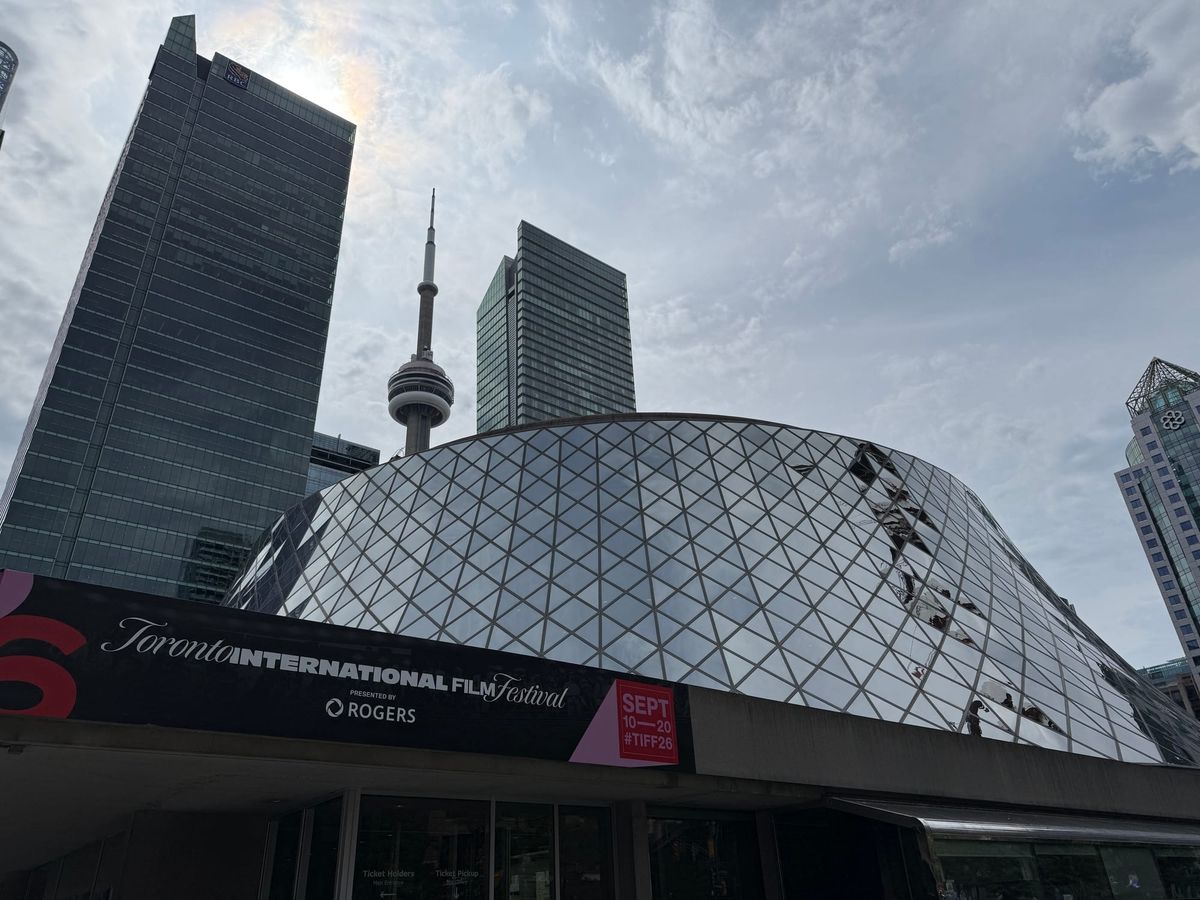
Greetings, Decoding Everything readers! Continuing my trend of filing sleep-deprived dispatches from Francophone countries, I’m currently writing to you from an Airbnb in Canada. I’ll be here all week, attending the second half of the Toronto International Film Festival and bringing you coverage of some of the buzziest titles of the fest.
Today, I’ll be giving you 4 reviews: Siân Heder’s Being Heumann, Bassam Tariq’s Your Mother Your Mother Your Mother, Jesse Eisenberg’s The Debut, and Leah Nelson’s Tangles. But first, some table setting.
What’s On The Menu?
When I write about other festivals, I often try to tease out some essential character. But Toronto has always been tough to pin down. Despite having numerous world premieres to its name, I see it less as a lineup with a clear-cut identity than as an awards season focus group being conducted en masse. Taking place within a week of both Telluride and Venice, it hoovers up the buzziest titles from both, sprinkles in a few darlings from the earlier fests (Sundance, SXSW, Berlin, Cannes), and throws them in a blender with its own proprietary slate—a jumble of tiny Canadian indies, prestige films from major American studios, late-night genre fare, and a variety of world cinema that runs the gamut from blockbuster to art house. Including pandemic-era virtual screenings, I’ve attended at least 7 iterations of the fest. If there’s a flavor that unifies its menu, it’s lost on my palate. Other festivals are restaurants; this one’s a buffet.
To understand TIFF, you need to turn your attention from the screen to the ticket line around the block. The audience is the festival’s reason for existence and its most unique asset. Taking place in a major metro area with an international airport to service it, and absent the bureaucratic hurdles that make other festivals seem out of reach to all but the most diehard sickos, Toronto draws a crowd which I’d lovingly describe as “Letterboxd-core.” Sample the attendees of any Alamo Drafthouse or Oscars watch party in North America, and you’ll find roughly the same demographic mix: casual viewers, omnivorous obsessives, and only a manageable percentage of snobs. More than any other festival I’ve attended, audiences here are palpably rooting for every movie to succeed. They’re generous with their laughter, quick to give themselves over to a tear-jerker, and prone to spontaneous mid-screening bursts of applause. This is why the People’s Choice Award is often seen as a bellwether for the coming awards season, regardless of Tomatometer scores. For an illustrative example, consider 2018. That year, the two runners-up were critically beloved triumphs by auteurs Barry Jenkins (If Beale Street Could Talk) and Alfonso Cuarón (Roma). But the ultimate winner was Green Book.
Speaking of Peter Farrelly movies with subtly accented protagonists, I’d originally intended to kick this dispatch off with a review of I Play Rocky. Work and insomnia conspired against me, however, and I wound up calling a last-minute audible to bail on my screening and sleep. At the time, I figured this was one of the more skippable titles in my schedule, and critics still seem to (partially) agree. But word of mouth suggests that it brought the house down at its public premiere, and is now assumed to be the frontrunner for the People’s Choice Award. In my years of covering festivals for Decoding Everything, I’ve somehow never missed the film that caught the top prize, so it’s humbling to start this year with a big, clunky, self-inflicted failure. Then again, as a certain Philadelphia icon can teach us, the journey can be rousing even if it ends in defeat. My “Eye of the Tiger” montage would largely consist of chugging coffee, sitting in dark rooms for 10+ hours a day, and trying and failing to sleep—but hey, otherwise, it’s essentially the same story!
On that note, let’s dive into the reviews.
Being Heumann (Siân Heder)
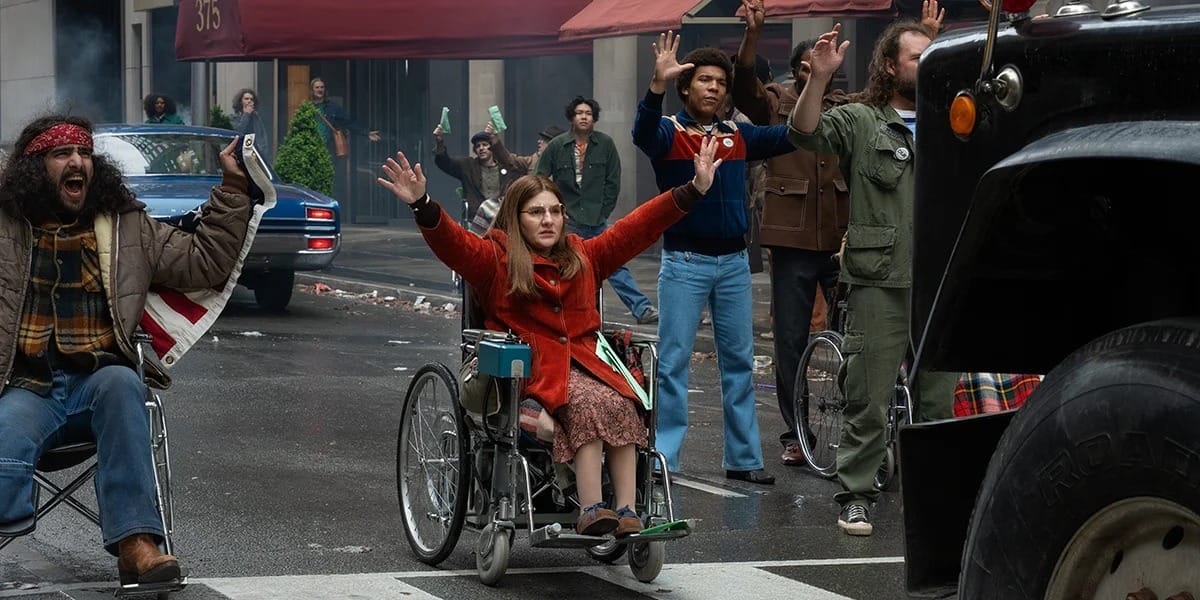
More than once, I’ve seen CODA lumped in with Green Book as a negative example of Oscar bait. Personally, I was taken with the bighearted drama when it first premiered at Sundance, and think that label is both unfair and inaccurate. Still, I have to admit that I feel a certain sheepishness when I cop to having loved it. That bizarre Best Picture win ripples backwards in my memory, downgrading a charming indie gem into a thudding guilty pleasure. That might explain why, when I saw that Siân Heder was here with a film about a disability rights icon, my instinct was to cringe. I envisioned a broadly inspirational story à la On the Basis of Sex, well-intentioned but shallow. Being Heumann was sure to elicit those generous Toronto applause breaks, but would it have anything substantial to say?
In the film, Judith Heumann (Ruth Madeley) expresses similar reservations. The year is 1977, and the activist has staged a sit-in at the San Francisco Health, Education, and Welfare (HEW) Department. Over a hundred disabled protestors are now days into their occupation of the federal building, and a reporter (Dylan O’Brien) believes he can draw attention to their cause. It’s “inspirational,” he argues, and he certainly isn’t wrong. Picture wheelchair users, the blind, and the deaf, all joined in solidarity, foregoing food and comfort to insist upon their right to exist. It’s an image that moved my 2026 audience, and would likely have moved contemporary news viewers in kind. But inspiring in the intransitive sense is weak and superficial. To change the world, you need to inspire some concrete act.
On occasion, the biopic does indulge in some tropes of the genre: stirring speeches delivered to visibly awed characters, needle drops as shorthand for earned emotion. But I’m quick to forgive them, because it absolutely shines in the specifics. Heder wisely cast actors whose real disabilities mirrored their on-screen counterparts’, lending an unmistakable authenticity to the proceedings. That authenticity is key to a film which is primarily interested in what makes disability rights distinct from other movements—its heterogeneous facets, and the calls to action they demand. Judy and her colleagues seek to pressure HEW Secretary Joseph Califano (Mark Ruffalo) into signing Section 504 of the Rehabilitation Act, granting disabled individuals equal access to federal services. Califano is vaguely sympathetic to the cause, for the same reason lawmakers passed it five years prior: It sounds nice in the abstract. But in practice, it’s a can of worms, requiring an expensive, nationwide effort: curb cuts on sidewalks, ramps in every post office, interpreters in public schools, and on and on. To paraphrase the Secretary, they aren’t just asking for a seat on the proverbial bus; they’re demanding he rebuild the bus to suit them. It simply isn’t pragmatic!
The activists don’t disagree that real accessibility takes effort, likely far more than anything considered in the bill on Califano’s desk. Where they differ is in his definition of pragmatism, which treats certain rights as impositions rather than non-negotiable constraints. “Disability is not a tragedy,” Hale Zukas (Andrew Pilkington) famously quipped, “It is a tremendous hassle.” Being Heumann is an ode to all manner of hassle, from the mechanics of living with a disability, to the logistical challenge of organizing, to the nonstop cajoling of public officials to act. It argues that it is right and good to take up space, to not apologize for your existence. At a time when nearly everything seems designed to minimize our discomfort, it champions friction as a catalyst for change. Be bold. Be loud. Keep pushing.
Your Mother Your Mother Your Mother (Bassam Tariq)
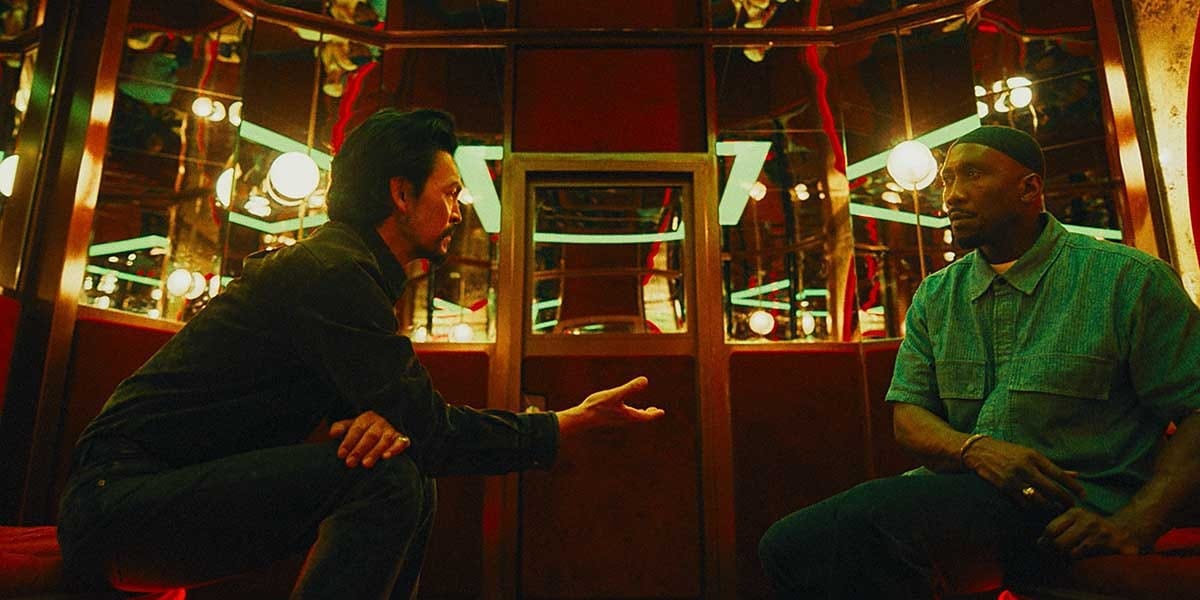
If the previous film used specificity to elevate a cookie-cutter crowd-pleaser, Your Mother Your Mother Your Mother is its polar opposite. It’s a jolt of creative energy, uncategorizable and unruly, and I’m still trying to unpack what it means. The only thing I’m certain of is that I loved it.
Latif (Mahershala Ali) is similarly defiant of templates: a devout Muslim, a father of three, and a killer for hire. When his wife dies, each identity is called into question. He’s resolved to give up his profession to focus on being a single father, yet in the latter role, he feels woefully insufficient. He’s been absent for so long, he can barely relate to his daughter (Adia). And while he wants to continue to be a model of faith, in his grief, he lacks the capacity to pray. Emotional and spiritual nourishment are severely lacking, and even the physical is hanging by a thread. His infant son is incapable of digesting formula, and the reserves Latif’s wife had pumped are nearly gone. And so, he embarks on a desperate quest to find breast milk for his child—one which sees him caught between multiple violent players in the criminal underbelly of Houston.
There’s a narrative which I’ve seen floating around, describing this as the Blade film Bassam Tariq and Ali never were able to make. I understand the comparison, but only to a point. Latif’s weapon of choice is a sword and it’s riveting to watch him use it: He slices through his opponents in sharp, staccato bursts, forming balletic choreography of violence. But Tariq resists the rhythms of an action film at nearly every turn, far more interested in Latif’s inner struggle than he is in any given villain or luxuriating in bloodshed. Which isn’t to imply that this is a restrained film, either, although it has far fewer fight sequences than you might expect. Instead, it flows with a sort of maximalist emotional logic, overlaying Latif’s inner thoughts and outward actions, so that violence feels less like a spectacle than an extension of his spiritual and psychological grappling. At its core, this is not a story about a blade-wielding hitman. It’s a film about loss, parenthood, and the extremes of religious devotion—the dangers of fundamentalist fervor, the loneliness of losing faith entirely.
None of this should make you brace for some grueling, arthouse slog. Although Tariq has heavy themes on his mind, there’s a propulsivity to his style that makes it totally engrossing. Whether in a mosque or a strip-club-turned-church or a gaudy Gen-Z mansion, everything is hyper-saturated, textured and distinctive. It’s intense and beautiful, but also surprisingly comedic, packed with an eclectic collection of baddies. Latif’s run-ins include a gruff Arabic gangster (Laith Nakli), his dirtbag pornographer nephew (Abubakr Ali), and a militant evangelical Christian cult leader who sings worship songs while firing an assault rifle (John Cho). All of this might sound a bit incongruous, but trust me, it somehow fits together. Mahershala Ali navigates these tonal shifts with ease, building to an emotional crescendo that punched me in the gut. I’m still not certain what it all means, but I’m in awe of the result.
The Debut (Jesse Eisenberg)
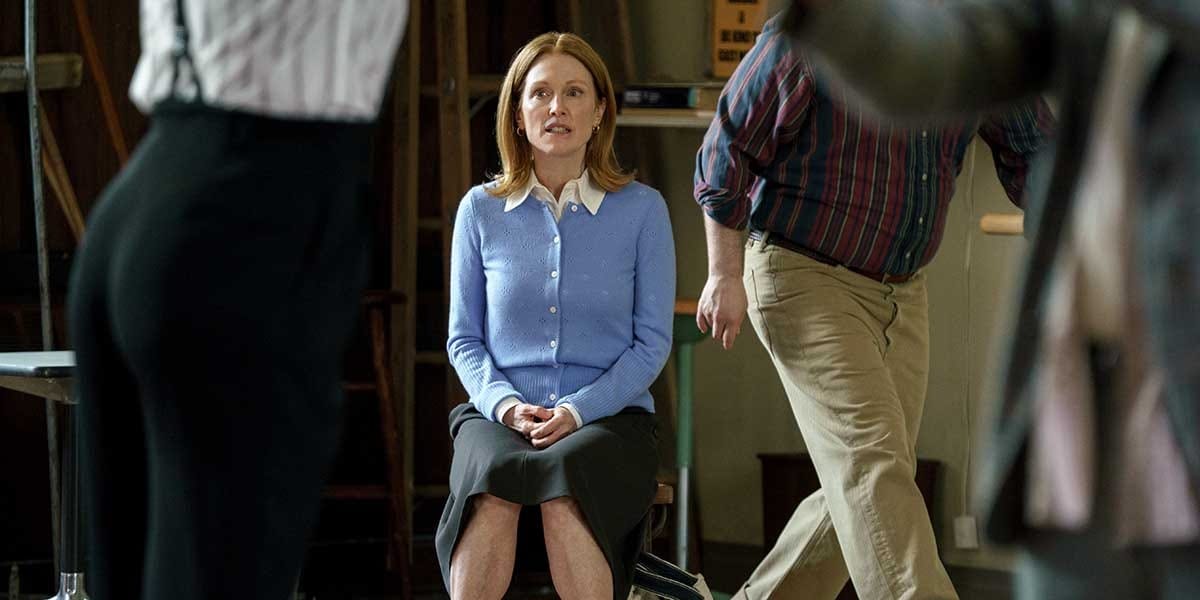
The Debut is another film about wild tonal swings, and a celebration of the actors who can pull them off. Julianne Moore stars as Mona, a discontented housewife in suburban New Jersey who seems constitutionally incapable of taking up space. Her husband ignores her, her teenage children no longer need her, and she speaks with the cadence of a preemptive apology. It’s surprising she could even muster the confidence to walk into her local community theater and audition for a part. But she does, and when she bags the role, her confidence continues to flourish. To Mona’s fellow castmates there are no small parts, and to their petty tyrant of a director (Paul Giamatti) there are no small productions. Thus, there can be no small people. When Mona steps onto that stage, she must shed herself entirely and fully inhabit Miss Danielle: the brash, no-nonsense superintendent of the NYC apartment where their musical is set. Anything less would be artistic malpractice.
In keeping with many of my favorite satires, Jesse Eisenberg’s absurd comedy/musical/drama is evidently in love with the subject that it skewers. This is a hilarious look at the world of musical theater and the self-seriousness of artists, made by people who are seriously committed to its premise. As in Maddie’s Secret, the metatext bleeds into the text to conjure something that’s both in on the joke and thoroughly sincere. From the fictional musical at the center (composed by Eisenberg himself) to the wide-eyed players who bring it to life, everyone is giving this thing 110%. Even the camerawork is dazzling. But nothing can hold a candle to Moore’s acrobatic performance. At any given moment, she might be a timid wallflower, a Liza-Minnelli-esque superstar, or on the verge of a Rupert Pupkin delusion of grandeur; sometimes, she flows through all three in a single scene. In the Q&A, Eisenberg said he wrote the film specifically for her. Having seen it, I understand why. I cannot conceive of anyone better suited to this material, or of a vehicle that would better show off her singular talent.
Going back to that odd undercurrent of sincerity. You know that moment in a musical when a character suddenly departs from reality and breaks into a song? There’s something interesting about that transition, and I suspect Eisenberg’s obsession with it runs deeper than the theater. When do we hold back, and when do we let things burst forth? The protagonists of A Real Pain embodied those extremes: one who represses every instinct, the other a constant open wound. Here, Mona is holding both within herself, whether tasked with playing “Miss Danielle” or “loving wife” or “Mona Friedman.” She can recite every preordained line to a tee, or she can throw out the script and act purely on impulse, but neither is likely to satisfy an audience. Without risk, the performance is dramatically inert; without guardrails, it devolves into full-throated chaos. She needs to find a balance, opening just wide enough but no further.
Tangles (Leah Nelson)
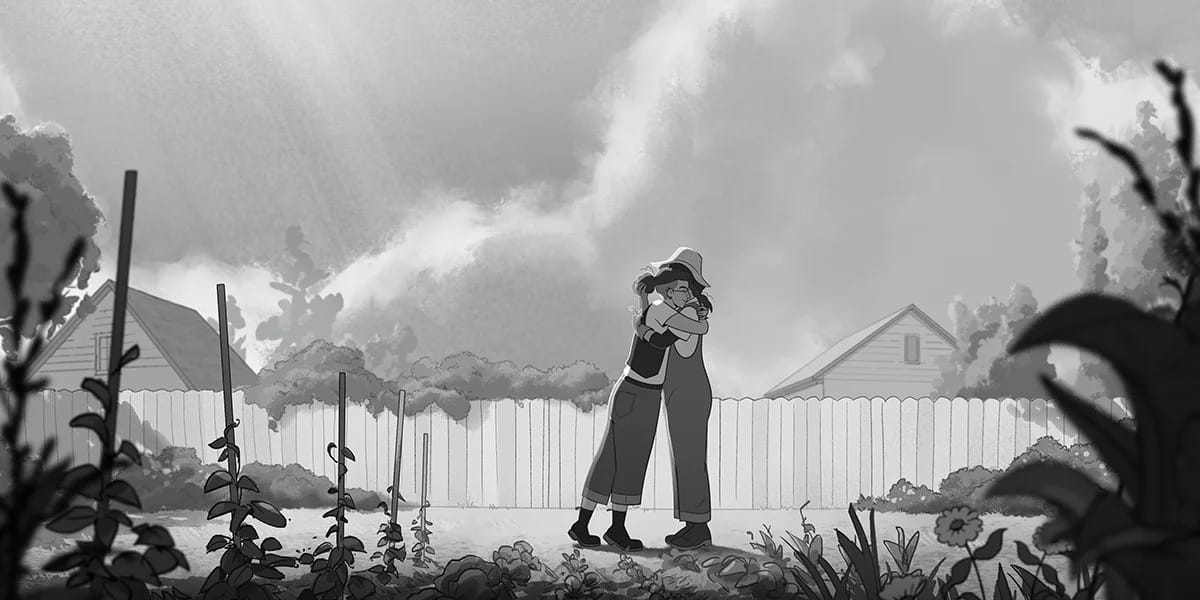
It’s hard to get the levels right. When is it okay to lean into escapism? What is the appropriate amount to feel? If these tensions hum in the background of everyday life, a personal tragedy can make them nearly deafening. Tangles is about a shockwave that ripples through a family, and the slow process of regaining their footing.
Sarah (Abbi Jacobson) is the first to verbalize the issue. The young, queer artist has just flown in from San Francisco to spend a few days with her parents, and her mother Midge (Julia Louis-Dreyfus) isn’t acting like herself. She’s irritable, fidgety, forgetful. When Sarah brings it up to the rest of her family, they downplay the symptoms and chalk it up to menopause. But it hangs heavy in the house, like a repressed intrusive thought. Eventually, all that amorphous wrongness coheres into a brutal diagnosis: Midge has Alzheimer’s disease. Sarah’s dad (Bryan Cranston) takes on the caregiver role with a winsome demeanor, but cracks in the facade begin to show. He needs help. Sarah’s visits become more frequent, and her life back home recedes in kind.
As you can probably imagine, this is a heartbreaking viewing experience. I cried numerous times, and assume most everyone around me did too. But what I adore about Leah Nelson’s film is that it refuses to merely be a tearjerker. Adapted from Sarah Leavitt’s graphic memoir of the same name, it carries a fearlessness that can only come from hard-won experience. Where other films about this subject would focus on the tragic perspective of Midge, Tangles turns its attention to the effect this has on Sarah. She’s powerless, and frustrated, and she forwards that onto her family under the guise of “taking charge.” The disease is so terrible, it has led her to minimize everything else by comparison. How could a relationship, a career, or her emotional well-being possibly stack up against the pain her mother is going through? Having convinced herself that love demands being fully subsumed by tragedy, she finds herself resentful, and guilty about that resentment, and stuck.
None of this is presented as self-flagellating or didactic. The beauty of the animated medium is that it frees us to live in Sarah’s head. It grants us a window into her contradictory feelings without needing to disentangle them, and a permission structure to mine moments of levity from even the heaviest material. Rendered in gorgeous black and white, and carried by Abbi Jacobson’s achingly earnest narration, Tangles is honest but never gives you more than you can handle. As the film suggests, the best way to demonstrate love to a person isn’t to contort yourself around them; it’s to nurture your own rich inner life and invite them to share in it. I’m grateful to have been invited into this one.
—
That's a wrap for today! Tune in next time for reviews of Wild Horse Nine, Ink, and more.
Stephen David Miller is a film enthusiast and cohost of The Spoiler Warning Podcast, who writes on Letterboxd and his personal blog.