In ‘Disclosure Day,’ Spielberg Fights for Truth and Empathy Over Alienation
The master filmmaker returns to his signature subgenre for a bumpy, exhilarating ride.


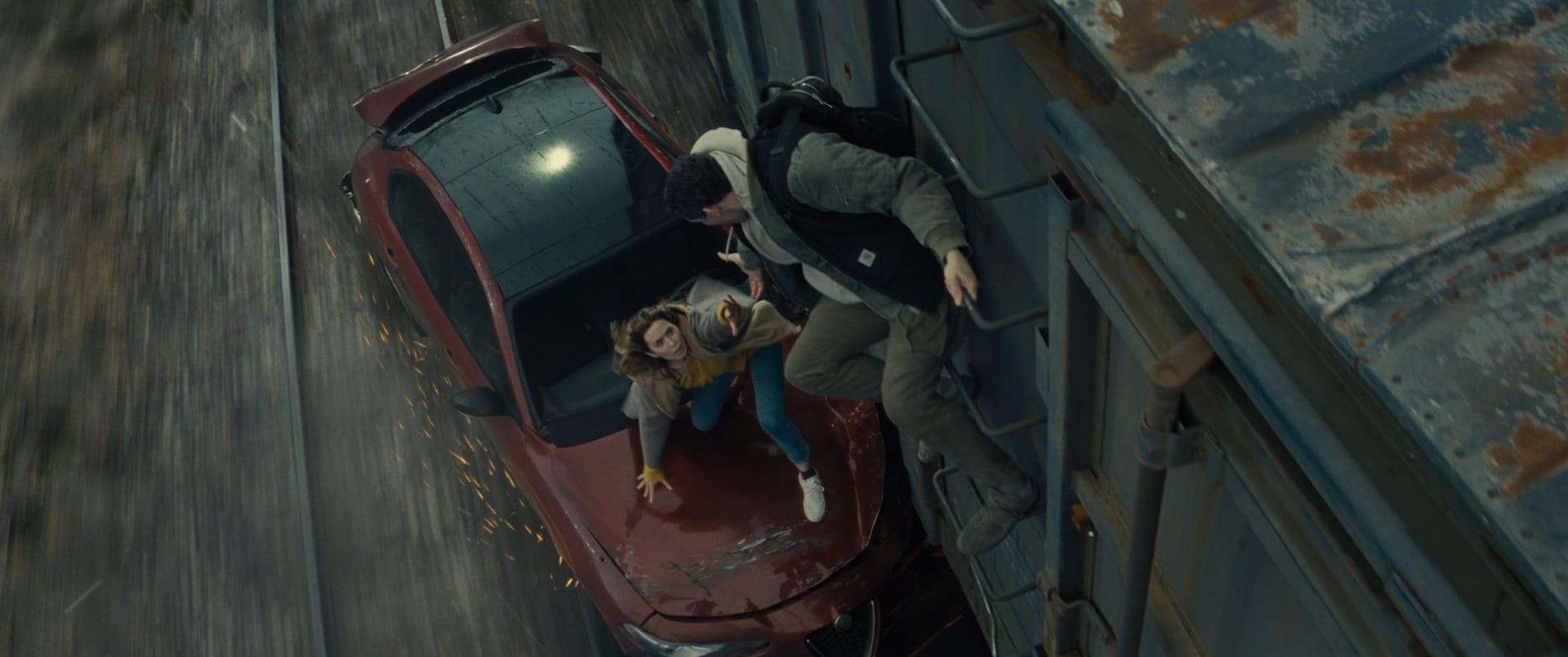
Even though Disclosure Day is only Steven Spielberg’s fourth film to deal with aliens (five if you count Kingdom of the Crystal Skull, but let’s not), it’s a sci-fi sub-genre he towers over thanks to Close Encounters of the Third Kind, E.T. the Extra-Terrestrial, and War of the Worlds. And yet his new feature also feels like a trip through more than just these sci-fi films, with notes ranging from The Sugarland Express to The Post. As a blockbuster, Spielberg shows that even in his late ‘70s, he’s unparalleled as an action filmmaker, moving the camera in such a way that a conversation between two people can be as breathless as a train bearing down on them. But the concerns he expresses through Disclosure Day feel oddly out of step, and his societal aspirations are suited to an information era that passed us by decades ago. It’s a movie bursting with ideas, but it can also feel alien to our current moment.
The story opens by sending us along two tracks. The first follows Daniel Kellner (Josh O’Connor), a cybersecurity expert now on the run with his girlfriend Jane Blankenship (Eve Hewson) from his former employer, defense contractor Wardex, run by nefarious Noah Scanlon (Colin Firth). Daniel, alongside his former Wardex colleague Hugo Wakefield (Colman Domingo), plans to release material that Wardex has kept from the public for over half a century. The other track belongs to Margaret Fairchild (Emily Blunt), a restless TV meteorologist who, for reasons she doesn’t understand, begins to speak new languages and form psychic links with anyone she meets. When Margaret speaks in an alien language on air, it sends her and Daniel on a fated collision to change mankind’s understanding of the universe.
There’s so much here that plays like Spielberg’s reaction to our current media moment, especially as far as entertainment is concerned. The opening scene drops us straight into the action, as if to say, “No, this isn’t a TV series where I’m going to spend a whole season laying groundwork before the story begins.” Moreover, Disclosure Day is an extremely information-dense film, purposely designed to make you lean in and try to figure out what’s happening. It cannot, contra to our current crop of direct-to-streaming features, be played in the background while you fold laundry or tool around on your phone. And finally, while there’s certainly CGI here, much of the movie is grounded in the physical, keeping us tethered to the terrestrial even as our characters deal with mysteries from the heavens.
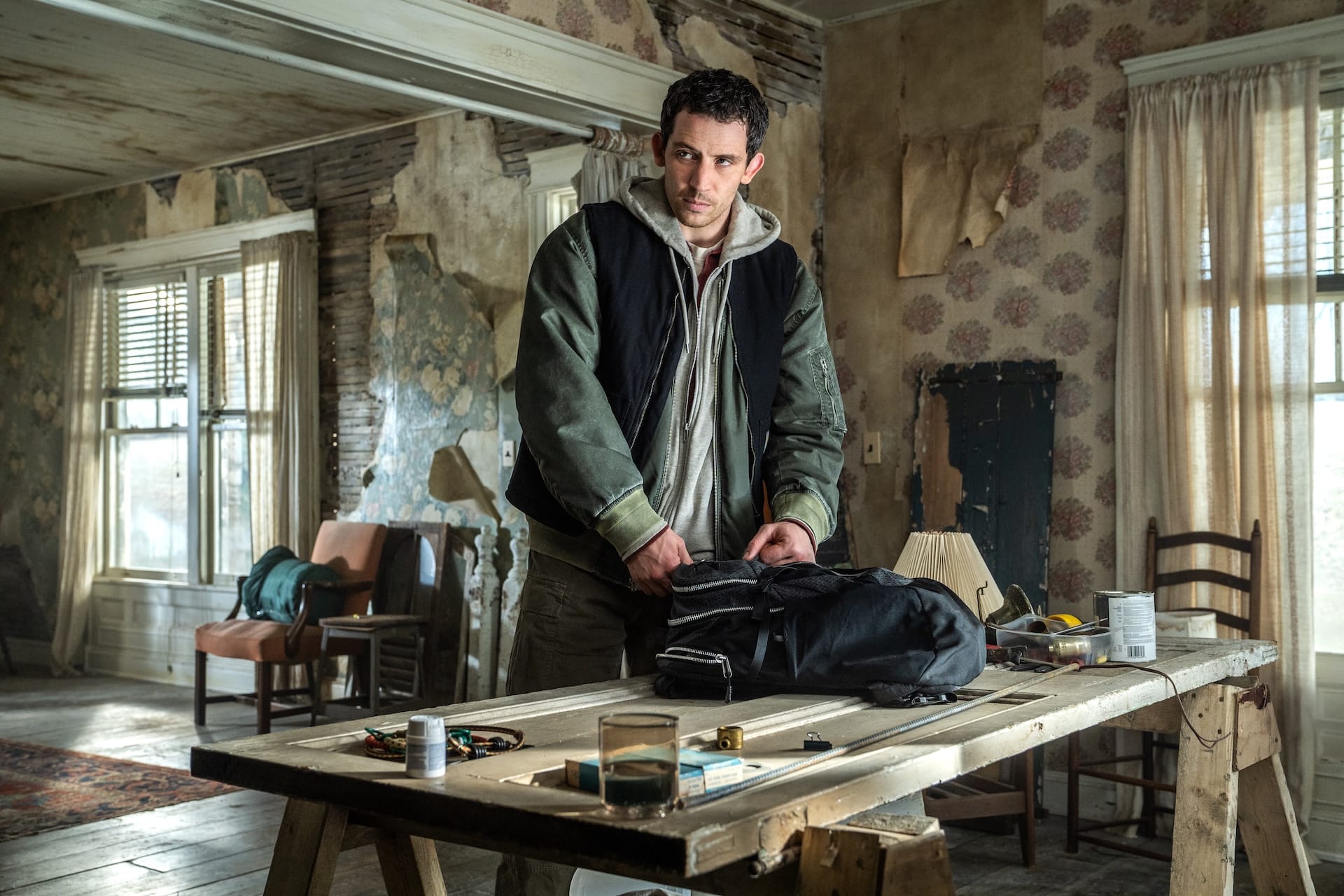
Watching Margaret and Daniel propelled by forces they don’t comprehend makes Disclosure Day feel like a sibling to Close Encounters, but from a filmmaker more confident in his own approach and ideas. While his 1977 feature is now regarded as a classic, I’ve always found it a bit cold, and despite its visual ambitions, one that seems like it’s chasing 2001: A Space Odyssey in its attitudes. Disclosure Day plays as far more human, sending its characters not to a place like in Close Encounters, but to each other. What renders Daniel and Margaret unique is they’ve both developed a kind of super-empathy that could unite the world. Noah and his cadre of goons are evil not necessarily because they’re destructive, but because their actions are built on keeping people apart, shielded from the truth, because they presume that knowledge will only tear people further apart. Our heroes believe that a communal experience of knowing the truth will unite humanity. We shouldn’t be too surprised that a filmmaker who has spent his life bringing people together for populist entertainment would find that solution heroic.
And he almost kind of gets there through sheer force. Spielberg’s filmmaking is propulsive and potent as ever, and he’s once again assembled a brilliant cast. O’Connor effortlessly strides into the everyman hero role. Firth is clearly having a ball playing what amounts to a pseudo-Bond-villain. Domingo continues to improve every role he plays, even a largely expository one like this, simply by speaking. But it’s Blunt who elevates the entire picture every time she’s on screen. Her performance is balletic with the camerawork, gliding through languages and connections as Margaret tries to hold on to her sense of self with both hands. Every time the story returns to Margaret, it’s like the picture gets a fresh jolt, especially as she bounces off her well-meaning but oafish boyfriend Jackson (Wyatt Russell).
But there’s an attitude at the center of the film that never quite acknowledges where we are as a society. Although Spielberg wrote the story for Disclosure Day in 2023, there’s much of the film that feels like it’s stuck in the mid-90s. The movie’s core ideas are about how we need empathy, and the way we get there is through common truth. Except the antagonism in the story comes from cover-up (hence the “disclosure” of the title), and that’s not where we are now. Similar to The Post, Spielberg wants to tell a story about how the fight to bring the truth to light is what makes humanity—as understood through American Exceptionalism—brilliant.
Such an American-centric view feels at odds with our current events. Even setting aside the political morass of the last decade, we’re on a global stage now, so it feels odd that aliens are firmly focused on this one geographic spot. American exceptionalism is an outdated idea, and even Close Encounters had François Truffaut milling about. That’s not to say that Disclosure Day needed to be a globetrotting adventure, but it does feel overly optimistic to make America a synecdoche for humanity at a time of isolationism and combativeness with even our allies. Perhaps for Spielberg and screenwriter David Koepp, they see the current administration’s relentless mendaciousness as the kind of cover-up the film’s heroes seek to combat.
However, I feel like this misunderstands the state of play in our information environment and why the movie’s goals never fully clicked for me. Thirty years ago, the idea that the powerful would actively withhold information was a compelling narrative. It was rooted in the Watergate coverup as well as the Pentagon Papers (again, we come back to The Post), and so there was fantastic tension in a show like The X-Files where “the truth is out there.” But cut to today, and what we have instead is a firehose of information. Nothing is withheld, but it comes at us full blast, creating an epistemological crisis. Disclosure Day hopes to unite the planet but never reckons with people living in their own realities. The truth can’t set you free if you’ve wedded yourself to information that comports with your identity.
Even though I couldn’t fully get on board with Disclosure Day thematically (and this is before you get to its attempts to address religious faith, which feel both heavy-handed yet undercooked), I also could never deny the impact of Spielberg’s filmmaking. He sent me back to the thrills of seeing War of the Worlds and Minority Report in theaters. As much as I love West Side Story and The Fabelmans, Spielberg remains a formidable blockbuster filmmaker, putting to shame peers half his age with the scale and thoughtfulness of his artistry. And yet while his skills as a director remain as sharp as ever, his ideas are a reminder that he is a child of a different generation, and perhaps he doesn’t fully see the conflicts raining down on us. Similar to how Ready Player One looks at the onslaught of IP, online life, corporate control, and concludes “Go outside and play,” the quaintness of Disclosure Day is perhaps meant for a different time. Spielberg is absolutely right about truth and empathy. However, the value of communal experience comes not through the narrative, but through the act of seeing the movie in a theater. At least in those brief hours, we’re believing the same truth.
Disclosure Day opens in theaters on June 12th.