‘Resident Evil’: Finally, a Great Video Game Movie for People Who Suck at Video Games
Rather than get hung up on lore, Zach Cregger’s adaptation leans into the thrill of playing the long-running survival horror series.

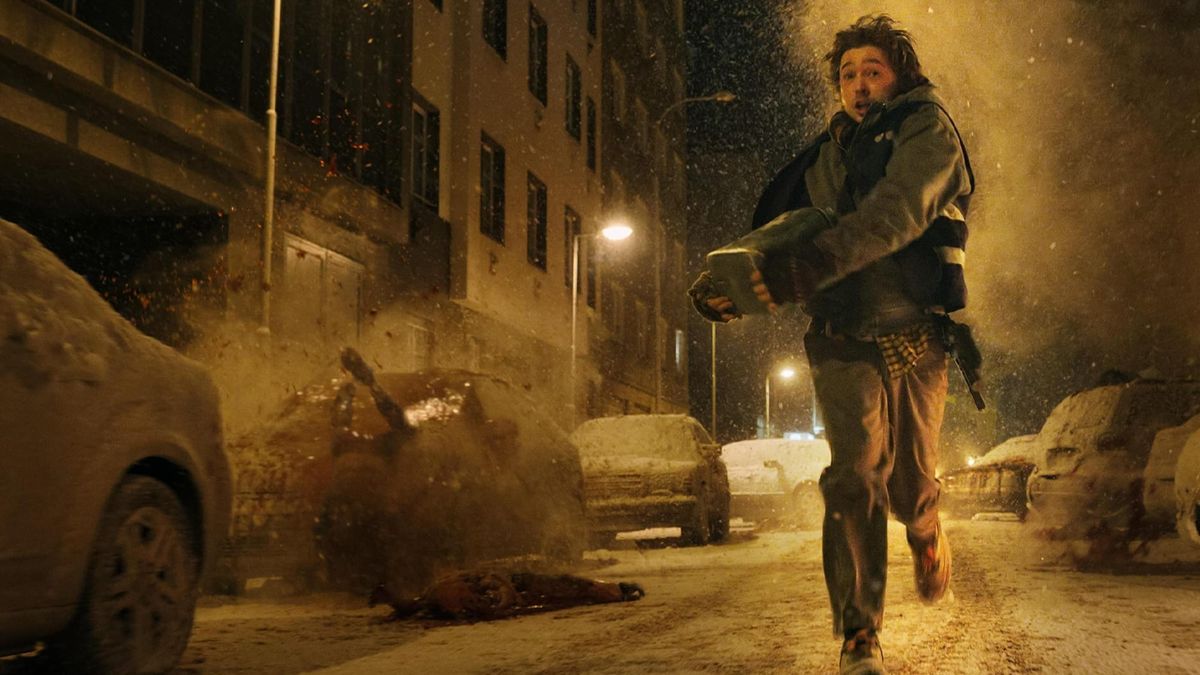
Video game adaptations are tough in part because they’re chasing a mirage. At first glance, a video game seems like another form of visual narrative, so translating a game to a movie should be no big deal. But that misses the nuances of each medium, and so film adaptations can echo a video game, but rarely do they channel its feel. Thankfully, Resident Evil director and co-writer Zach Cregger understands the larger appeal of the series beyond knowing the difference between a T-Virus and a G-Virus. His new movie is the right kind of adaptation, largely discarding the game’s ongoing mythology beyond the broad outlines, and instead leaning into the perspective of the unseen player—us. With Austin Abrams as a terrific everyman way out of his depth, the new Resident Evil is frequently hilarious without ever losing the scares that made the series one of gaming’s most popular franchises.
Bryan (Abrams) works as an organ transplant donor. His girlfriend Michelle just informed him that she’s pregnant, and he’s too cowardly to even register an opinion on how he wants to proceed. However, his mettle is thoroughly tested when he takes a last-minute run to Raccoon City. On the road, he accidentally hits a woman with his car, but she’s not quite all there to begin with. The closer Bryan gets to Raccoon City, the quicker he realizes that something has gone severely awry with the populace, and a guy who’s the most average of schlubs has to figure out a way to survive.
The tension in a Resident Evil game is simple. Capcom, the game’s developer, typically puts you in the perspective of someone who’s moderately skilled. The tension is that you can still be killed by all manner of gruesome creatures. You go down the wrong hallway, you’re ripped apart by a zombie dog, you go back to your last save point. Movies, unless they have some kind of Groundhog Day premise, don’t work that way. If you kill the protagonist, the movie is over. The solution for all the Resident Evil movies thus far is to instead make them action films, leaning into a highly capable protagonist dispatching grisly creatures. It makes for fairly unexciting cinema, and the previous entry, Resident Evil: Welcome to Raccoon City, is the most faithful yet never recaptures the excitement of the games. Recreating a visual from a video game doesn’t automatically translate to the same moment being effective in a movie.
Moreover, if you are “good” at these games from the jump, then they don’t really work. There has to be a challenge, and if you can blast zombies without missing a beat, then it’s tough to categorize that genre as “horror.” If your character is supposed to be a cop or special agent or someone who is proficient at killing, that only further diminishes the thrill because we expect that person to meet a dangerous situation with confidence and control. The players who are most rewarded are those who are flailing, even though the common gaming refrain for such difficulties is to “git gud.” Cregger’s movie counters, “But isn’t it more fun when we’re not good at this?”
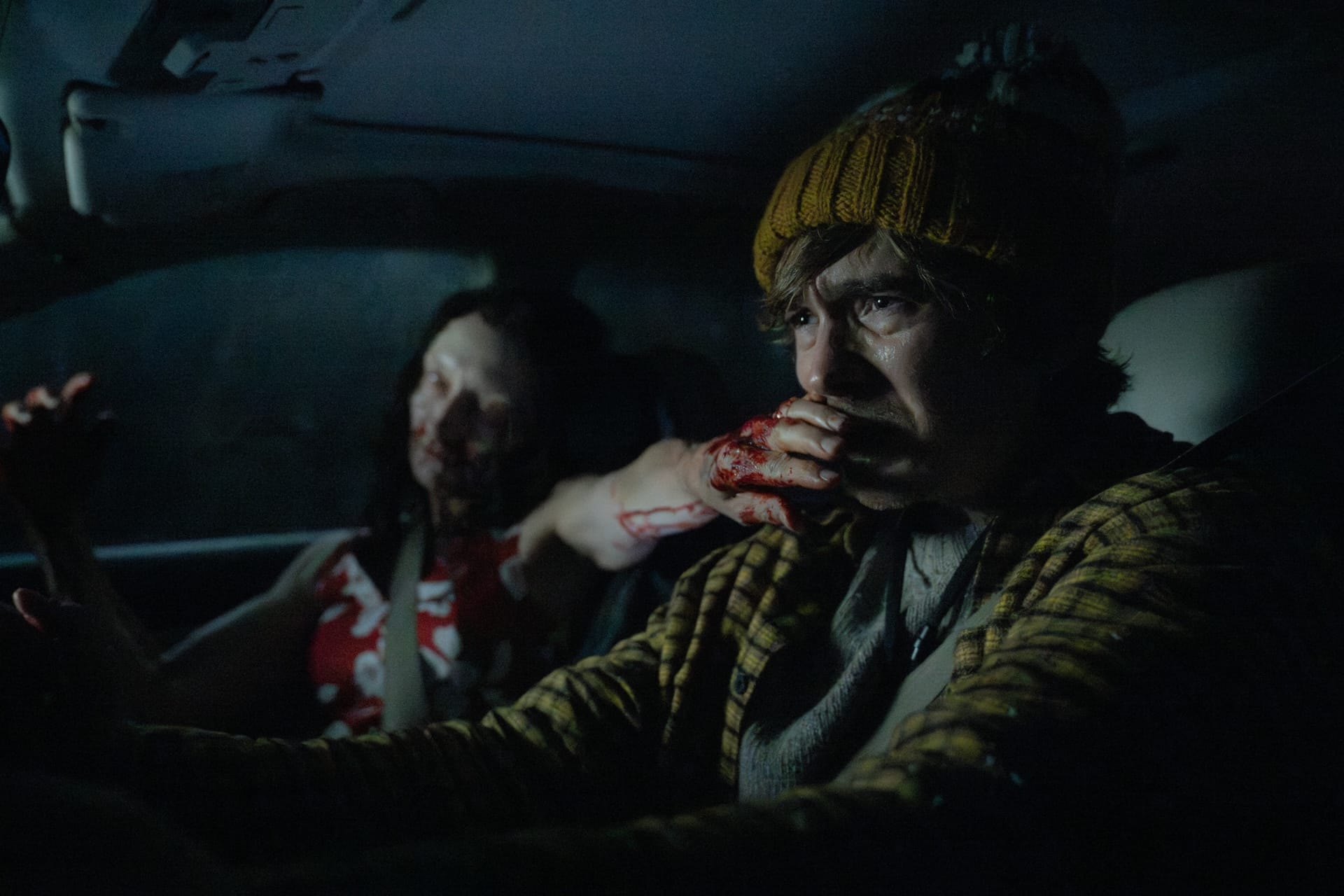
Bryan is woefully out of his depth, and his reactions are typical of what most of us would do in such a situation. We’re not the over-powered Alice (Milla Jovovich) of Paul W.S. Anderson’s adaptations; we’re just some guy who has probably never used a real gun. What do you do once you’re thrown into a situation with some of the creepiest creatures you’ve ever seen? Probably, as we see with Byran, a lot of cursing and high-pitched screaming. That doesn’t make him a coward, and the film wisely shows him not being callous either. He endeavors to help the woman he hits with his car; he later tries to help a little girl he encounters. He’s not a badass or an asshole. He’s just a guy, and that universality helps Resident Evil be both terrifying and hilarious in equal measure.
Granted, with such a broad characterization, there’s not much depth to Bryan or his story. Cregger has made an experiential movie, pushing us through various situations and letting Bryan serve as our avatar to the point where the film will occasionally dip into a first-person shooter perspective just to hammer home not only the gaming origins, but that we are in Bryan’s shoes. Those shoes have to be big enough for everyone, so his personal conflict of “I’m scared to be a father” is about as specific as it gets, and almost all the energy goes into running Bryan from increasingly horrific situations. But that energy is unrelenting, and it keeps Resident Evil humming for almost its entire 90-minute runtime.
If there’s one major flaw in the movie, it’s that the story has trouble finding a resolution. Ultimately, character and story will lead you to some kind of catharsis, but since character and story are so thin here, the conclusion feels somewhat abrupt and unfulfilling. It’s still gory and funny like the rest of the film, but it doesn’t feel like Bryan’s journey has been resolved to a satisfying end, as much as there’s nothing left to do. It’s the rare misstep in a film that is cheerfully surefooted and self-assured.
And yet even with this misstep, it’s tough to dismiss how damn fun the whole thing is. Those who want to get hung up on Resident Evil lore from the games may wish to remember why these games connected with people in the first place. The stories and characters in these games are fine, but it’s not like Chris Redfield is one of gaming’s towering personalities. The story of the games is perfunctory, and it’s clear that the fun doesn’t automatically transfer just because you set some soldiers against the Umbrella Corporation. It shouldn’t be so novel that a director puts the player experience ahead of nods to the games, but Resident Evil should be a lesson to other filmmakers that adapting a video game can’t simply be a series of references. The most important anchor is what those games make us feel, and in that way, Cregger’s Resident Evil is one of the best video game movies ever made.
Resident Evil opens in theaters on September 18. Matt Goldberg is a film and TV critic who runs the newsletter Commentary Track.