‘Spider-Man: Brand New Day' Embraces Peter Parker's Pain
Destin Daniel Cretton’s somber sequel skillfully handles the fallout of ‘Spider-Man: No Way Home.’


Peter Parker and Spider-Man are made to suffer. His suffering is what makes him unique among superheroes. Batman is traumatized, but he’s still a billionaire who never needs to worry about where his next meal comes from. Peter has to be a regular guy navigating the responsibility of being a superhero, but his last three mainline outings in the Marvel Cinematic Universe gave him the safety net of a support network including friends, family, and Earth’s Mightiest Heroes.
However, at the climax of his previous movie, Spider-Man: No Way Home, Peter had to make a big sacrifice, which leaves him totally alone with no one knowing his true identity. Spider-Man: Brand New Day, rather than try to speed past this obstacle, embraces it and uses it to make the first Tom Holland Spider-Man movie that leans into the character’s angst. The wide-eyed teenager is fully behind us, and in Destin Daniel Cretton’s sequel, the monster of loneliness is what lies ahead. It makes Brand New Day a darker picture, but a necessary one for the character’s evolution.
Peter Parker (Holland) lives a lonely existence. I’m not sure what he does for money, but he lives an attic apartment where he divides his time between fighting crime as Spider-Man and wishing he could be at MIT with love of his life MJ (Zendaya) and best pal Ned (Jacob Batalon), who, along with the rest of the world, don’t remember he exists because of the spell Doctor Strange cast at the end of the last movie to save the world. A new threat emerges in the city from a mysterious figure who can possess any person other than Peter. In addition to battling this mystery enemy, Peter is undergoing a physical transformation that’s giving him new abilities but also fueling his rage.
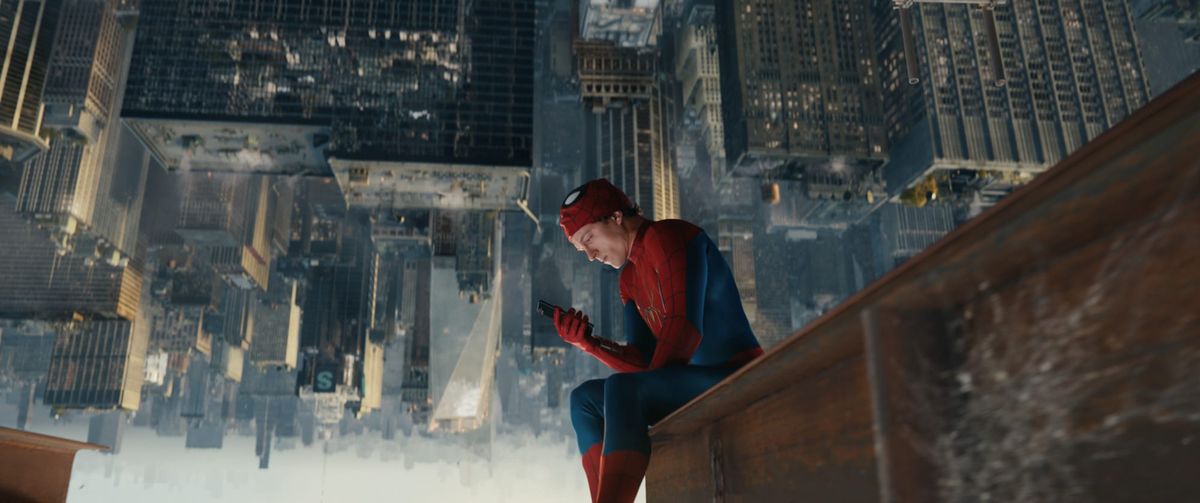
The film’s closest MCU cousin isn’t the previous Spider-Man movies, but last year’s Thunderbolts*, a superhero film that leans into a trauma plot about people who feel discarded and isolated. I quite liked Thunderbolts*, and while some may feel like the trauma plot is a bit overdone, it depends on the character, and certainly Spider-Man is no stranger to trauma. Cretton’s opening montage for the character lets us see how Peter’s alter ego has also become his hiding place, where he feels reminded of his mission and in some semblance of control. The pain comes when he has to be Peter, alone in the world and watching his friends live their best lives without him in it.
This feels particularly acute in a world where, despite digital connections, there’s a growing sense of isolation, not only from a post-COVID world, but the general sense of how growing up means losing your friends. Peter is looking at his best pals through his phone (Ned’s on Instagram), and Brand New Day understands that the character’s heart has to rest atop those relationships. It’s certainly fun to throw in other MCU characters, but the film uses the earned capital of the last three Spidey movies to give serious weight to Peter’s longing for MJ and Ned. And as we also all know all too well, the lonelier someone becomes, the angrier they can get.
The story uses Peter’s physical transformation to emphasize his rage (a smart way to emulate plot beats from the comics’ symbiote costume storyline without having to carry all of its narrative baggage) but then brings in similarly rageful characters like Frank Castle/The Punisher (Jon Bernthal) and Hulk (Mark Ruffalo). The mystery figure is also driven by rage, and their ability to hop between bodies is a neat way to symbolize losing yourself. Spider-Man has become Peter’s sole refuge, and if rage eats away at Spider-Man, then what’s left?
In this crucible, the scenes with Peter, MJ, and Ned feel like coming up for air. However, the movie wisely holds back on giving us too much of them, not only to create a distinction between the previous trilogy but also to allow us to share in Peter’s longing. If he was hanging out with Ned and MJ for long stretches, even under the guise of Spider-Man, then the loneliness and yearning for their friendship would defuse the emotional tension. Part of being Spider-Man is not getting what you want, and when the film withholds scenes with Ned and MJ, it doesn’t feel like it’s just for more superhero stuff, but to emphasize the distance between Peter and his old life.
The emotional heft balances nicely against the superhero heroics, and thankfully the movie is never so deadly serious that it forgets to have a sense of humor. The dynamic between Spidey and Punisher is particularly nice, not only because Frank’s isolation highlights a dark road that Peter could vanish down if he’s not careful, but also due to the big brother/little brother energy Holland and Bernthal have in their chemistry. The script is also not so wedded to its themes that it forgets to have fun, so if Spider-Man needs to fight some ninjas, he’s going to fight some ninjas.
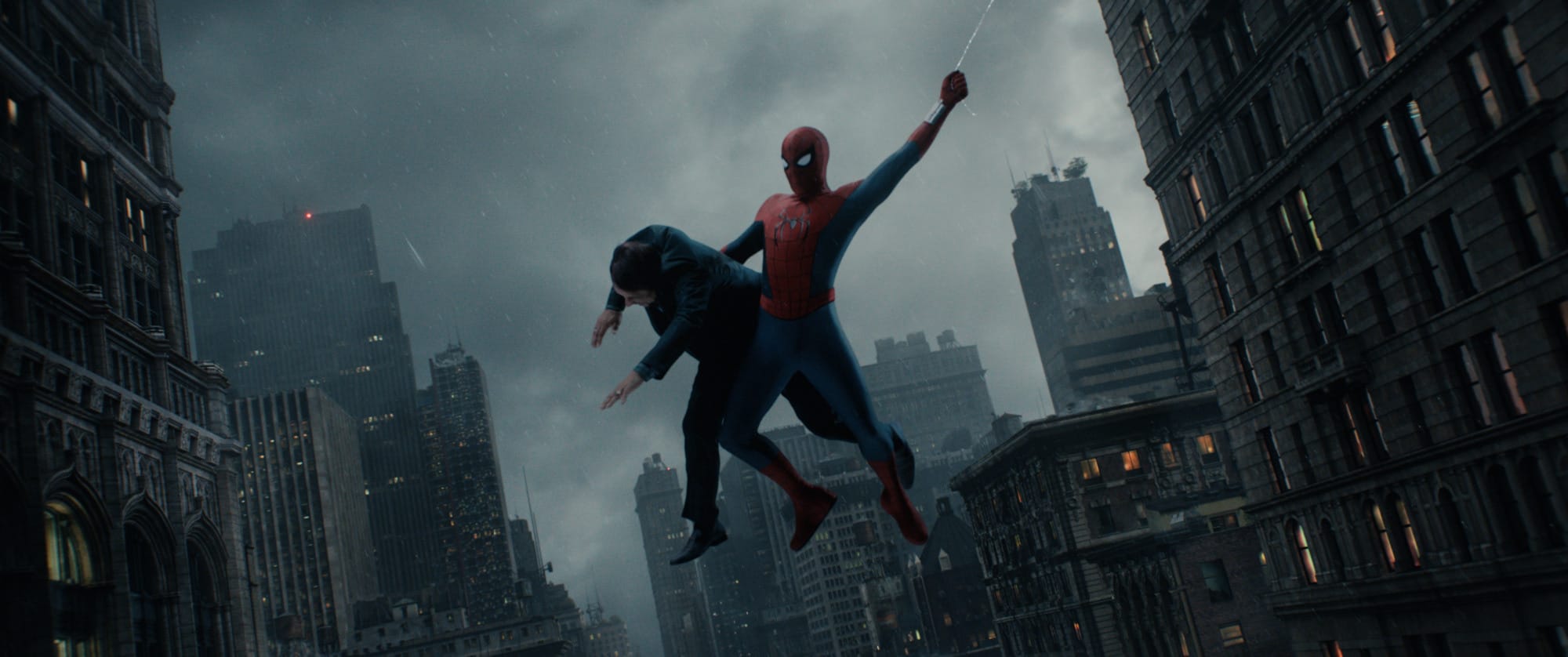
Cretton, who previously helmed Shang-Chi and the Legend of the Ten Rings, continues making some of the MCU’s more memorable set pieces. It’s refreshing to see action that’s easy to follow, pulls from the recent Spider-Man video games, and leans into the idea of splash pages where the director slows everything down to relish Spidey and his fellow superheroes doing something cool. These slowed-down moments in particular are a reminder that as much action as there is in superhero films, we rarely take a beat to enjoy the composition, and if you’re going to pay tribute to the comics, it should be more than just Easter eggs.
If there’s one place in the film where I struggle, it’s in the reveal of the mystery figure, and how much narrative unpacking has to go to this character. Unfortunately, to explain more would be to give away what’s meant to be a major reveal, so I’ll only say that I’m curious to see how Brand New Day plays on a repeat viewing where I’ll know the whole plot. For now, I’d say the character works although I have some qualms with the overall depiction.
But as a Spider-Man movie, it feels like a strong step forward for Holland’s iteration of the character, and one that I hope we see more of beyond any contractual MCU appearances. The “Home” Trilogy was quite good in letting us see an enthusiastic teenager trying to hold everything together in his double life. As both the characters and the cast members get older, the emotional baggage should also mature, and as long as the movies can continue to marry the lightness of the Wall-Crawler’s escapades with the pathos of his personal turmoil, then it will feel true to what has made Spider-Man such a beloved and relatable character.
Matt Goldberg is a film and TV critic who runs the newsletter Commentary Track.
David Chen's Quick Take
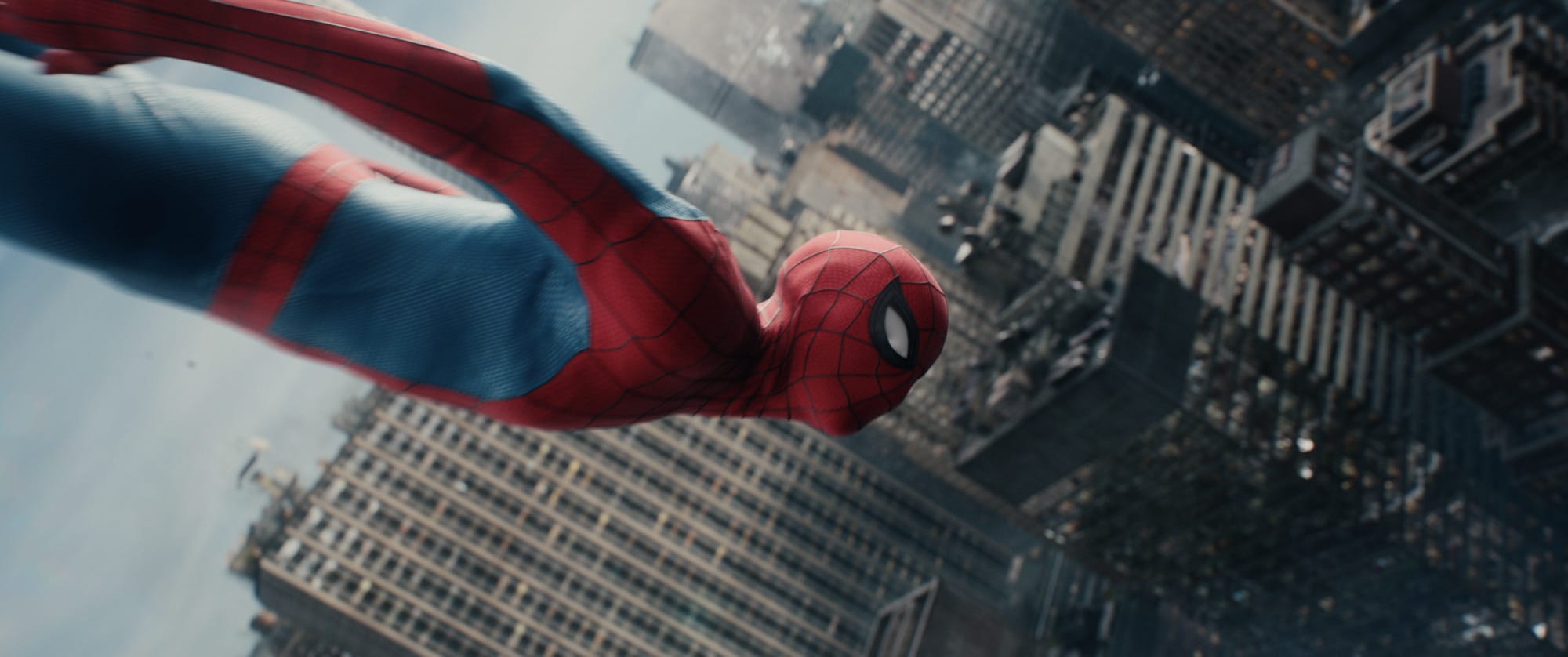
There are some genuinely breathtaking moments in Spider-Man: Brand New Day. Director Daniel Destin Cretton employs some lovely filmmaking tricks to really place us in Spider-Man's subjective point of view. We're close-up on his face as he swings through the city, and occasionally even inside his mask.
Tom Holland brings an amazing physicality to this outing of the iconic character. Through him, we experience the brutal toll that crimefighting takes on his body in the forms of countless collisions and bruises, many of which leave a mark. But it's also worth noting that this is probably the Spider-Man film in which we most see Holland (or his double) actually, physically inside the Spider-Man suit, just hanging out with other characters and conversing, as opposed to a CG version of the character swinging kicking his way through a set piece (although there's plenty of that too). What I'm trying to say is that this is the film that made me believe that Spider-Man could actually walk among us – no small feat.
But while Holland is admirably giving his all to a role that has defined his career, I'm sad to say the overall movie didn't quite do it for me. Ultimately, I can't get away from the fact that Spider-Man: Brand New Day is two decent movies mashed together in unwieldy fashion. One of them is a fairly satisfying continuation of the Peter Parker story from his Home trilogy, with a heavy dose of angst surrounding his decision to leave his friends behind. The other is a standard MCU film that haphazardly references characters we already know while introducing new characters and concepts that are clearly meant to be actually paid off in future films. That style of filmmaking comes with a lot of baggage and Brand New Day doesn't do anything to overcome it. In trying to tie these two films together with Spider-Man as the throughline, I don't think either film delivered as much as it could have.
Spider-Man: Brand New Day opens in theaters on July 31st.