TIFF 2026 Dispatch #2: Ink, Elsinore, and Wild Horse Nine
Stephen David Miller continues his coverage of the 51st annual Toronto International Film Festival.

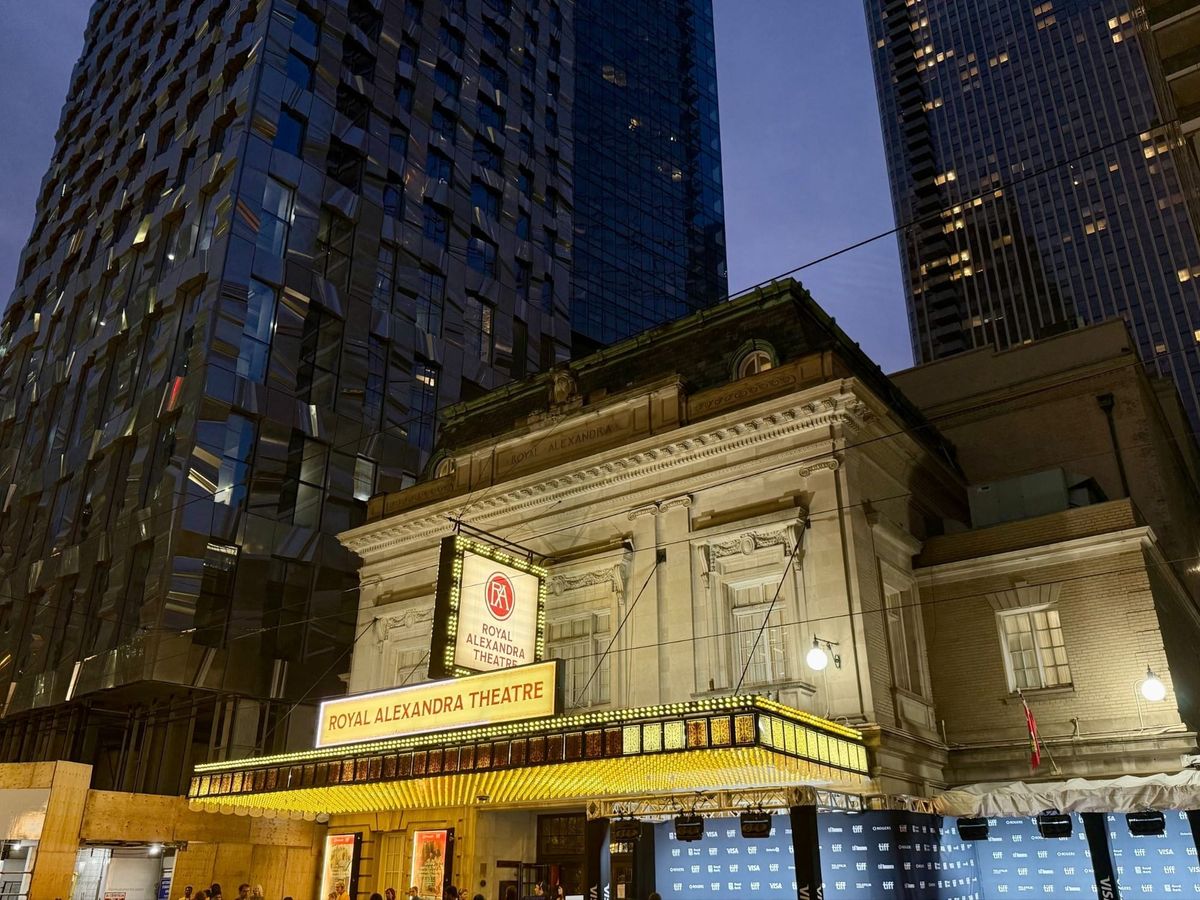
Stephen David Miller continues his coverage of the 51st annual Toronto International Film Festival with reviews of Danny Boyle's Ink, Simon Stone's Elsinore, and Martin McDonagh's Wild Horse Nine.
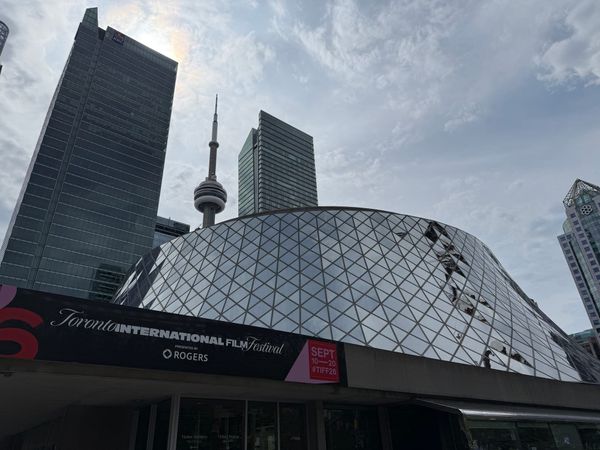
Hello again, Decoding Everything readers! I’m coming to you live once more from the Toronto International Film Festival for my second of three planned dispatches. In case you missed it, you can catch up with my previous coverage here.
This far into the festival, everyone is starting to run on fumes. Enter any theater, and you can feel the energy dip. TIFF audiences have a longstanding tradition of making silly, Rocky-Horror-esque callouts during the pre-reel. Expressing love for a particular brand of projector or shouting “Arrrr!” at the anti-piracy screen. But lately, the pirates have been fewer and farther between. The customary not-actually-a-question “questions” are still offered up in post-screening Q&As, but they’ve gotten at least 50% less awkwardly indulgent. Even my two faceless arch-nemeses—the guy who lets out an exasperated “Je-sus” roughly 300 times a movie, the dude who loudly tells his partner what he thinks is about to happen and is wrong every goddamn time—have conspicuously fallen silent.
I am not immune from the exhaustion that’s settling in. But before I succumb to it, I want to give you reviews of three notable titles in this year’s selection: a disappointment, my favorite performance of the year, and my favorite film of the festival so far. I’ll start with the disappointment.
Ink (Danny Boyle)
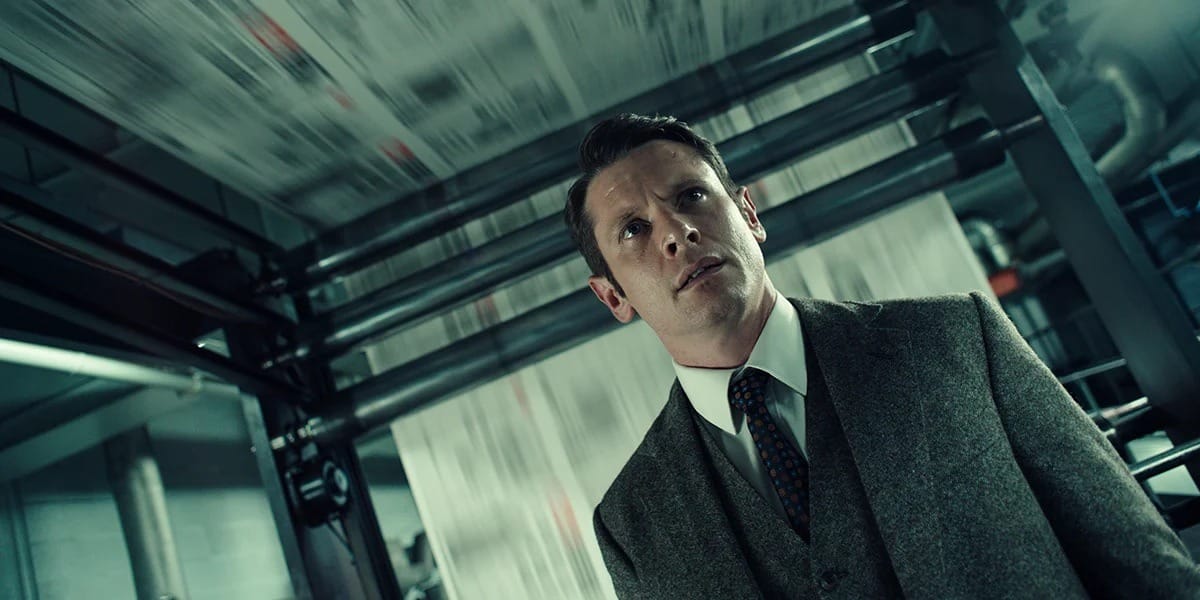
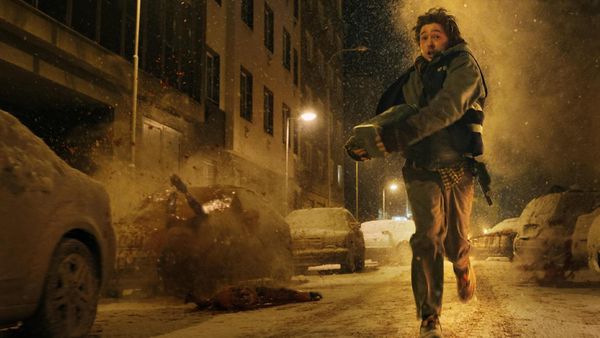
Every year, once the festival lineup is announced, I skim the descriptions of all 200+ titles to come up with a prioritized list. When I saw the lede for Ink, it shot up to the top. Here’s how the TIFF ticketing site describes it: “Director Danny Boyle’s latest thrillingly charts the meteoric rise of Rupert Murdoch’s fledgling but instantly notorious The Sun newspaper as he and editor Larry Lamb create the blueprint for UK tabloid culture. Guy Pearce (The Brutalist, TIFF ’24) and Jack O’Connell star.”
Even when he misses, Danny Boyle is a consistently interesting filmmaker to watch, and 28 Years Later felt like the arrival of a new phase of his career—marrying his famously bombastic style with a new sort of elegiac wisdom. He had just fashioned a powerful parable about a society ravaged by bloodlust and fear of the other. Now he was turning his attention to our real, fractured society, and to the psychology of a man who architected one engine of that division. Who better to tell this story than Boyle? Moreover, who better than “Jimmy Crystal” O’Connell and “Harrison Lee Van Buren” Pearce to bring it to life? The corruptible servant, and the bankrolling devil he succumbs to.
Unfortunately, Ink did not live up to my expectations in terms of quality—or even content. Despite hyped-up descriptions to the contrary, the film is only peripherally interested in Rupert Murdoch. His whims may set The Sun in motion, and his wealth enables its ascent, but he’s a minor character with little bearing on the plot. This is Larry Lamb’s story through and through. We watch as the editor assembles his team, masterminds a new populist slant for the paper, and cultivates a devoted reader base. It’s hard to make copyediting register to viewers as exciting, so Boyle uses every tool at his disposal to juice the numbers. There are copious needle drops, fidgety cross-cuts to conveyor belts and printing presses, flashy filters, and wild transitions gluing nearly every pair of scenes. A minor controversy has even emerged surrounding Boyle’s use of AI to animate a few Polaroid photos. Because god forbid anything sit still for a beat.
To be fair, the aesthetic overload serves its practical purpose: I was never remotely bored. But it does evince a lack of confidence in the material, a sign of something lacking in the basic story structure. For a cautionary tale about the degradation of attention spans and our appetite for empty-calorie content, it’s telling that the packaging is so frictionless and twitchy. Boyle is consciously homaging tabloid culture, I assume, but a crutch that’s self-aware is still a crutch. This over-reliance on style does more than overwhelm his substance; it actively undercuts whatever point he’s trying to make. The film attempts to draw a connection from Larry’s antics in the 70s to our brokenness today, but for the majority of the runtime, the only note that lingers is “cool.” Marvel at these punk rock underdogs, thumbing their noses at the stodgy, out-of-touch media elite. Watch yet another montage of party after debaucherous party! It’s building towards a moral reckoning of sorts, but ignores all character work in favor of adding more oomph to the crescendo. By the time we reach any sort of dark night of the soul, there’s no legible human left for us to parse it through. Rupert is barely present, the supporting cast is underserved, and Larry is reduced to a monster with no emotional throughline. The Demon Editor of Fleet Street, who trims real-world tragedies into ugly, simplistic bites. Spooky, perhaps, but not convincing.
Despite my criticism, I didn’t hate Ink. The ride itself is entertaining enough, and if I squint, I think I can even make out Boyle’s (half-convincing) point. But it feels like a rush job, and a far cry from what the material deserved.
Elsinore (Simon Stone)
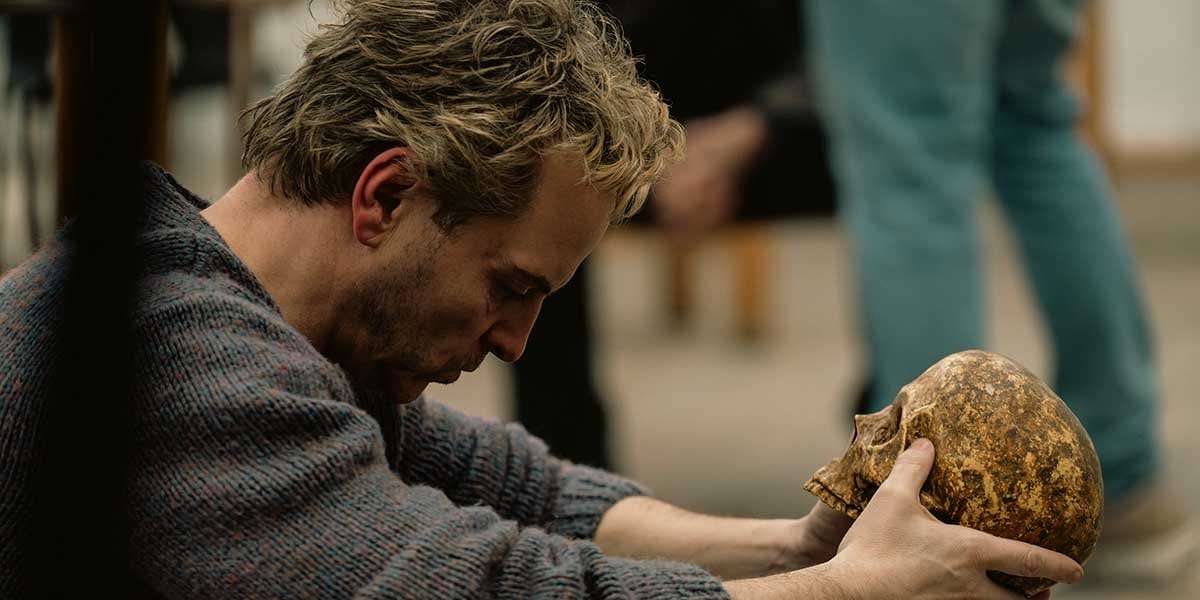
There’s a scene in Elsinore where Ian Charleson (Andrew Scott) is arguing with his doctor. The Chariots of Fire actor is being treated at a hospital in London, and he’s desperate to return to his passion project. Dr. Johnson (Olivia Colman) is resolute. He’s at too high a risk, and as a physician, she has a duty to “the preservation of life.” Ian understands; he also has a solemn duty to life. “But not just its preservation. Its glory. Its joy.” Duty compels him to get back on the stage for a performance of Hamlet.
At last year’s TIFF, I covered not one but two Hamlet adaptations, and I’ll admit that I was skeptical a third would reveal something new. I was wrong to be worried. Where Riz Ahmed’s adaptation made Shakespeare’s words echo through to the present, and Chloé Zhao used them to commune with the past, Simon Stone finds meaning in the effort it takes to perform them. The toll it exacts on an artist to channel the Prince of Denmark, and why that toll is inextricable from the art. Hamlet is famously a marathon and must be trained for accordingly—requiring mental acuity to recall some 1500 lines, technical dexterity to navigate their vast emotional range, and the physical endurance to do so while leaping and wielding a sword. It’d be a daunting task for an actor with all the time and health in the world, and sadly, our protagonist has neither. Ian Charleson has AIDS, which is a secret he’s kept from all but a few close friends. He knows that he’s dying, and that the grueling demands of the role are very likely to hasten that process. This particular duty towards life is not to be carried lightly.
But there is glory and joy in abundance as we watch him pursue it. Andrew Scott is astonishing in this film, giving what is easily my favorite performance of the year. The role of Ian Charleson requires a breathtaking emotional and physical range, encompassing the extremes of playing Hamlet and adding a heartbreaking queer drama alongside it. There are countless big moments that I can envision being in Scott’s future Oscar reel, but what I find most striking is how he navigates the quiet interactions. His Ian is gentle, disarming, world-wise but not world-weary, informed by loss and letting it open rather than close him. He carries so much pain within himself, personal and communal. Though he doesn’t repress it, he does consciously titrate it for others: parceling it out drip by drip, counterbalancing it with a smile or a joke. Ever the professional, Ian is keenly aware of his audience. On stage, though, he puts on the mantle of Hamlet and nothing is held back or measured. He’s roaring, bare, communicating everything. We experience his soliloquies on three levels at once: the Shakespearean tragedy in which Ian entirely recedes, the personal tragedy which imbues his words with meaning, and the spectator sport of watching an athlete pull off the impossible.
Elsinore is a dazzling high-wire act. I left the theater in awe, in tears, and dizzy from a secondhand runner’s high.
Wild Horse Nine (Martin McDonagh)
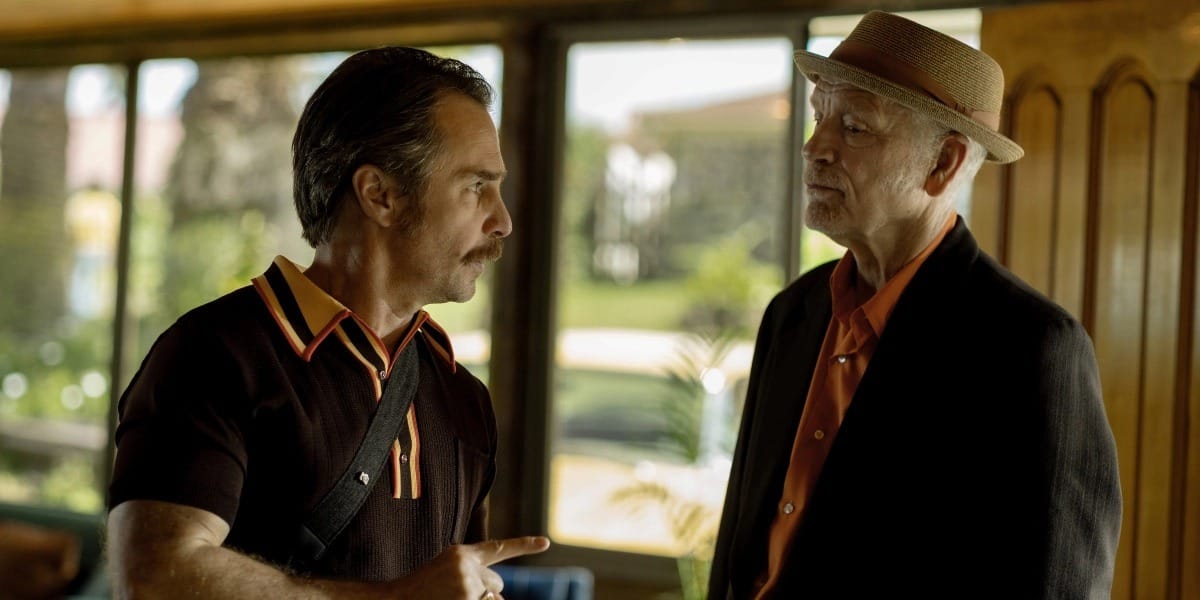
Chris (John Malkovich) isn’t very good at pep talks. Like many of the depraved characters who populate Martin McDonagh’s films, the aging CIA operative long ago lost any glimmer of hope. He’s seen too much to believe in a better future; hell, he’s devoted his career to ensuring things continue getting worse. It’s 1973 and Chris and Lee (Sam Rockwell) are stationed in Chile, which in a few short weeks will erupt in a violent coup. But here on Easter Island, spirits are high and the skies are still blue. When offering advice to a political activist he meets on vacation, the rosiest vision he can muster is still defeat. You can resist, but they’ll crush you. You can hide, but they’ll find you. You can flee, but they’ll follow you wherever you go. So why not just sit down somewhere pleasant near a body of water, hold a gun, and wait for the inevitable? You’ll lose the fight immediately, as is the tendency of all noble causes. “But at least you’ll die with the wind in your hair.”
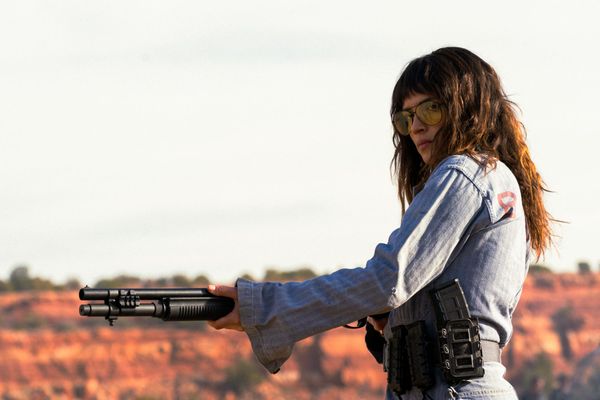
Wild Horse Nine is my favorite film of the festival so far, and it’s hard to imagine another one usurping it. It has all of the qualities I cherish in a McDonagh screenplay: acrobatically constructed conversations prone to sharp, irreverent detours; a nihilism so bitter it alters your palate, teasing notes of sweetness out of even the most horrible things. It exudes a shaggy, effortless “hangout” demeanor which makes the plot feel inessential, so you don’t notice that it’s coiling underfoot. This thing twists and turns, but I won’t spoil where it leads. What I will say is that this is the tightest, most satisfying story the Irish playwright has directed to date. And even in his long history of eliciting memorable performances, I’m not convinced you’ll find any better than these two leads. Rockwell oozes a bravado that barely masks his gooey center; Malkovich hypnotizes you with his lilting syncopation and Pagliacci smile. Both agents reveal themselves in surprising ways as the story unfolds, but there’s always a little something extra held back, stirring just beneath the surface.
In one offhand conversation, Chris pitches an idea for a movie he describes as a “downbeat Western.” I know this sort of thing is teed up as catnip for reviewers, but that’s exactly how Wild Horse Nine functions. It’s a downbeat Western, and McDonagh’s most trenchantly political film by miles. The cowboy archetype was built on the myth of the infinite frontier, of ever more land to conquer and the heroism of those who tame it. Even before the Golden Age of Hollywood, we knew this was a fantasy that papered over other, uglier truths. But by the time we meet Lee and Chris, there isn’t even the fig leaf of an ideal. They’re hired appendages of a vestigial cowboy empire which lurches forward not because it’s “noble” but because it can. Weary vigilantes sauntering into unsuspecting towns or nations, changing things with force then moving on down the road. What are we to do when society is past the point of meaning? When we’re aware of our complicity but unable to rein it in?
As I write this just a few blocks from the shore of “Lake America,” I wish I had an answer beyond venting outrage. But when I crack the window, at least I can still feel a breeze.
Stephen David Miller is a film enthusiast and cohost of The Spoiler Warning Podcast, who writes on Letterboxd and his personal blog.