‘Toy Story 5’ Review: The Series Is Still a Joy Even If It Can’t Solve Tech Anxieties
The latest sequel is at its best by putting the lovable Jessie at the forefront rather than trying to be a societal critique.

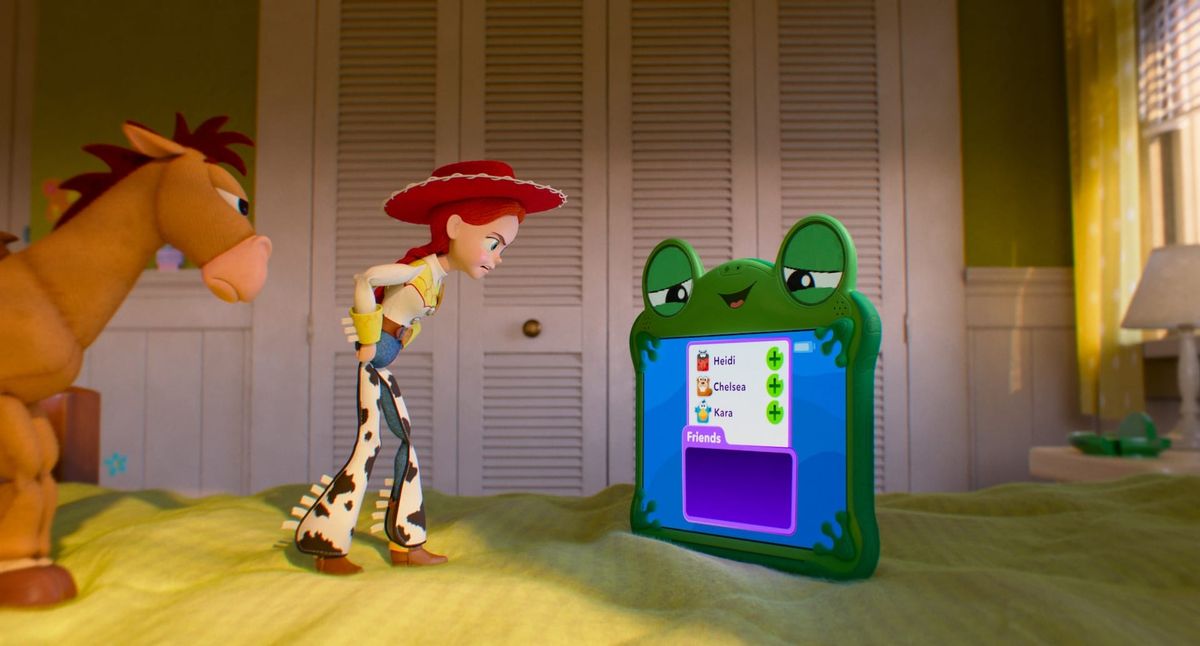
The original Toy Story remains timeless because it not only understands how children love their toys but because it leans into the idea that the toys love us back, have adventures when we’re not around, and learn the value of friendship. Even though technology has rapidly advanced in the last thirty years, the first movie holds up and remains relatable through its universal themes. Toy Story 5 tries a different tack at first, looking at the prevalence of screens and what it means for both playtime and forging friendships. Thankfully, this setup fades to the background a bit as the story adjusts to focus on Jessie (Joan Cusack), the toy who’s always been haunted by her abandonment, and what it means to be important to a child. This is when Toy Story 5 shines and makes for a worthwhile sequel, especially with the introduction of a toilet-training toy voiced by Conan O’Brien.
Bonnie (Scarlett Spears) is as imaginative as ever, but she remains a shy kid who has trouble making friends. That’s even more difficult as children everywhere run off to play with their devices, hypnotized by the allure of screens. Worried about their daughter’s isolation, her parents buy her a Lilypad device (Greta Lee) to make friends, which immediately enchants Bonnie, much to the chagrin of Jessie, Buzz (Tim Allen), and the other toys. However, Jessie’s greater concern is that Bonnie won’t make friends relying on Lilypad, so she calls in Woody (Tom Hanks) for some assistance. However, the plan backfires. Jessie and Bullseye get whisked away to a farm while a bickering Buzz and Woody try to deal with Lilypad. Meanwhile, an army of advanced Buzz Lightyears (also Allen) that washed up on a desert island work to make their way back to “Star Command.”
The smartest thing director Andrew Stanton and Pixar do here is throw out the old playbook. To this point, every Toy Story film has not only focused on Woody but also used a rescue/escape plot. There are different shades and ideas within that plot, but by the time you reach Toy Story 4 and Woody is trying to figure out how to get Forky (Tony Hale) out of the antique shop, there is a sense that we’ve done this before. By emphasizing Jessie, the series takes on a different complexion, especially since her primary mission isn’t to get back to Bonnie, but to ensure Bonnie makes human friends. It’s a nice way to elaborate a central idea of Toy Story about the value of imagination and play by emphasizing how that play should bring in other imaginative children.
Moreover, putting Jessie at the center of the story feels like the smart, natural move here. Jessie’s trauma came from being abandoned by a young girl, and now with Bonnie, there’s the threat of having that happen again. To be blunt, we’ve kind of told quite a few stories about what Woody wants and fears, and Buzz always seems to have trouble holding the center of the picture without supporting characters (one of the weaker elements of Toy Story 4 is Buzz “listening to his heart” by pressing his pre-recorded phrases button). Jessie makes for a natural lead, and what makes her distinctive as a character helps give Toy Story 5 a fresh complexion and conflict.
Where the theme goes slightly awry is the adult anxieties about children on their devices. I don’t have kids, so perhaps today’s parents can speak to the film’s accuracies, but it feels more like an expression of how adults look at kids rather than unpacking how play has simply changed. Video games were supposed to be an existential threat, but some of my best memories growing up are staying up late with my friends and trying to beat difficult games on Super Nintendo. Moreover, Toy Story 5’s critique leads to this bizarre tiered system where kids who are imaginative and play with toys are more alive than the zombies on their devices. Of course, a studio built on computer animation tries to reconcile this in the end, but it rings hollow.
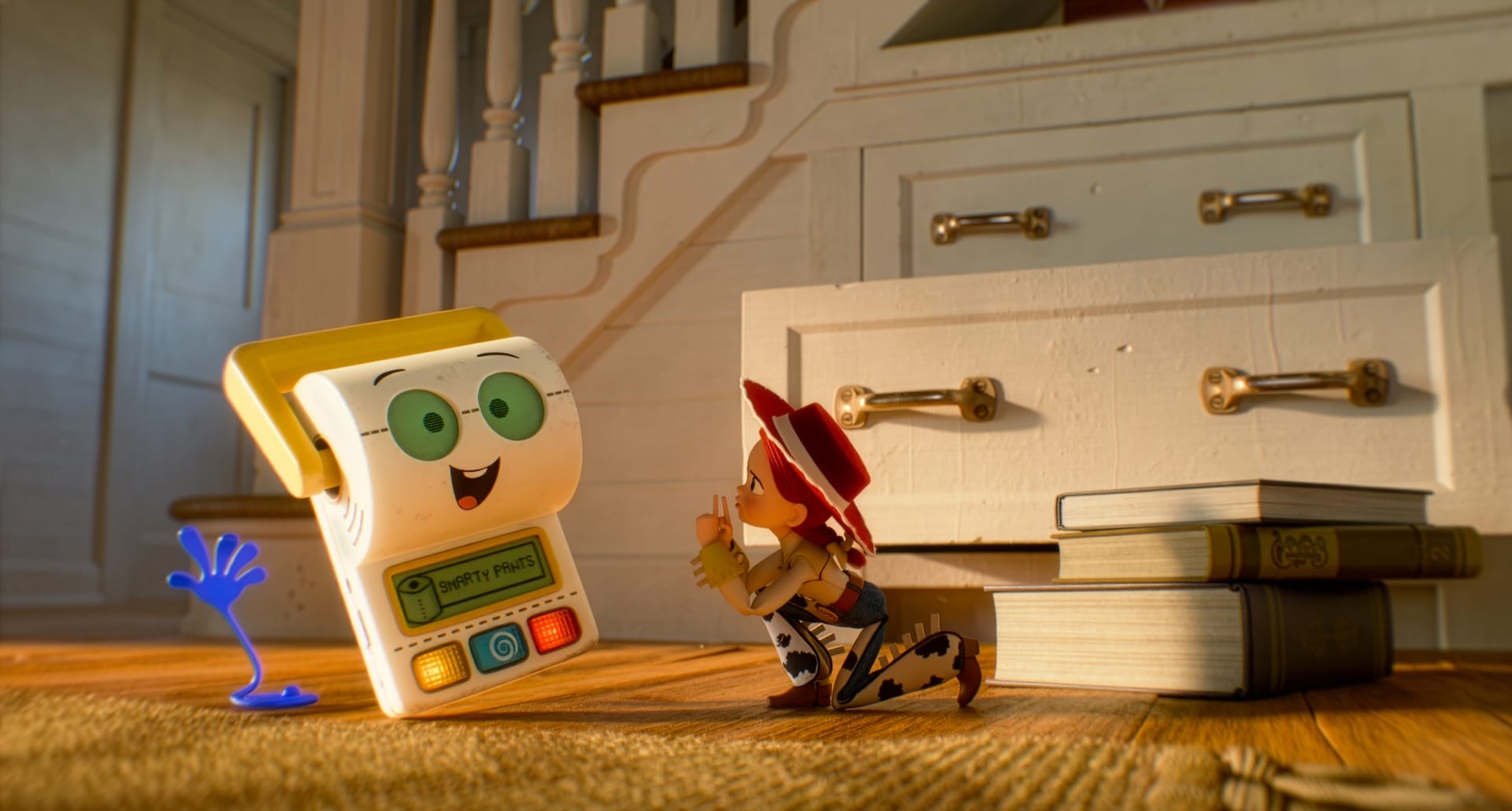
Instead, the movie is on much firmer footing by just letting the toys have an adventure, especially Jessie when she meets primitive devices like GPS toy Atlas (Craig Robinson), digital camera toy Snappy (Shelby Rabara), and the scene-stealing Smarty Pants (O’Brien), a toilet training toy. Pixar has largely refrained from toilet humor throughout its existence, maybe throwing in the rare fart joke here and there. But with Smarty Pants, it’s like they saved up thirty years of potty jokes, and the only way to make them work is to have them delivered by O’Brien. It doesn’t overwhelm the movie, but it does make for some of the funniest jokes in any Toy Story film, and like with putting Jessie at the center, helps make the new installment feel separate from its predecessors.
Not to spoil the ending, but Toy Story 5 also wisely gives up the ghost of trying to pretend there’s a goodbye in these movies. Toy Story 3 and Toy Story 4 have been lessened over the years because their codas no longer fit. The weight of the farewell doesn’t land when we know the toys will be back, and thankfully, Toy Story 5 rests comfortably in being a new adventure and stressing the importance of play rather than putting a bow on the series as a whole. Given Disney’s addiction to franchises, we shouldn’t be surprised if Toy Story 6 comes along, and at least the series now feels at peace with additional stories rather than bidding these characters a fond farewell. Like an old toy, you can see some fraying at the edges, like the marginalization of characters such as Rex (Wallace Shawn), Hamm (John Ratzenberger), and Potato Head (now voiced by Jeff Bergman, who sadly cannot replicate the memorable tenor of the late Don Rickles), but the new faces help even things out.
If you can move past the “kids these days” grumbling about devices (as if adults were somehow immune to screen addiction), there’s a worthwhile return to the world of Toy Story because even when the societal critique is thin, Pixar can deliver on heart and humor. This is a series that still makes us roar with laughter and weep openly in a theater full of strangers. Technology hasn’t lessened what this series can do, and as long as the sequels keep the focus on its endearing characters rather than intractable social ills, then they shouldn’t have a problem lasting to infinity and beyond.
Toy Story 5 opens in theaters on June 19th.