Spielberg and Nolan’s Summer Blockbusters Have Two Very Different Ideas About How To Save the World
The Odyssey and Disclosure Day are two sides of the same coin

[Spoilers ahead for Christopher Nolan’s adaptation of The Odyssey and Steven Spielberg’s Disclosure Day. This is the second of two pieces exploring the themes of The Odyssey. Read Matt Goldberg's essay about how Nolan modernized Homer's text and subscribe for free to get all updates from Decoding Everything.]
Between the wildfire smoke filling our air, the parasites invading our food, and the politicians trying to take away our elections, it’s easy to feel like the world is falling apart at the seams. So perhaps it’s no surprise that some of our greatest auteur filmmakers are feeling that way too this summer. With Disclosure Day and The Odyssey, Steven Spielberg and Christopher Nolan have each delivered their own action-packed quest movies about worlds on the brink. And while it might not seem like a conspiracy thriller about aliens and a tactical retelling of a Homeric poem would have much in common, Spielberg and Nolan largely serve up two sides of the same coin when it comes to their focus on the importance of connection and trust in a society that’s ripping itself apart. The difference is that Spielberg delivers a glass half full of Boomer optimism many found woefully out of touch with our current moment, while Nolan leans into a Gen X nihilism that, paradoxically, winds up feeling much more cathartic in its willingness to admit just how bad things have become.
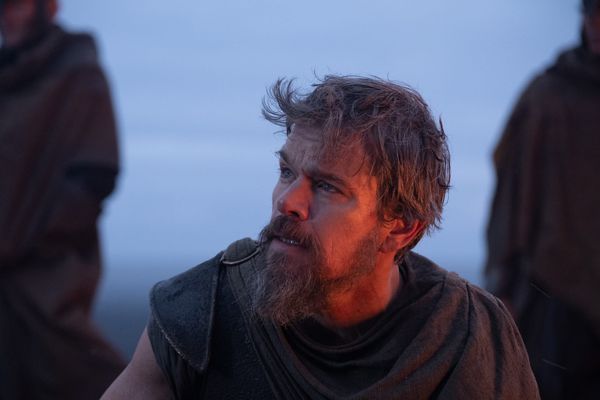
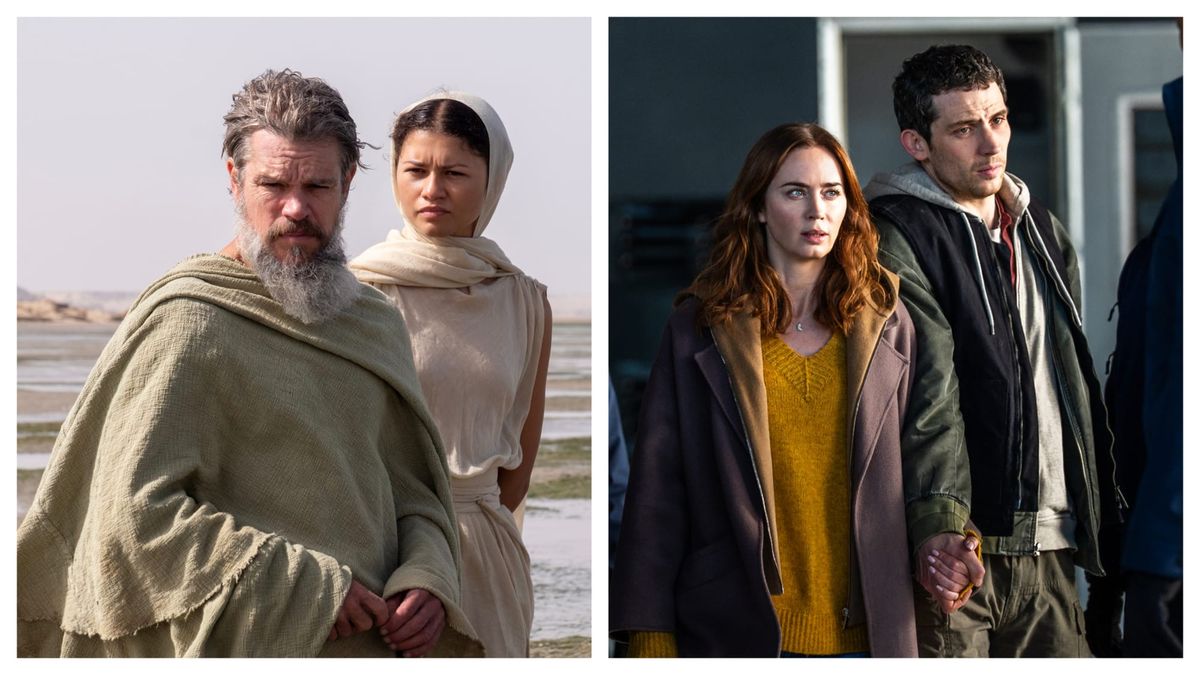
After all, a lot of awful stuff happens in both The Odyssey and Disclosure Day. Spielberg’s contemporary setting is edging towards World War III. Cybersecurity specialist Daniel Kellner (Josh O’Connor) and meteorologist Margaret Fairchild (Emily Blunt) are both traumatized by repressed memories of alien encounters. Evil corporate baddie Noah Scanlon (Colin Firth) is leaping into people’s minds without their consent. And secret footage of the government experimenting on aliens is so upsetting, anyone who watches it has to look away.
Yet it often feels like Disclosure Day itself wants to look away from the bad things too. Spielberg emphasizes how Daniel and Margaret unite as kindred spirits while handwaving away the years of trauma that defined both of their lives beforehand. He sets up a parallel for childhood sexual abuse that he doesn’t engage with at all beyond the idea that aliens might want to comfort us with whimsical fairy tale trappings. He has Scanlon stop being evil because Colman Domingo tells him he should be nice instead.
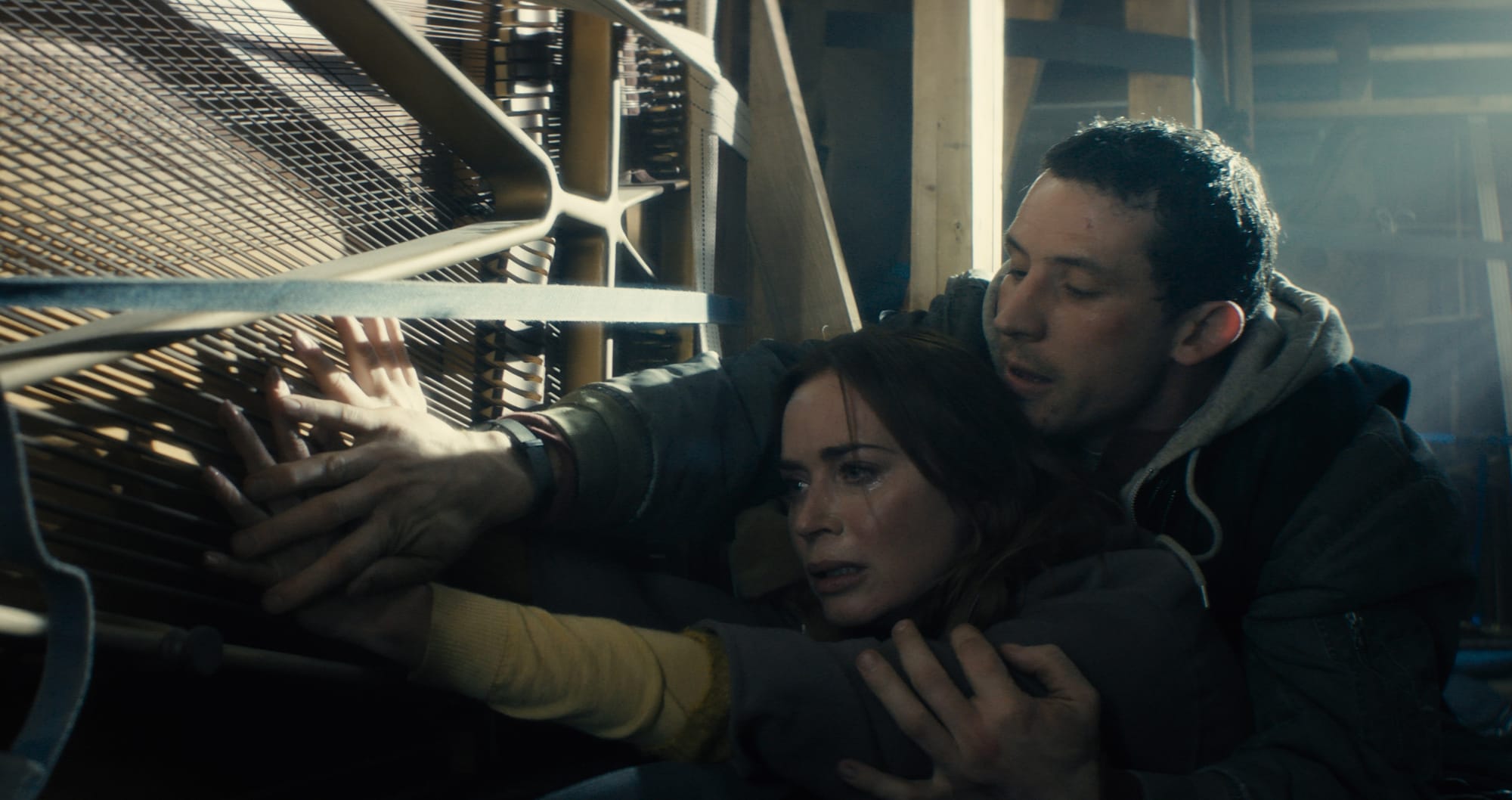
A lot of the debate around the ending of Disclosure Day focused on whether or not it was logistically believable that a single news broadcast could get the entire planet to stop and listen. But I think that’s misdiagnosing the actual disconnect that many (though not all!) felt around the film. The real issue is Spielberg spends a lot of time talking about the life-saving importance of empathy, communication, and faith, and very little time showing those qualities in action. It’s why the train-set scene of Daniel comforting Margaret through a panic attack is so memorable. It’s the one time a character, human or alien, actually demonstrates the sense of connection the movie is ostensibly about. The rest is all tell and no show, which makes it harder to believe that simply listening to one another is enough to save the world.
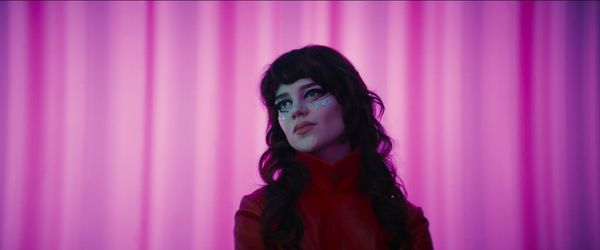
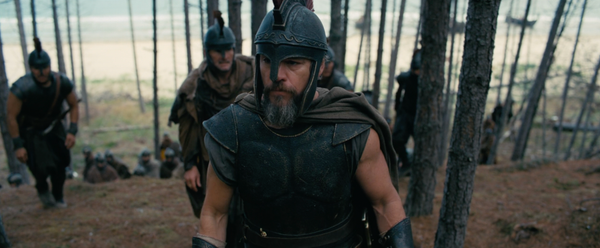
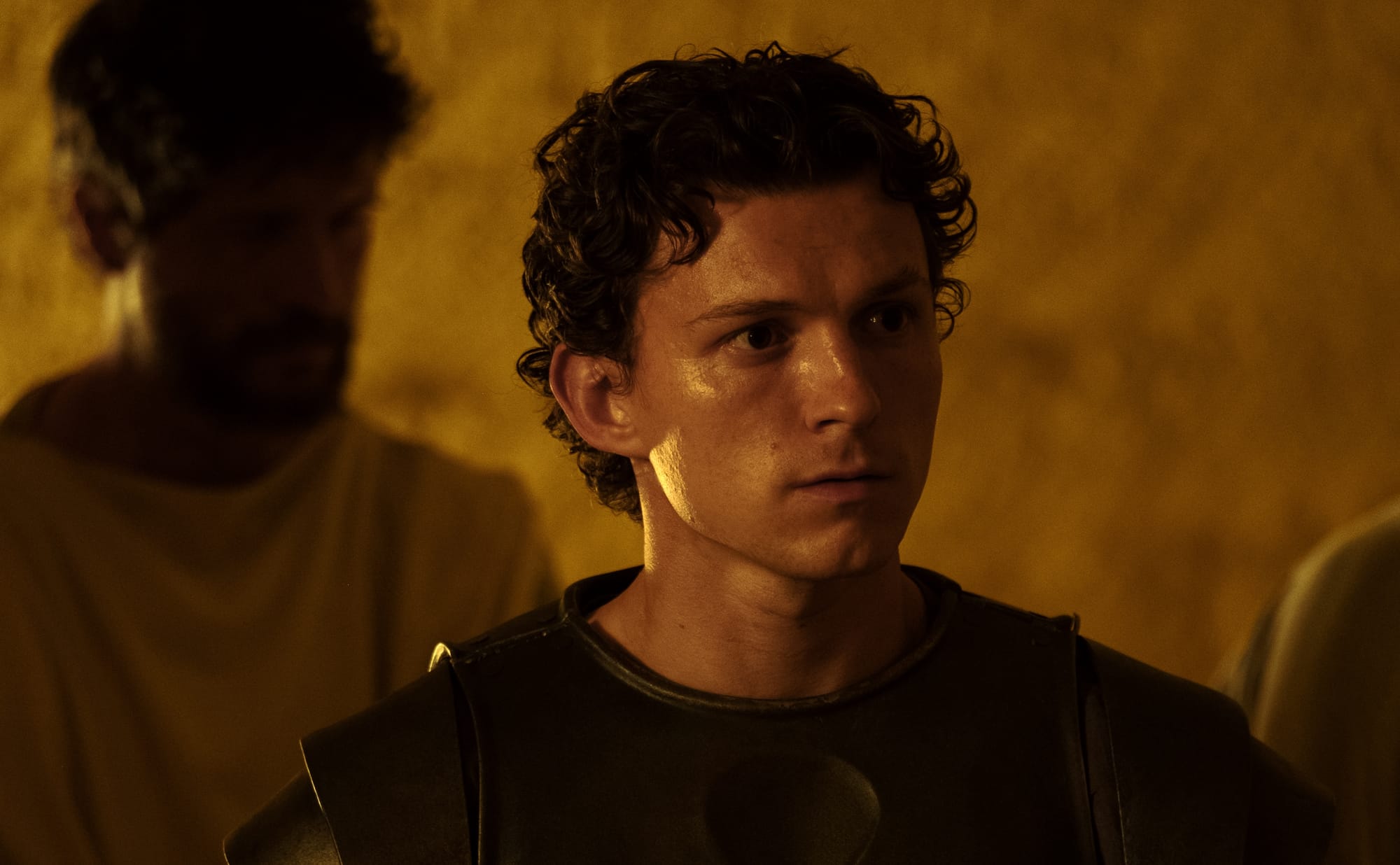
In contrast, The Odyssey spends most of its three-hour runtime lingering on how bad things are. Odysseus (Matt Damon) has been away for 20 years. His house is overrun with greedy suitors looking to usurp his throne, and his wife Penelope (Anne Hathaway) and son Telemachus (Tom Holland) are at their wits’ end. Every time Odysseus lands on a new island, he seems to lose a chunk of his crew and the trust of the rest. The goddess Athena (Zendaya) regularly shows up to tell him what a terrible job he’s doing, while a young soldier named Sinon (Elliot Page) literally crawls up from hell to criticize him further.
Charitably, you could still read Odysseus as a flawed hero doing his best in impossible circumstances, but Nolan’s electric third act takes the story to even darker places. Odysseus isn’t just the pawn of war-hungry men like Agamemnon (Benny Safdie) and Menelaus (Jon Bernthal); he’s one of the war-hungry men who broke the world himself. It was his idea for the Trojan Horse that shattered social and ethical norms to the point of no return. Where Greek society was once held together by Zeus’ Law—the idea that the only way to survive is to help and respect those who arrive at your shores—that concept has now been perverted into a culture of greed, disrespect, and selfishness.
It's not totally dissimilar from the impending World War III hovering in the background of Disclosure Day. Yet where Spielberg seems to believe that with a little compassion and communication, we can still pull ourselves back from the brink, Nolan argues that the time for healing has passed. No matter what comes next, the Bronze Age is over. It will take centuries before another civilization rises in its place, and that one will almost certainly be doomed to misremember the lessons of history and make the same mistakes.
It should feel impossibly grim and yet there’s something weirdly hopeful about the honesty. Disclosure Day may have literal Catholic nuns in its plot, but The Odyssey is the film that actually hinges on the catharsis of confession. (Discovering Nolan was raised Catholic unlocks not just this film but his entire filmography.) Before Odysseus can find a way forward, he has to share his grievous wartime sins to a figure behind a screen, like opening up to a priest in a confessional booth. Only once he’s admitted just how bad things have become is he able to be clear-eyed about what he needs to do as penance: abdicate the throne, hand power to his son, and sail off into exile.
Crucially, however, he also shoulders one last sin before he goes by murdering all the suitors so his son doesn’t have to. Odysseus may hand Telemachus a broken world, but at least he lets him start his reign with his hands clean. Given how many real-life politicians cling to power until they literally die in office, leaving the next generation to clean up their mess, it’s weirdly heartening to watch an aging leader reflect back on what he’s done and admit he doesn’t deserve to be in charge anymore—especially when he does some much-needed dirty work on the way out the door.
In contrast, there’s no cost to the climax of Disclosure Day. In fact, there’s barely even any effort needed to get every news station on the planet to broadcast Margaret’s “Disclosure Day” report once she’s infiltrated a single Kansas City news station. Though there’s something sweet about Spielberg’s belief that caring about something passionately and coming together with others who feel the same is enough to make a difference, that philosophy also feels rooted in a very 2016 post-election “resistance” mindset. Sadly, nothing in the past ten years has suggested that simply speaking the truth loudly and clearly is enough to get people to listen.
For his part, Nolan embraces something closer to the philosophy of “positive nihilism,” where accepting that nothing matters can embolden you to try to do something productive with the time you’re given. No one can turn back the Bronze Age collapse, but humanity isn’t dying out entirely either. Going into that reality with open eyes sets up Telemachus to be a more effective leader than one wearing rose-colored glasses. It’s a harsher message, but a more truthful one too. Both films argue for the importance of unearthing the dark things that have been done in our names and accepting the scary fact that our status quo has shifted. Yet while Disclosure Day struggles to make us feel the weight of its truth, The Odyssey sails directly into the void. Maybe that’s the only way to truly chart a new path forward.
Caroline Siede is a film and TV critic who runs the newsletter Girl Culture.