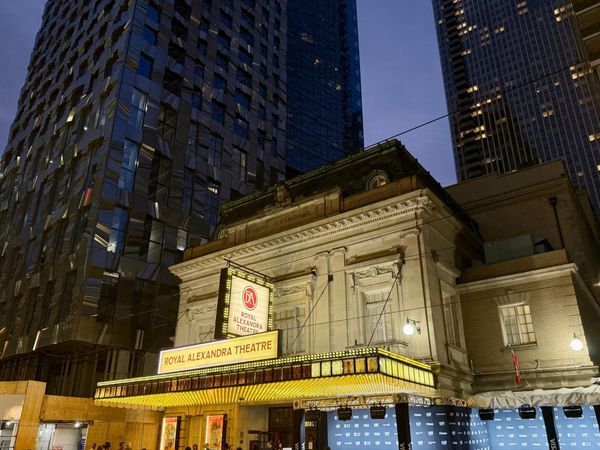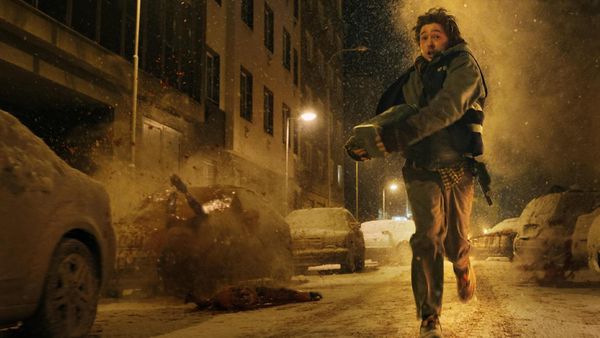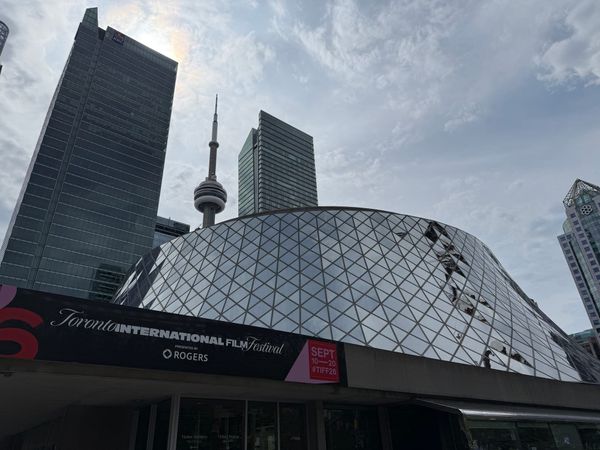
TIFF 2026 Dispatch #3: 'Club Kid', 'Possible Love', the People's Choice Awards, and other highlights
Stephen David Miller concludes his coverage of the 51st annual Toronto International Film Festival.

Stephen David Miller continues his coverage of the 51st annual Toronto International Film Festival with a wrap-up of the awards, and reviews of five notable films, including Jordan Firstman's Club Kid, Mike Leigh's Tender Loving Care, and Lee Chang-dong's Possible Love.
Hello again, Decoding Everything readers! The 2026 edition of the Toronto International Film Festival has officially concluded. The crowds have dispersed, the prizes have been meted out, and now there’s nothing left to do but sit back and reflect. By the time you’re reading this, I’m already back in the States, watching 3-4 fewer movies a day with pricier healthcare and nary a Tim Hortons in sight.
We’ve got a packed agenda for this final dispatch, including reviews of five more notable titles. But first, let’s take stock of the festival as a whole.
That’s A Wrap
Before diving into cinematic highlights and the major award winners, I’ll start on a personal note. This TIFF was a particularly humbling experience for me. In my first dispatch, I mentioned that busyness and insomnia caused me to miss out on my chance to see I Play Rocky. As it turns out, that was the first of many dominoes to fall, and I soon found myself caught in a cycle of sleepless nights and hastily canceled morning screenings. Of the 34 films I’d initially booked for myself, I wound up only catching 27. I’m sharing this in part because I’m a junkie for metrics, but also because it feels important to tell the other side of the story. Over the course of these dispatches, especially my coverage out of Cannes, I wax poetic about the chaos of attending a festival: the frenzy, the exhaustion, the way it wears down your defenses and leaves you more attuned to the emotion of certain films. I rarely discuss the flip side, when your defenses are so eroded that your mind and body cease to function altogether. Schedule your life down to the minute, pump constant stimuli into your brain, try to force it off for 4-5 hours of sleep, and repeat. Eventually the machine will fall apart.
I hit a brick wall early in this trip, which was brutal in the thick of it but liberating in hindsight. Once I abandoned any aspirations of playing a “perfect game,” I was able to shoot for something more sustainable. Nice-to-haves were upgraded to non-negotiables, including healthy meals, exercise blocks, and dedicated breaks for doing absolutely nothing. It took a few days to get things back on track, but eventually I found my groove. This made the remaining screenings feel more special. Chosen experiences I was grateful to be a part of, rather than a race to meet the quota for the boss inside my head.
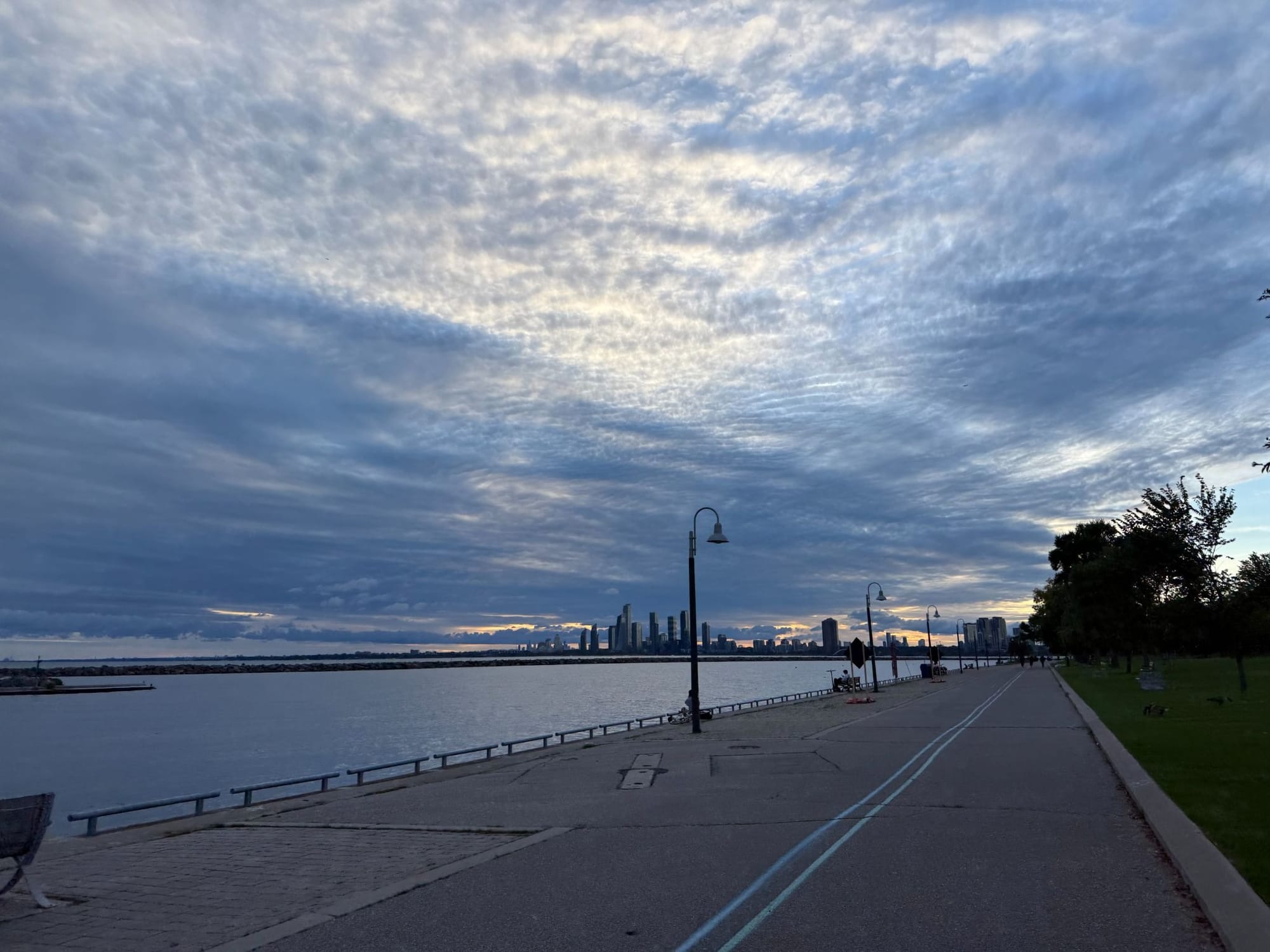
Despite forfeiting 20% of my tickets, I was still able to see plenty of films I’d happily recommend. More, in fact, than I can cram into these dispatches. Here are a few rapid-fire shout-outs:
- Lauren Miller-Rogen’s Babies is a vibey hangout comedy, and a thoughtful exploration of the pros and cons of having children. The film is a tad overstuffed and overreliant on voiceover narration, but the central performances are so strong (Anna Kendrick in the lead, Seth Rogen as her husband) and the concepts it’s exploring are so refreshing that it won me over just the same. Between this and The Invite, it’s been a stellar year for frank, intelligent comedies about adult relationships…and how it feels for a Drinking Buddies star to be married to Seth Rogen. Here’s hoping Jake Johnson swoops in and pulls off a trifecta!
- Hirokazu Kore-eda’s Look Back is a meditation on art, time, and ambition, centered around two young girls who bond over a shared passion for making manga. After panning his Cannes debut this May, I’m thrilled to report that the director is back on his game. His latest is patient, sentimental in the best possible way, and empathetic to the core. I haven’t seen the animated feature or the one-shot on which it’s based, so I can’t speak to it as a work of adaptation. But as an expression of Kore-eda’s humanistic sensibilities, it delivers.
- Niki Byrne’s The Julia Set was one of my most pleasant surprises of the festival. Chase Infiniti anchors the film as a college mathematician trying to balance her relationship and academic drive. In many respects this is a cookie-cutter coming-of-age story, and there are certainly moments that felt forced or strained credulity. But I’ve never seen this particular formula applied to the world of academia, and that fresh angle makes it consistently compelling. As someone who knows quite a bit about that world and the associated perils of overthinking, I found the material unexpectedly resonant. And if nothing else, it proves that One Battle After Another was no fluke: Infiniti is a bona fide star.
- Another pleasant surprise was Hur Jin-ho’s The Assassin(s). The slick political thriller is a fictional retelling of a 1974 attempt to assassinate the president of South Korea. It’s a piece of history I had no prior knowledge of, but quickly was engrossed in. Hur’s film is twisty, informative, dramatically engaging, and it looks like (several!) million bucks. Late in the festival, I often reserve a few slots for high-profile international studio releases—titles I likely would have never known to seek out if they came out in the States. This screening reminded me of why I make the effort.
- Speaking of those wildcards: The most delightful popcorn flick I caught this week was Bai Xue’s It’s My Time. The Chinese-language comedy/drama stars Michelle Yeoh as a 70-year-old competitive Rubik’s Cube solver. It’s zany and explicitly self-aware, relishing every cliché of the inspirational sports genre and milking it for laughs and pathos in equal measure. Shallow, breezy fare, to be sure, but Yeoh is wonderfully committed. I had a total blast.
- Somehow, amidst my chaotic schedule, I managed to make time to rewatch my favorite film from Cannes: Ryusuke Hamaguchi’s 196-minute plea for radical compassion, All of a Sudden. There’s not much to say here that I didn’t already say in my original review, except that I’m pleased to report it held up on second viewing. This sort of slow, didactic brand of storytelling won’t be everybody’s cup of tea, but I continue to adore it. Murmurs around the festival suggest I’m not alone.
As luck would have it, I also fared pretty well when it came to major award winners. Defying popular wisdom, the People’s Choice Award did not go to the Italian Stallion after all. Instead, the top prize went to the queer Spanish epic La Bola Negra—a surprising pick but a strong one, which I heaped praise on out of Cannes. I Play Rocky was relegated to a runner-up position, and Siân Heder's rousing disability rights biopic, Being Heumann, placed third. Rounding out the parallel International People’s Choice competition were Simon Stone’s Elsinore, Lee Chang-dong’s Possible Love, and the aforementioned Assassin(s). I raved about Andrew Scott's performance in my previous dispatch, and will be (spoilers) raving about Possible Love later on in this one. While I’m surprised that more Cannes heavy-hitters (All of a Sudden, Minotaur, Fjord) didn’t place on the podium, overall I think TIFF voters did reasonably well. This is one of the more interesting, diverse collections of winners that I can recall.
All in all, I still managed to see 5 out of the 6 major awardees. That isn’t too shabby for a festival of this size! Regardless, it’s pathetic to reduce art to a number. Let’s focus on the positives, and not obsess over the one that got aw—wait, who’s that sweaty southpaw mumbling incoherently and slouching towards the ring?!
I Play Rocky (Peter Farrelly)
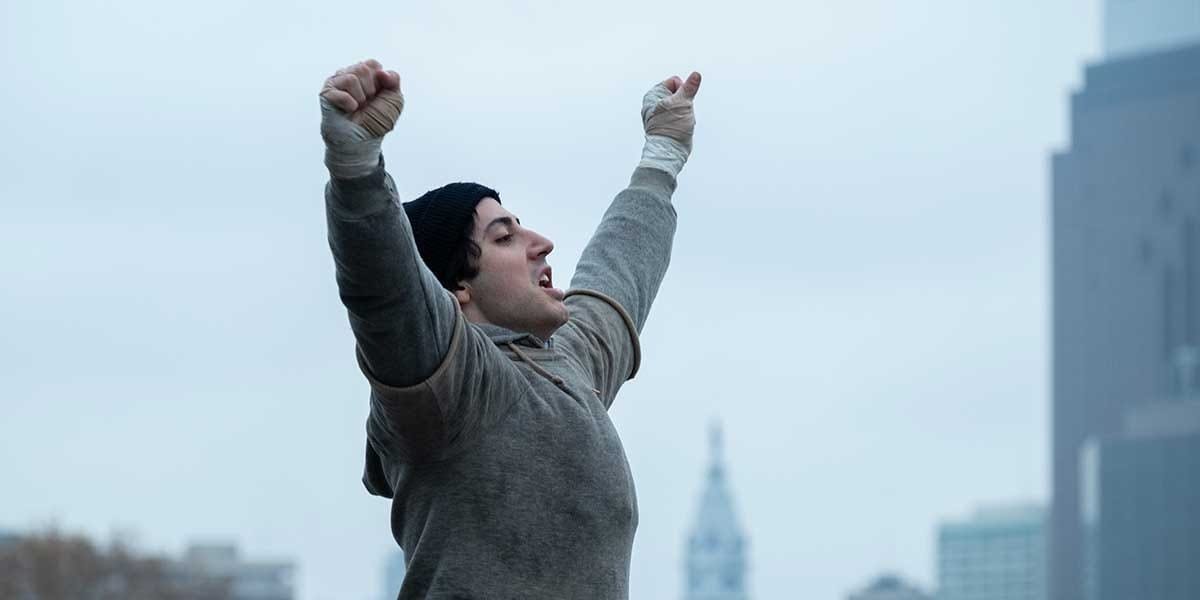
Yes, in spite of my efforts at enlightenment and self-acceptance, that early failure stuck in my craw. Had I really come all the way to Toronto only to need to wait until Thanksgiving to catch what would surely be the Dad Movie Of The Year? Hell no. I knew that I needed to come back for round two and take another swing at my opponent. So after a few days of hemming and hawing, I mustered what was left of my strength, logged onto StubHub, and spent roughly the GDP of Philadelphia on a ticket for a late-festival screening of I Play Rocky.
Perhaps the best and worst thing I can say about I Play Rocky is that it’s totally fine. The internet may balk at the trailer and the premise, but Peter Farrelly’s follow-up to Green Book is nowhere near the disaster I had been bracing for. It’s an entertaining ride, as both its runner-up prize and my hooting-and-hollering audience can attest. In many ways, it reminds me of Saturday Night, the assumed People’s Choice Award frontrunner from two years prior: a well-meaning, energetic, technically proficient reproduction made by someone evidently enamored with the source material. Anthony Ippolito gives a strong performance as Stallone, nailing his mannerisms and finding heart to undergird them without ever devolving into parody. The cast around him is having a ball, especially Stephan James as Carl “Apollo Creed” Weathers, Jay Duplass as Rocky director John Avildsen, and Tracy Letts as a fictitious United Artists executive. The latter is essentially Letts’ Ford v Ferrari character transposed onto the studio system: an always-skeptical, grumbling mover and shaker, whose aversion to casting Stallone in the lead is only surpassed by his resentment at having missed out on The Godfather. (“Fuck Paramount,” he hissed to my 2026 audience, eliciting impromptu rounds of applause.) Even structurally speaking, I have to give the film a modicum of credit. Peter Gamble’s script frames the making of Rocky as its own parallel rags-to-riches story, superimposing the arc of the breakout boxing hit on the story of its creation. By the time we’re watching that famous training montage at its premiere in (ironically) the Paramount Theatre, we’re pumped, knowing Stallone has been training for this moment.
Farrelly’s film suffers, however, from a serious lack of ambition. “Inevitable” is the word that comes to mind. Despite being draped over the bones of an underdog story, Stallone’s success is a foregone conclusion at every turn. His cockiness compels him to call his shot, hindsight assures us that he’ll make it, the ball goes in with a swish, and we move on to the next setup. Will he get the contract? Obviously. Will he ace the scene? He will. Something’s running off the rails? Don’t worry, he’ll make the adjustment. Late in the movie, director Avildsen insists that every truly great movie needs “the thing”—some unplanned moment of ecstatic revelation, an unpredictable quality which leaves the viewer feeling dizzy. Rocky needs “the thing,” and Stallone predictably delivers it (swish) in a monologue which Ippolito, in fairness, performs the hell out of. But I Play Rocky does not and cannot deliver the same, because it’s too risk-averse to ever surprise you. Unlike Stallone, who dared to show the American public something new, Farrelly has the benefit of a half-century-long focus group. Empirically speaking, it works: Recreate a classic with the right level of craft and attention, and audiences will feel some simulacrum of how the original made them feel. Take your family out to see it after turkey, and no one will be angry with your decision. Personally, though, I find the approach to be oddly lifeless. I’d rather root for something willing to take a punch.
Club Kid (Jordan Firstman)
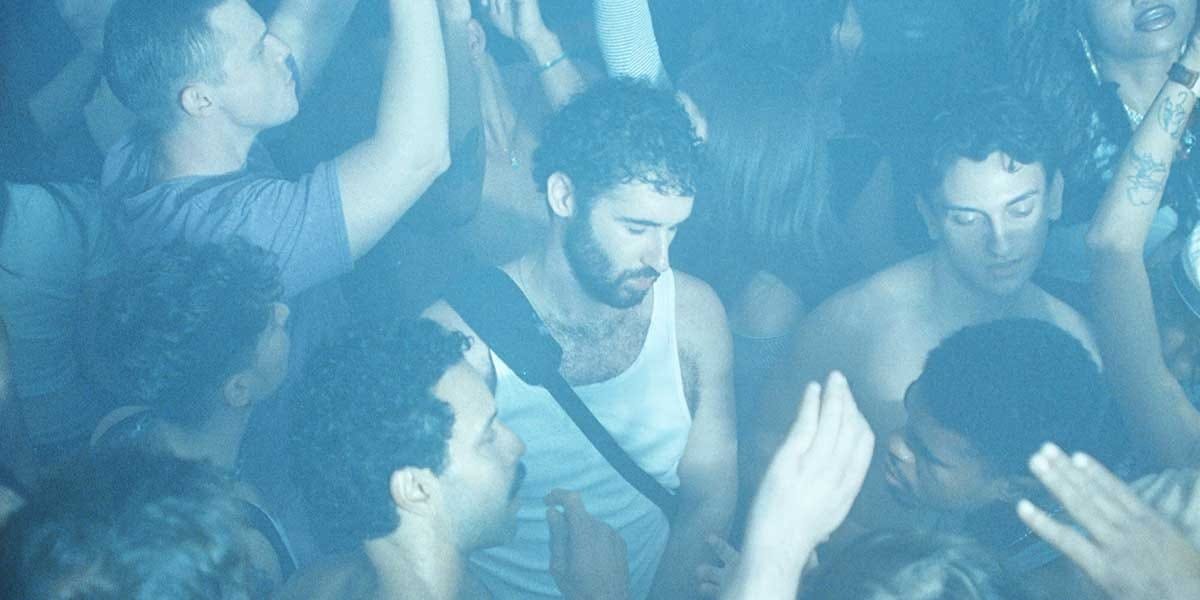
If you’re looking for an underdog story that’s actually willing to take a risk, let me enthusiastically endorse Jordan Firstman’s bold, original Club Kid. Firstman stars as Peter, a socialite and fixture of NYC’s underground queer club scene known for organizing legendary parties. They’re unabashedly hedonistic, maximalist affairs, featuring killer DJ sets, an endless supply of uppers and downers, and the virtual guarantee of getting laid. The key to their success is Peter’s attentiveness as a host and his willingness to lead by example. He indulges so everyone else can relax and follow suit. It’s a good life, though admittedly it comes with a few consequences. Brutal mornings after. Bouts of depression. Major gaps in his memory. A 10-year-old son Peter had no clue existed, who is the product of one such gap. His name’s Arlo (Reggie Absolom), he’s just shown up at his doorstep, and he needs a place to stay.
What makes Firstman’s debut feature so special is its ability to be a crowd-pleaser without sanding down any of its edges. It throws you into the deep end, immersing you in the minutiae of the culture. Featuring a cast of queer YouTubers, comedians, and icons of the scene, it’s got the in-crowd sense of humor I associate with “Broad City,” hyperspecific in a way that’s instantly recognizable even if I can’t personally relate. There’s a liberating confidence that comes from being in on the joke, and it lets Club Kid tread terrain many other comedies wouldn’t dare. Like an attendee of one of Peter’s bacchanals, we can relax, knowing an experienced traveler is keeping the levels in check. Those levels are important, because this is more than just an irreverent comedy: It’s a tender story about parenthood and growing up, as earnest and endearing as Eighth Grade. Firstman is walking a tightrope between sweetness and raunch, and he seems intent on making it as hazardous as possible. Within a single scene, we might get a dialogue about the spiritual nature of fisting, be educated on the relative merits of “gundle” (GHB) or “kundle” (ketamine) or “bundle” (coke), and help Arlo process his feelings about losing his mom. It sounds bizarre and borderline problematic on paper, but it melds together beautifully.
Club Kid is big-hearted, expansive storytelling, which refuses to moralize or pit one facet against the other. We’re asked to consider the drawbacks of Peter’s orgiastic lifestyle, but we’re also made to see it as a part of an indelible tradition. A place for free expression and pushing the boundaries of social mores. Adam Newport-Berra’s cinematography captures the hypnotic intensity of the underground club scene, and it also finds beauty in quiet moments of father/son connection. A stroll down the sidewalk, or the reading of a bedtime story, pulses with the afterglow of the parties that preceded it. In fact, those same personality traits that made Peter a coveted club promoter now prime him to be a loving father: his willingness to be in the thick of it with you, to take whatever journey you’re on seriously and bend it back towards the light. He’s unflappable and takes Arlo at face value. He’s also wildly out of his depth, of course, and still has plenty to learn about raising children. But his empathy is a springboard; as long as he has it, everything else will come easy. Watching him find his footing is refreshingly therapeutic.
Tender Loving Care (Mike Leigh)
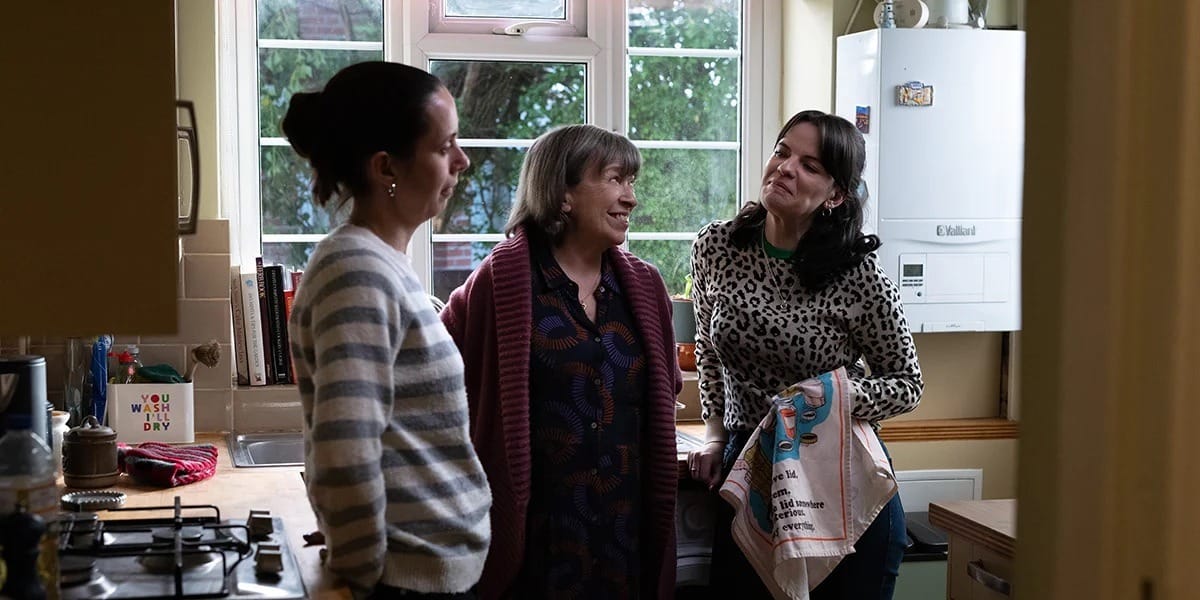
Empathy is a chief concern of Tender Loving Care and of Mike Leigh’s filmography more broadly. The 83-year-old British auteur has spent a lengthy career trying to capture genuine emotion on screen. His method is unorthodox: He begins with a general premise or theme, recruits actors to workshop their characters, and eventually brings them together for a lengthy rehearsal wherein they improvise their dialogue and refine it into a script. The process, though difficult, yields incredible results, having the same spark that (briefly) drew me to the Mumblecore genre, but packaged in something polished and dramatically satisfying. Beats that might come off as cheesy in a traditional film become unspeakably moving in Leigh’s, because we sense that they are actually happening. Real people who happen to have stumbled into a fictional drama, baring their souls to the audience.
Given the organic way Leigh lets his films take shape, it’s easiest to focus on the characters. Amy (Kate O’Flynn) and Rosie (Alice Bailey Johnson) are a pair of social workers and childhood best friends, living together in the Ealing district of London. Their day jobs are grueling, involving scant government funding, even less emotional support, and clients who often resent their attempts at being helpful. But Amy and Rosie maintain a positive attitude in defiance of the grind. So do Amy’s aging, long-since-retired parents, Birdie (Marion Bailey) and Geoff (Paul Jesson). Cheeriness is a throughline of the film: people who are dealt a painful blow but choose to shake it off, opting for a glass of wine or a cuppa and sharing a laugh. Early on, I must admit that all of this chafed against me, eliciting a sort of secondhand embarrassment. There’s a reason I go for the hard stuff, preferring Naked over Life Is Sweet or Hard Truths over Happy-Go-Lucky. For as tough as it can be to watch a character suffer, darkness has a certain hip, intellectual swagger. Whereas there’s nothing cool or erudite about unbridled joy—the hack jokes we tell each other to pierce the tension, the little dances we do when singing in the shower. It can be awkward and cringey, and feels voyeuristic to witness. But it’s also essential, as Leigh aims to show us.
Mike Leigh has announced that Tender Loving Care will be his final film, so it’s fitting that here, he’s in a more didactic register. As with All of a Sudden, he’s making an argument for the radical act of caring. The impulse to look at someone directly, to nod along and smile, to offset someone’s pain with a hug or corny joke—none of these come to us by default. They’re skills that need to be honed. Leigh’s protagonists are aware of the same futility as the agents of Wild Horse Nine. When a mother who has been separated from her child accuses Amy of representing a system that’s rigged against her, we recognize the truth beneath the venom. Geoff and Birdie reminisce about the pre-Thatcher social welfare system, but they both know that it is never coming back. As hope is sapped and our defenses continue to erode, all that remains is pure instinct. Who do you want to be when the dust finally settles? Do you board up the windows and succumb to despair, or do you cultivate irrational delight? Leigh’s swan song may carry a lighthearted tune, but there’s a heavy exhortation running through it.
Possible Love (Lee Chang-dong)
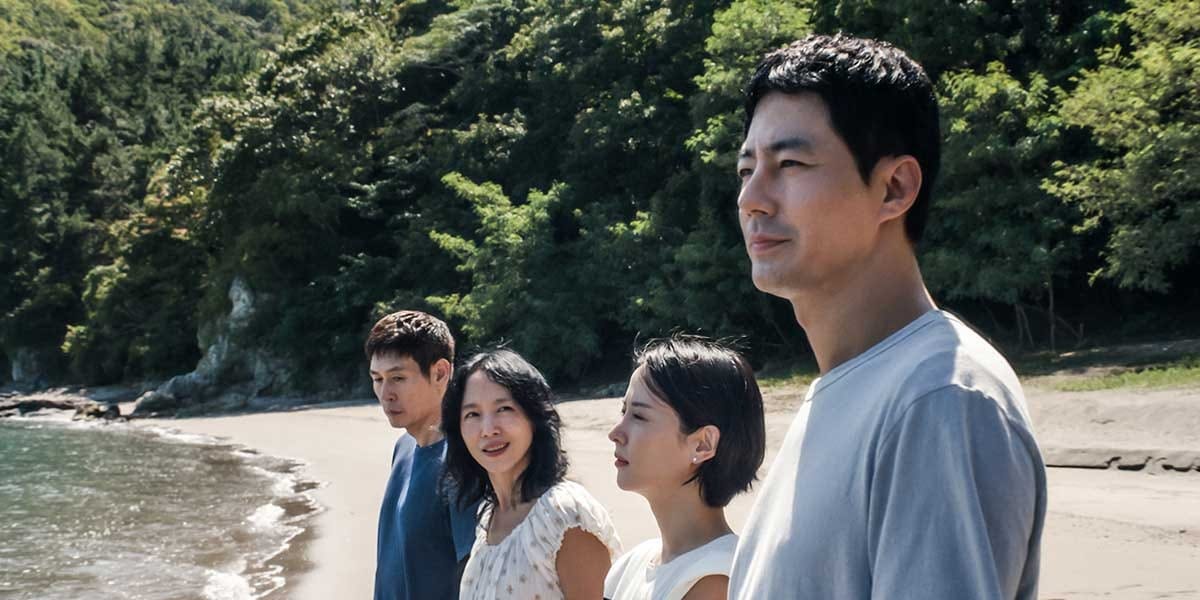
We may adopt superficial postures depending on the moment, but eventually we’re pulled back to whoever we truly are inside. How much is that deeper self bolted in place, and how much can we consciously change it? That’s one question among many which Lee Chang-dong is exploring in the masterful Possible Love.
Ye-ji (Cho Yeo-jeong) is making a documentary about the plight of factory workers, and she’s sharing her inspiration with colleagues over drinks. Her working-class father once told her that laborers are like the elephant a magician makes disappear in a televised trick. They aren’t actually gone; the world is simply unable to see them. Now Ye-ji, the wealthy wife of an international businessman (Zo In-sung), has the means to force the world to see them, and she believes she’s found the perfect entry point in Mi-ok (Jeon Do-yeon). Mi-ok is an open book, able to channel her emotions in a telegenic manner, whereas her husband (Sul Kyung-gu) is repressed and quietly seething. He hasn’t been the same since he was laid off from the plant. By inviting the documentary crew inside of their home, Mi-ok hopes to wake her husband from his stupor.
Vanishing elephants notwithstanding, this is not another Murakami story. Unlike Burning, which was content to let key characters be a mystery, Possible Love splays them out like an elaborate novel, peeling back their layers, revealing the nuances of their wants. Ye-ji’s intentions may be pure, but she’s mining her supposed “friendship” for content in ways that become increasingly uncomfortable as lines get blurred. And for her part, Mi-ok isn’t only motivated by goodwill for her husband. She has issues of her own to get off of her chest—and, frankly, she’s flattered that her affluent new friend is willing to listen. The performances are excellent all around, but Jeon’s turn as Mi-ok is the standout. She’s as fearless and exposed here as she was in Secret Sunshine.
This could easily be read as Lee’s version of Parasite; certainly, it has class on its mind. But the director has never been one for straightforward messages. Instead, I think he’s more concerned with stripping away levels of performance, and the insufficiency of language or documentary “truth.” At the start, things are all very literal. It’s a talky affair, addressing social themes directly. But eventually buttoned-up niceties give way to something more primal. This is true of the characters, who are prone to breaking down, getting piss drunk or wailing on camera. It’s also true of the filmmaking itself, which grows more arresting and impressionistic over time. One wordless moment, late in the runtime and set in the ocean, might be the single best thing I’ve seen this year: the camera dipping above and below the water, bobbing between higher self and animal instinct. I’m also reminded of a labor strike, shown on two separate occasions from two different points of view. The first is shot from a helicopter far above the scene, a news broadcast attempting to lend it context. The second is from the ground, communicating only the subjective. Theory has its limits. Understanding comes from standing face to face in the muck.
Union Town (Barbara Kopple)
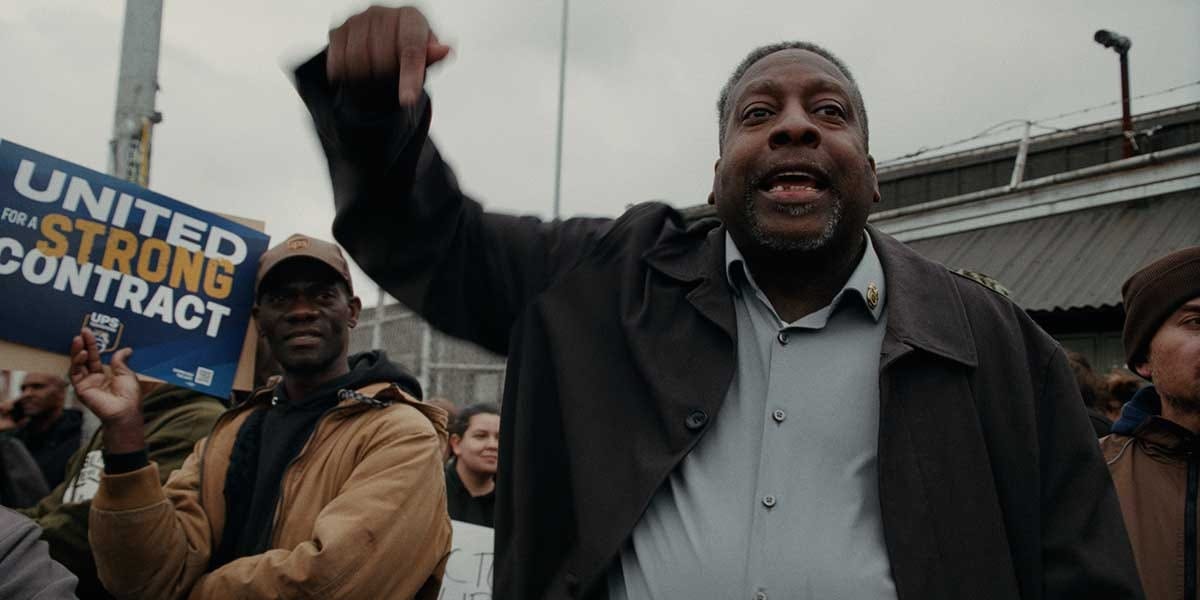
Barbara Kopple knows the value of making things personal. In 1976’s Harlan County U.S.A., the director embedded herself in a Kentucky coal mining community that had chosen to go on strike. Fourteen years later, in American Dream, she again went deep on a labor dispute at a Minnesota meatpacking plant, showing internecine battles within the union itself. In both instances, her unprecedented access to her subjects let her amplify the emotional impact. I don’t typically opt to review documentaries for these dispatches; I find it hard to separate the power of the message from the quality with which it’s told. But when I saw that the two-time Oscar winner would be returning with a third film about labor, I knew I had to make an exception. So with this final entry, let’s dispense with fiction.
In contrast to the previous entries in the trilogy, Union Town is not focused on a single labor dispute. Set in New York City from 2023 to 2025, the film follows three different groups of workers in the delivery sector. We begin with the UPS employees, represented by the Teamsters, whose contract is about to expire. Then come the Amazon drivers, whose nascent unionization efforts have not yet led to a material increase in wages. Finally, there are the Deliveristas: gig-economy workers, primarily immigrants, who work for DoorDash, GrubHub, and similar apps. At the outset of the saga, none are earning a living wage by NYC standards. But even under that line, the disparity is striking. A top UPS driver might get paid north of $40/hour, while someone doing comparable work at Amazon will make roughly half as much. Meanwhile, a driver for the apps can easily spend an hour earning little to nothing, and does so with zero protections. If they’re injured, they’re liable; if their bike is stolen, they pay out of pocket; if the algorithm wills it, they can be terminated without cause or prior warning. As we bear witness to individual struggles on every rung of the ladder and watch the groups rally for better conditions, Kopple’s argument gets more glaring by the minute. The system will not budge unless suitable pressure is applied, and that pressure rarely comes from above. Power might speak in a sympathetic voice, but it will ultimately revert to baser instincts. To change the world, you need to build a movement.
Union Town is neither as artful nor as inventive as its predecessors. Lacking the intimacy of Harlan County and the ethical complexity of American Dream, it feels much more like a traditional documentary: a top-down look at labor movements writ large, telling us directly what it means. I loved it all the same, though, because I see it as a rallying cry at a time when subtler arguments are failing to make a dent. Kopple is entreating us to look our neighbors in the eye; to see the system undergirding our modern conveniences and not pretend the elephant has vanished; and to strengthen our resolve to fight for something better, or at least strain against the forces that are tearing things apart. Practice irrational hope until it becomes second nature. Keep swinging, even if you lose the first match. Keep singing, especially when it feels cheesy. After a long week stuck inside my head, it was invigorating to reconnect with something bigger.
That concludes this year's coverage of the Toronto International Film Festival! As always, feel free to reach out if you're curious about any titles I didn't mention. You can find me on Letterboxd, Bluesky, hosting The Spoiler Warning podcast, or in the comments section below.